







New Funding Secured
Lux Aeterna, a burgeoning space technology startup, has successfully garnered $10 million in seed funding, significantly boosting its efforts to develop
a groundbreaking reusable satellite. This substantial investment, led by early-stage venture firm Konvoy, brings the company's total funding to $14 million since its inception in August 2024. Founded by Brian Taylor, an alumnus of SpaceX, Lux Aeterna is charting a new course for space missions by creating spacecraft designed to withstand atmospheric reentry and be refurbished for subsequent flights. This financial injection is crucial for advancing their innovative design and preparing for upcoming developmental milestones, including a pivotal demonstration flight scheduled for early 2027. The company's vision is to move away from the current model where satellites are largely disposable, aiming instead for a more sustainable and cost-effective approach to accessing and utilizing space.
Delphi-1 Mission Details
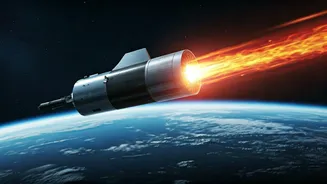
The company's immediate focus is on its Delphi-1 spacecraft, which is engineered around a unique rigid heat shield that also functions as the satellite's main structural component. Before the end of June, Lux Aeterna plans to conduct a crucial parachute drop test using a prototype of this innovative spacecraft. Following this, a critical design review is slated for early April, a key step before the planned launch of Delphi-1 into low Earth orbit (LEO) in the first quarter of 2027. This inaugural mission will be facilitated via a SpaceX rideshare program, with an anticipated landing in South Australia shortly thereafter. Notably, Taylor mentioned that this first mission has already garnered significant customer interest, with all available slots fully booked. The spacecraft itself weighs 200 kg and offers a payload capacity of 30 kg, serving as a vital stepping stone for future, larger-capacity vehicles.
Customer Applications & Partnerships
The customer base for Lux Aeterna's reusable spacecraft is diverse, encompassing both commercial entities and defense organizations. These clients are particularly interested in applications such as hypersonic testing, in-orbit computing, and in-space manufacturing, areas that can greatly benefit from short-duration, flexible missions. The ability to conduct experiments or deploy manufacturing processes in space for periods ranging from a single day to six months makes a reusable platform highly attractive. Furthermore, Lux Aeterna has actively pursued and established multiple partnerships with various U.S. government organizations that are keen on advancing reusable spacecraft technology. These collaborations underscore the broader industry recognition of the value and potential of reusable orbital assets.
Technological Development Milestones
Lux Aeterna has dedicated considerable effort to building its internal capabilities, including the development of sophisticated tools and testing infrastructure. A key innovation is a design suite that meticulously integrates payload requirements with vehicle performance metrics, significantly accelerating the initial stages of customer discussions and securing commitments. The company has also engineered a robust test system enabling engineers to rigorously validate flight software and simulate missions using actual spacecraft hardware. This system incorporates a proprietary, in-house developed reusable heat shield material. The return of Delphi-1 to Earth will be orchestrated by advanced autonomous software and a heritage chemical propulsion system from an as-yet-unidentified supplier, ensuring a controlled and safe reentry process.
Reusability's Impact on Space
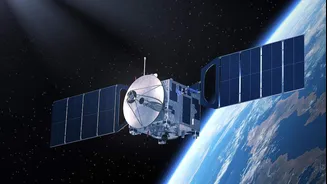
The innovative design of Delphi-1 sets it apart from traditional capsule-based reentry vehicles. Instead of an external shell, its heat shield is integrated into the primary structure, allowing it to function as a standard satellite during orbit and operations before returning for recovery and refurbishment. This approach holds the potential to unlock new markets in the rapidly growing sector of short-duration space missions and hardware retrieval from orbit. While reusable launch vehicles have dramatically lowered the cost of reaching space, the majority of satellites today remain single-use, destined to disintegrate in the atmosphere. Lux Aeterna's co-founder, Taylor, who has prior experience in mass-manufacturing satellites at major aerospace companies, believes reusable spacecraft are essential for shifting the industry away from a "launch-and-burn" mentality towards greater affordability, sustainability, and operational flexibility.
Future Reuse and Growth
Lux Aeterna's strategic agreement with Southern Launch to conduct the Delphi-1 landing at Australia's Koonibba Test Range also includes provisions for the spacecraft's first reuse mission, slated for 2028. The company is already observing considerable interest from potential customers for this subsequent flight, though specific details remain undisclosed. Currently, the venture comprises a dedicated team of 14 employees, with plans to expand to approximately 25 individuals in anticipation of the Delphi-1 demonstration. The recent seed funding round saw participation from new investors such as Decisive Point, Cubit Capital, and Wave Function, alongside continued support from existing backers like Space Capital, Dynamo Ventures, and Channel 39. Taylor indicated that the funding round was significantly oversubscribed, leading them to turn away additional capital, highlighting strong investor confidence.