






The Urban Nocturne
While most avian species are inherently diurnal, meaning they are programmed to be active during daylight hours and rest at night, urban environments present
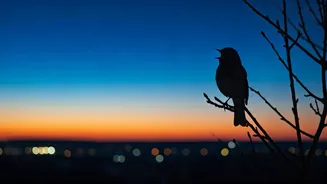
a unique set of circumstances that can disrupt this natural rhythm. The symphony of city life, often characterized by incessant artificial illumination and a cacophony of sounds, can profoundly influence bird behavior. This phenomenon is particularly noticeable in densely populated areas where the boundaries between natural cycles and human-made disturbances become blurred. Ornithologists and bird enthusiasts have observed that occasional nocturnal chirping isn't an anomaly but rather a nuanced response to the altered landscapes that cities create. Understanding these shifts requires looking beyond the simple assumption that all birds adhere strictly to a daytime schedule, recognizing their capacity to adapt and react to their immediate surroundings, even when those surroundings are a far cry from their ancestral habitats. The implications of these behavioral changes extend to the birds' overall well-being and their ability to thrive in these human-dominated ecosystems.
Triggers for Midnight Calls
Several environmental factors contribute to birds breaking their nocturnal silence. Foremost among these is disturbance-triggered vocalization, where sudden and unexpected noises—such as loud vehicle horns, the unpredictable bursts of fireworks, the presence of predators, or even stray animals—can startle resting birds, prompting them to emit alarm calls. Another significant contributor is the pervasive presence of artificial lighting in urban areas. Streetlights and illuminated buildings can deceive birds into believing that daylight is persisting longer than it naturally should. This continuous exposure to light at night interferes with their internal biological clocks, which regulate crucial processes like sleep patterns, hormone production, reproductive timing, and migratory readiness. Furthermore, during the intense breeding season, hormonal fluctuations can also instigate sporadic vocalizations outside their usual activity periods. These external stimuli and internal biological cues collectively explain why birds might be heard singing or calling when we expect them to be asleep.
Mating, Territory, or Stress?
The reasons behind a bird's late-night vocalizations are multifaceted and can be attributed to a combination of social behaviors, territorial instincts, and stress responses, depending heavily on the specific context. During the peak of the breeding season, male birds commonly engage in singing to attract potential mates and to assert their dominance over their territory, warning off rivals. In the often-noisy and cluttered urban soundscape, some species find it advantageous to extend their singing hours into the quieter nighttime period. This allows their calls to travel further and more clearly, unhindered by the constant drone of daytime human activity. Conversely, sudden and jarring artificial disturbances, like construction noise, unexpected bright light flashes, or other unforeseen loud sounds, can trigger alarm or stress calls. Prolonged exposure to artificial illumination also leads to a cascade of unusual patterns, including earlier waking, later sleeping, premature dawn choruses, increased energy expenditure, and elevated stress hormone levels over time. From a conservation standpoint, such chronic disruption of their circadian rhythms can negatively impact breeding success and overall long-term fitness.
Urban Survivors: Which Birds Vocalize?
Certain avian species are more predisposed to vocalizing after midnight due to their inherent adaptability to urban ecosystems. These birds are typically naturally vocal, demonstrate strong territorial behavior during their breeding periods, and exhibit a comfort level with roosting in close proximity to humans. Species frequently observed in brightly lit urban environments, such as the Asian Koel, particularly during its breeding season, along with the Common Myna, House Crow, Rock Pigeon, and the Red-vented Bulbul, are prime examples of those likely to be heard singing or calling in the late hours. Their resilience and ability to navigate the complexities of city life mean they are often the ones adapting their behavior to the surrounding environment. Therefore, the next time you hear a bird's song in the early hours of the morning, it's likely not a mere anomaly but a fascinating indicator of how wildlife is adjusting to and making the most of our ever-illuminated urban landscapes.