







AI's Transformative Potential
Artificial Intelligence is emerging as a powerful ally in the realm of mental healthcare, particularly in addressing the significant demand for services
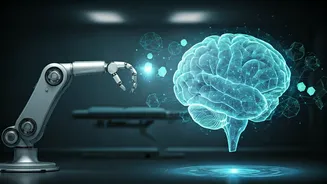
in India. Dr. Thara SK, a distinguished psychiatrist and co-founder of the Schizophrenia Research Foundation (SCARF), highlights AI's capacity to significantly augment the work of mental health professionals. Far from aiming to replace human therapists, AI is envisioned as a tool that empowers them by handling routine tasks, analyzing vast datasets for diagnostic support, and offering personalized treatment insights. This technological integration promises to enhance the efficiency and reach of mental health services, making care more accessible and effective for a larger population. The focus is on leveraging AI to manage initial screenings, identify at-risk individuals early, and streamline therapeutic pathways, thereby allowing human experts to concentrate on complex cases and profound patient engagement.
Enhanced Diagnostics and Personalization
AI-powered systems are demonstrating remarkable capabilities in mental health diagnostics by sifting through extensive patient information, including self-reported symptoms, observed behaviors, and even physiological indicators. This analytical power allows for quicker and more accurate identification of potential mental health conditions, a critical advantage in regions facing a scarcity of mental health practitioners. Dr. Thara emphasizes that AI can act as an early warning system, flagging individuals predisposed to conditions like depression, anxiety, or psychosis, thus enabling timely interventions that can significantly alter prognoses. Furthermore, AI holds the key to unlocking truly personalized treatment plans. By scrutinizing individual patient profiles, including genetic predispositions, lifestyle factors, and responses to previous therapies, AI can predict the most effective treatment modalities. This sophisticated approach moves beyond trial-and-error, aiming for more efficient and tailored interventions that cater to the unique needs of each patient.
Continuous Support and Ethical Safeguards
Beyond diagnostics and treatment planning, AI offers invaluable continuous support for individuals undergoing mental health care. AI-driven chatbots and virtual assistants can provide immediate responses to common queries, offer coping strategies, and serve as a consistent source of emotional support, especially for those who might not have regular access to a therapist. This accessibility is crucial in ensuring that patients have support resources available around the clock. However, the integration of AI into mental healthcare is not without its challenges. Dr. Thara strongly emphasizes the paramount importance of data privacy and security, advocating for robust systems to safeguard sensitive patient information. Ensuring ethical deployment involves mitigating biases within AI algorithms and critically maintaining the human element in care. Transparency regarding how these tools function and their inherent limitations is essential for building trust and responsible implementation.
Navigating Indian Contextual Nuances
While AI offers immense potential, its application in the Indian context necessitates careful consideration of unique cultural and social factors. Dr. Thara points out that mental distress in India, particularly among women, is often expressed through somatic symptoms like headaches or body aches, a phenomenon known as somatization, which current AI tools may struggle to accurately interpret without human clinical insight. The vast linguistic and social diversity across India also presents a challenge; social norms, such as a woman's demeanor in a rural setting, can be misinterpreted by AI without understanding the underlying cultural context. The significant role of family in mental health within India is another crucial element that person-centric AI tools might overlook. Moreover, the pervasive stigma surrounding mental health can lead to indirect communication of distress, manifesting as withdrawal or silence, which requires a clinician’s nuanced understanding. These complexities highlight that while AI can be a valuable assistant, it is currently contextually underprepared to fully grasp the intricate social fabric of Indian society.
Balancing Tech and Human Touch
The rise of self-help chatbots and AI-driven apps presents both opportunities and risks in mental healthcare. While these tools can be beneficial for managing mild concerns and providing accessible support, Dr. Thara cautions against over-reliance, especially when dealing with more serious conditions. The Indian Psychiatric Society's warning about a chatbot providing harmful advice underscores the critical need for regulation and responsible development. For young people, while these apps can offer preliminary assistance, professional consultation remains indispensable for clinical management. The key lies in recognizing the limitations of AI; it excels at offering short-term emotional support and basic counseling due to its constant availability and affordability, but it cannot replicate the in-depth evaluation and nuanced care that a human therapist provides. Moreover, AI can enhance professional workflows by automating documentation and basic screening, freeing up clinicians for direct patient interaction. However, an excessive dependence on these tools could lead to individuals avoiding necessary real-world help, particularly in cases of severe depression or suicidal ideation, where AI is fundamentally incapable of providing adequate support.