





Genesis of a Giant
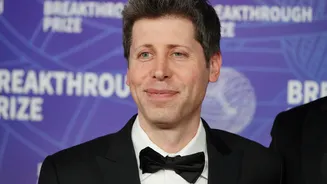
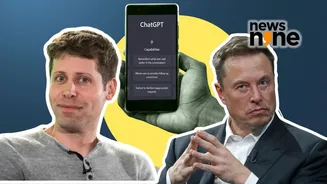
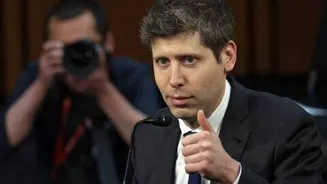
The story of OpenAI begins in 2015, when Sam Altman proposed a collaborative, non-profit 'Manhattan Project for AI' to Elon Musk. The shared vision was
to develop advanced artificial general intelligence (AGI) and make it accessible to all of humanity, preventing any single entity, like a dominant Google, from controlling its destiny. This ambitious endeavor was formally established as a non-profit organization, with a founding principle of open-sourcing its groundbreaking AI technologies. The initial pact was to ensure that AGI, once created, would serve the broader interests of humanity, a stark contrast to the commercially driven AI development that would later characterize the industry. This foundation was built on the belief that transparency and shared access were paramount to responsible AI advancement, setting a unique precedent in the burgeoning field of artificial intelligence.
Seeds of Disagreement
By 2017, the harmonious partnership between Musk and Altman began to fray. A significant ideological rift emerged within OpenAI regarding the safety and implications of open-sourcing AI. A faction, including Musk, argued that fully open-sourcing advanced AI could pose considerable risks. Concurrently, concerns arose about the substantial financial resources required to achieve the ambitious goal of AGI, leading to doubts about the non-profit model's sustainability. Musk proposed integrating OpenAI with Tesla's burgeoning supercomputing capabilities, a move that was reportedly met with resistance from Altman and other key figures. This divergence in strategy and control ultimately led to Musk's departure from the board and his cessation of financial support, paving the way for him to launch his own AI venture, xAI, years later. This period marked a critical turning point, highlighting fundamental differences in their approaches to AI development and governance.
The For-Profit Pivot
Following Musk's exit, OpenAI embarked on a strategic shift to secure the necessary funding for its AGI aspirations. The organization established a for-profit subsidiary, a move that marked a departure from its original non-profit charter. This pivot was instrumental in attracting significant investment, most notably a $13 billion commitment from Microsoft. This influx of capital allowed OpenAI to accelerate its research and development efforts, but it also coincided with a reduced emphasis on open-sourcing its AI technologies. The establishment of a for-profit arm and the subsequent large-scale investment from a major tech corporation raised questions about the organization's commitment to its founding humanitarian mission. This transition laid the groundwork for the commercialization of AI technologies, setting the stage for future conflicts over the organization's ultimate purpose and beneficiaries.
Musk's Allegations Unveiled
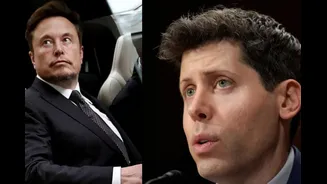
In 2024, Elon Musk initiated legal proceedings against OpenAI, levelling accusations that the company and its leadership, including Sam Altman, had strayed from their humanitarian mandate in pursuit of financial gains. Musk's lawsuit contends that OpenAI deliberately misled him and other stakeholders by promising a path for AI development that prioritized safety over profit, contrasting it with the approach of tech giants like Google and Microsoft. Evidence unearthed during the discovery phase, including diary entries from Greg Brockman, former president of OpenAI, has surfaced, suggesting internal doubts about adhering strictly to a non-profit-only model. Brockman's writings reportedly expressed a desire for financial success and questioned the long-term commitment to the non-profit structure, hinting at plans for a for-profit entity prior to public announcements. Judge Yvonne Gonzalez Rogers deemed these documents sufficient to allow Musk's case to proceed to trial, indicating that the allegations of being misled hold enough weight for judicial examination.
OpenAI's Defense Strategy
OpenAI's defense counters that Musk himself played a role in exploring commercial avenues for the organization prior to his departure. Court filings reveal that in 2017, Jared Birchall, the head of Musk's family office, reportedly registered a company named 'Open Artificial Intelligence Technologies,' conceptualized as a for-profit counterpart to OpenAI. OpenAI's public statements assert that Musk actively sought to transform the non-profit lab into a commercial venture, seeking majority equity and full control, even envisioning his children overseeing AGI. The company argues that Musk's words and actions demonstrate his intent to establish a for-profit structure. Furthermore, OpenAI has accused Musk of attempting to hinder its progress while simultaneously developing his own competing AI initiatives. As a for-profit public benefit corporation (PBC) under its charitable arm, OpenAI operates with a structure that it contends is aligned with its evolving mission, albeit with a commercial component.
Trial's Expected Showdown
The trial, presided over by Judge Yvonne Gonzalez Rogers with a nine-person jury, will focus on Musk's claims of breach of charitable trust and unjust enrichment, as fraud allegations were previously dismissed. If Musk prevails, he is reportedly seeking $150 billion in damages, with funds designated for OpenAI's charitable arm. His legal team aims to recover assets purportedly taken from the public charity and prevent responsible individuals from similar actions in the future. Musk's demands also include removing Sam Altman from OpenAI's board and reversing the company's transition to a for-profit structure. Such a verdict could significantly impact OpenAI's trajectory, potentially disrupting its anticipated initial public offering and benefiting competitors. Conversely, a loss for Musk would grant OpenAI greater freedom to operate as a for-profit entity, enabling substantial expansion plans. The credibility of witnesses, including high-profile figures like Satya Nadella and Mira Murati, will be a crucial factor in the jury's deliberation.