






Osteoarthritis Explained
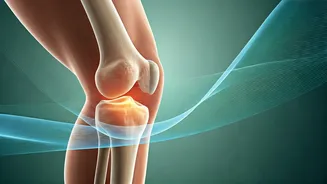
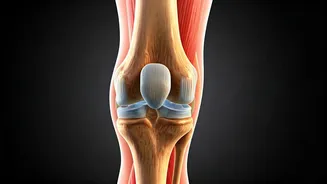
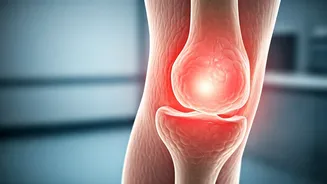
Osteoarthritis, a prevalent degenerative joint ailment affecting millions globally, is characterized by the deterioration of cartilage. This breakdown
precipitates discomfort, stiffness, reduced mobility, and swelling, most commonly impacting the knees, hips, and hands, although any joint can be susceptible. Given its progressive and incurable nature, management strategies concentrate on alleviating symptoms and preserving physical function. Historically, exercise has been a cornerstone of this approach, credited with improving blood flow, enhancing joint alignment, reinforcing the muscles supporting the joints, and mitigating stiffness. Over time, consistent physical activity can also aid individuals in maintaining their independence and potentially delaying the need for more invasive medical interventions. Nonetheless, a recent comprehensive review has prompted a re-evaluation of the magnitude and duration of these benefits, posing the question: are they as significant as previously assumed?
Study Findings Under Scrutiny
A significant umbrella review published in February 2026, titled “Effectiveness of exercise to ease osteoarthritis symptoms likely minimal and transient,” analyzed a vast dataset comprising nearly 13,000 participants from 5 systematic reviews and 28 randomized clinical trials up to November 2025. This extensive analysis, which examined exercise's efficacy across knee, hip, hand, and ankle osteoarthritis, compared it against various interventions including inactivity, placebo, patient education, manual therapies, NSAIDs, corticosteroid injections, hyaluronic acid injections, arthroscopy, osteotomy, and joint replacement. The primary aim was to ascertain if exercise genuinely merited its status as a primary treatment strategy. The review concluded that exercise offered pain reduction of only 6-12 points on a 100-point scale compared to placebo or no treatment, with very low certainty of evidence for knee osteoarthritis, where effects were small and short-lived. Benefits for hip and hand osteoarthritis were similarly minimal. Crucially, exercise did not demonstrably outperform patient education, NSAIDs, steroid injections, or arthroscopy in improving function, whereas surgical interventions like osteotomy and joint replacement showed stronger long-term outcomes in some trials. The researchers thus questioned the universal advocacy of exercise therapy as the sole initial treatment.
Interpreting Pain Reduction
While a 6-12 point reduction on a pain scale might appear modest to many, experts like Dr. Sandeep Nagar emphasize that the clinical significance extends beyond mere numerical value. The focus in modern pain management has shifted from achieving a 'zero pain' score to enhancing functional capacity and overall quality of life. Even minor decreases in pain can translate into tangible improvements, such as increased walking tolerance, better sleep quality, and a reduced fear of movement. Furthermore, exercise has a biological effect on pain perception by activating the body's natural pain-relief systems, known as endogenous opioid pathways. Therefore, even seemingly small numerical changes can represent meaningful progress for individuals managing chronic conditions like osteoarthritis, enabling them to participate more actively in daily life.
Exercise vs. Medication Risks
A notable aspect of the review is that exercise alone achieved pain reduction levels comparable to NSAIDs and corticosteroid injections. Rather than diminishing exercise's value, experts argue this comparison actually strengthens its case. Long-term reliance on medications like NSAIDs carries significant systemic risks, including gastrointestinal issues, kidney problems, and cardiovascular events, while opioids can lead to dependence and increased pain sensitivity. Exercise, when performed under proper guidance and tailored to the individual, boasts a superior safety profile. Moreover, the financial implications are substantial; chronic medication use, particularly opioids, can nearly double annual healthcare costs. Structured exercise programs, conversely, can lead to considerable savings on medication expenses and potentially thousands over a lifetime by reducing the necessity for surgical interventions. However, it's crucial to understand that exercise benefits are cumulative and require consistent participation, unlike the more immediate effects of medication.
Study Limitations Explored
The recent umbrella review, while comprehensive, has several limitations that might have understated the true effectiveness of exercise for osteoarthritis. Firstly, it grouped diverse exercise modalities—such as strength training, aerobic workouts, stretching, aquatic exercise, and tai chi—into a single category. These activities possess distinct intensities and physiological impacts, and evidence suggests that aerobic and resistance training often yield superior results compared to stretching alone. Averaging these varied approaches could have obscured potentially stronger effects. Secondly, the review did not differentiate between supervised and unsupervised exercise programs; supervised routines typically lead to better adherence, technique, and progression, indicating that professional guidance is a significant factor. Thirdly, many trials included in the review were short-term, lasting around 12 weeks. Given that osteoarthritis is a lifelong condition, longer-term adherence could reveal cumulative benefits not captured in these brief periods. Lastly, the precise dose and intensity of exercise were not consistently accounted for; optimal benefits are often linked to approximately 150 minutes of moderate-intensity exercise weekly, and if participants fell below this threshold, the observed effects might reflect insufficient dosing rather than exercise's inherent inefficiency.
When Surgery Becomes Key
While the study suggests exercise's benefits can be limited, it also acknowledges that surgical interventions, particularly total joint replacement, become more effective for specific patient groups. However, surgery is not considered an initial solution. Dr. Nagar clarifies that total joint arthroplasty is generally recommended for individuals experiencing symptomatic moderate-to-severe osteoarthritis (Stage 3 or 4) that has not responded to comprehensive non-operative care. Persistent pain, significant functional limitations, and clear radiographic evidence of joint damage, despite exhaustive conservative management, are key indicators for surgical intervention. Importantly, exercise remains an indispensable component both before and after surgery, playing a vital role in optimizing the outcomes of these procedures and facilitating a smoother recovery process.
Broader Health Benefits
Beyond its direct impact on joint pain and function, exercise contributes a multitude of systemic health benefits that significantly enhance overall well-being, even if its direct effect on osteoarthritis symptoms is debated. These broader advantages include effective weight management, which reduces stress on joints; notable improvements in mood and mental health; crucial cardiovascular protection that strengthens the heart and circulatory system; better sleep quality, aiding in recovery and pain management; a reduced risk of developing type 2 diabetes; and a lower overall cancer risk. The review authors themselves acknowledge that these secondary health benefits must be carefully considered during shared decision-making processes with patients. While exercise might not eradicate osteoarthritis pain entirely, its role in bolstering overall resilience and contributing to these vital systemic improvements makes it an indispensable component of a comprehensive health strategy for individuals living with the condition.
Exercise as First-Line
Despite the study's findings, Dr. Nagar firmly advocates for exercise to retain its position as a first-line recommendation for osteoarthritis management. He asserts that exercise delivers enduring functional and structural advantages that medications cannot replicate. While corticosteroid injections might offer rapid, short-term pain relief, their effects typically diminish within six months. In contrast, regular exercise cultivates muscle strength, enhances joint mechanics, and supports the health of cartilage. Unlike medications that merely mask symptoms, targeted movement actively addresses biomechanical dysfunctions. Dr. Nagar also points out that repeated injections may, over time, potentially contribute to tissue degradation. He emphasizes that the ultimate goal is not the complete absence of pain, but rather an improved quality of life. When exercise is tailored, supervised, and consistently performed, it remains one of the safest and most empowering tools available to individuals managing osteoarthritis.
Protecting Your Joints
For individuals experiencing osteoarthritis, incorporating structured warm-up and cool-down routines is paramount to protecting their joints and minimizing pain aggravation during physical activity. Dr. Nagar recommends a preparatory warm-up phase of 5-10 minutes, which can include light aerobic activities like cycling or brisk walking, complemented by dynamic movements such as leg swings, arm circles, or walking lunges. This phase prepares the muscles and joints for more strenuous activity. Following exercise, a 5-10 minute cool-down period is advised, involving a gradual reduction in intensity to normalize heart rate. This is typically followed by static stretching, holding positions like hamstring or quadriceps stretches for 10-30 seconds to improve flexibility and aid recovery. Adhering to these routines ensures that exercise is performed safely and effectively, maximizing its benefits while minimizing discomfort.