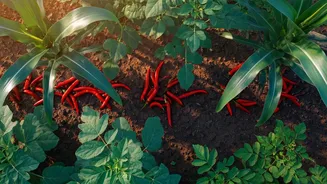









Green Gram's Quick Returns
Green gram, or moong, stands out as a highly reliable short-duration pulse crop, typically ready for harvest within 60 to 70 days. This crop flourishes
in warm climates and has a notably lower water requirement, making it exceptionally well-suited for cultivation during the summer. Beyond its immediate financial benefits, green gram plays a crucial role in soil health by actively fixing atmospheric nitrogen, thereby enriching the soil and preparing it for subsequent planting. The consistent demand for green gram in the marketplace ensures a steady and predictable stream of income for farmers who choose to cultivate it. Its ability to adapt to summer conditions while simultaneously improving the land makes it a smart choice for sustained agricultural productivity.
Hardy Cowpea's Versatility
Cowpea proves itself a robust legume, demonstrating remarkable resilience and performance even under intensely hot and arid environmental conditions. Farmers can anticipate harvesting its pods within a swift 50 to 60-day timeframe, positioning it as an efficient and rapid agricultural option. The versatility of cowpea is further enhanced by the fact that both its immature green pods and mature dry grains are valuable commodities, consumed widely and contributing to its market appeal. Its inherent drought tolerance, coupled with its beneficial soil-enriching capabilities, solidifies cowpea's standing as an advantageous crop within summer farming systems. This makes it a strategic selection for those seeking dependable yields in challenging weather.
Refreshing Cucumber Bounty
Cucumbers are celebrated for their rapid growth during the summer season, with the first harvest typically occurring around 45 to 50 days after planting. These plants thrive in warm weather and require consistent irrigation to achieve their full yield potential. With diligent care and attention, a single cucumber plant is capable of producing multiple successive harvests throughout its growing period, significantly boosting its overall productivity. The inherently refreshing quality of cucumbers ensures a sustained high demand from consumers, particularly during the sweltering summer months. This makes it an attractive and profitable vegetable for farmers looking to capitalize on seasonal preferences.
Okra's Enduring Yield
Okra, also known as lady's finger, is particularly well-adapted to withstand and flourish in high temperatures, commencing its yielding phase approximately 50 to 65 days after sowing. The crop exhibits a prolonged production period, continuing to bear fruit consistently as long as regular harvesting is maintained. Okra demonstrates adaptability across a range of soil types and necessitates only moderate levels of care and attention to thrive. Its dependable yield output, combined with a strong and consistent market demand, positions okra as a highly profitable choice for summer cultivation. Farmers benefit from its resilience and economic viability in hot climates.
Watermelon's Sweet Success
Watermelon, a quintessential summer fruit, typically reaches maturity in the range of 70 to 80 days. It flourishes best in sandy soils that offer good drainage and requires abundant sunlight to develop its sugars. While watermelons do demand significant space to spread their vines, the potential for high yields and the immense seasonal demand can translate into substantial rewards for growers. Implementing effective irrigation strategies and diligently managing any potential pest or disease outbreaks are paramount for ensuring a successful and profitable watermelon harvest. This popular fruit offers a delightful prospect for summer farming profits.
Leafy Greens' Rapid Growth
Fast-maturing leafy vegetables like spinach and amaranth are among the earliest crops ready for harvest, often within a short span of 25 to 40 days. Their quick turnaround allows for multiple cropping cycles within a single summer season, facilitating continuous production and income generation. These greens require moderate watering and are highly valued for their rich nutritional content, which guarantees consistent consumer interest and market demand. Their ability to produce rapidly and frequently makes them an excellent choice for farmers seeking quick cash flow and consistent sales throughout the warmer months.
Radish's Speedy Harvest
Radishes are a root vegetable prized for their incredibly short growth cycle, with harvests possible in as little as 30 to 40 days from planting. They thrive in loose, well-drained soil conditions and necessitate consistent moisture to ensure proper development of their edible roots. This rapid maturation makes radishes an ideal crop for seamlessly fitting into tight planting schedules and maximizing land use throughout the summer. Their quick turnaround allows farmers to cycle through crops efficiently, thereby optimizing their production potential and income generation capacity within the summer farming season.
Summer Farming Strategies
To maximize success in summer farming, strategic practices are essential. Irrigating crops during the cooler hours of the day, such as early morning or late evening, significantly minimizes water loss through evaporation. Applying mulch around plants helps to conserve precious soil moisture and regulate soil temperature, creating a more favorable environment for growth. Implementing crop rotation is vital for maintaining soil fertility and preventing the buildup of pests and diseases. Vigilant monitoring for pests and diseases is crucial, as warm weather conditions often accelerate their spread. Finally, timely harvesting ensures superior crop quality and commands better prices in the market, leading to enhanced profitability.