







Surviving the Extremes
Kashmir's winters are legendary for their severity, with temperatures sometimes plunging to -20°C. In such extreme conditions, the traditional firepot,
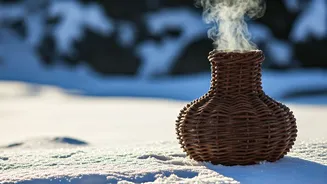
known as the 'Kangri,' becomes indispensable. This portable brazier, cradled in a wicker basket, is a lifeline. It provides warmth, allowing people to continue their daily tasks. Whether working outdoors or simply navigating the day, the Kangri is a constant companion. It's more than just a source of heat; it's a symbol of resilience, a tangible representation of how Kashmiris have adapted and thrived in an environment that often seems unforgiving. The firepot is not merely about surviving the cold; it's about maintaining a way of life.
Kangri: Heart of Winter
The Kangri's design is simple yet effective. The earthenware pot holds smoldering embers, carefully maintained to provide consistent heat. Enclosed within a wicker basket, it's safe to carry and allows for easy movement. Its portability is key, enabling people to stay warm while working in various conditions, from bustling marketplaces to the quiet solitude of homes. The Kangri's accessibility is paramount, ensuring that even the poorest can afford a measure of warmth during the coldest months. This underscores the cultural significance of the Kangri, embedding it into the very fabric of Kashmiri life, a symbol of communal resilience and shared hardship.
Life's Daily Rhythms
The presence of the Kangri dictates many aspects of daily life during winter in Kashmir. Morning routines often involve preparing the Kangri for the day's tasks, ensuring that it's properly fueled with embers and ready to provide warmth. People carry the Kangri close, whether they're engaged in work, social activities, or simply moving from one place to another. This reliance creates a unique rhythm to everyday life. It fosters a shared experience of warmth and camaraderie in the face of the biting cold, strengthening community bonds. The consistent warmth provided by the Kangri permits Kashmiris to continue their livelihoods, and maintain their social and cultural activities, unaffected by the brutal cold.
Work in Winter
In Kashmir, the Kangri plays a vital role in enabling work during the winter months. Many professions, such as artisans, shopkeepers, and outdoor laborers, are heavily reliant on the warmth it provides. Without the constant comfort of the Kangri, it would be difficult, if not impossible, to continue these activities. The warmth it offers not only makes the physical conditions bearable, but it also allows these workers to maintain their productivity and support themselves and their families throughout the cold season. The Kangri, therefore, is not merely a survival tool; it's a vital element in maintaining the economic activities that support Kashmiri society.
Cultural Significance
Beyond its practical use, the Kangri holds deep cultural significance in Kashmir. It represents resilience, resourcefulness, and the ability of the Kashmiri people to adapt to challenging conditions. It is frequently seen as a symbol of hospitality and sharing, often passed around among friends and family during gatherings. It is a shared experience that defines the culture, fostering a sense of community. The use of the Kangri weaves through the social interactions, shaping the traditions and values that define Kashmiri identity. The very presence of the Kangri tells a story of survival, of a community that understands the importance of sticking together, especially in times of hardship.