





The Significance of Iftar Drinks
During the sacred month of Ramadan, Muslims worldwide observe a dawn-to-sunset fast, a practice deeply rooted in spiritual reflection and discipline. This
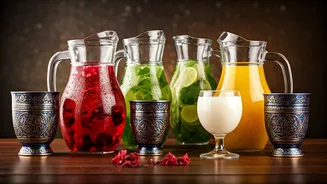
period, commemorating the revelation of the Quran, typically spans 29 to 30 days, guided by the lunar Islamic calendar. As the sun sets and the Maghrib prayer time arrives, the fast is broken, traditionally with dates and water, offering an immediate natural energy boost. Beyond these essentials, a variety of culturally cherished drinks are integral to the Iftar experience. These beverages are not merely refreshments; they are a vital part of the tradition, designed to replenish lost fluids and energy after extended fasting hours, ensuring a balanced and revitalizing meal to conclude the day's abstinence.
Nabeez: Ancient Date Elixir
Hailing from early Islamic traditions, Nabeez stands as a testament to the wisdom of using natural ingredients for sustenance. This revered drink is prepared by steeping dates or raisins in water overnight. The soaking process allows the fruits to release their natural sugars and nutrients into the water, creating a mildly sweet and highly hydrating concoction. Nabeez is particularly valued during Ramadan for its ability to swiftly restore depleted energy levels and rehydrate the body after a long day of fasting. Its simplicity belies its profound benefits, making it a timeless beverage cherished for its historical significance and practical efficacy in providing nourishment when it's most needed.
Mohabbat ka Sharbat: A Rosey Delight
A beloved beverage across South Asia, Mohabbat ka Sharbat offers a delightful and cooling experience at Iftar. Its primary ingredient is often a rose syrup, such as the widely recognized Rooh Afza, which lends a distinctive floral aroma and a beautiful hue. This is typically combined with milk, creating a creamy base, and enhanced with the addition of fresh, chopped fruits like succulent watermelon. The interplay of rose, milk, and fruit creates a symphony of flavors that is both refreshing and deeply satisfying. It’s an ideal drink for combating thirst and replenishing hydration, making it a popular choice for families and communities breaking their fast together.
Avil Milk: South Indian Nourishment
From the vibrant culinary landscape of South India, particularly popular in parts of Kerala, comes Avil Milk, a unique and nourishing beverage. This drink ingeniously combines flattened rice flakes, known as avil, with creamy milk. It’s then elevated with a medley of fruits and sweet toppings, which can include anything from bananas to nuts and dried fruits, adding layers of texture and flavor. The rice flakes provide a subtle heartiness, while the milk offers hydration, making it a balanced and energy-replenishing option. Avil Milk is a comforting and wholesome choice that perfectly complements the Iftar meal, providing sustenance with a delightful regional flair.
Thari Kanji: Kerala's Porridge Staple
Northern Kerala boasts a cherished Iftar tradition with Thari Kanji, a comforting porridge-like drink. This warming beverage is crafted from fine semolina, simmered to a smooth consistency. It’s enriched with the tropical creaminess of coconut milk, sweetened to taste, and infused with the aromatic essence of cardamom. The result is a thick, satisfying, and subtly spiced drink that provides a gentle yet effective energy boost. Thari Kanji is particularly suited for breaking a fast, as its soothing nature is easy on the stomach while still delivering essential nutrients and carbohydrates to help the body recover from the day's fasting.
Pure Fruit Juices: Natural Refreshment
Beyond specialized traditional concoctions, the simple yet profound goodness of natural fruit juices remains a cornerstone of Iftar hydration worldwide. During Ramadan, the preference leans towards refreshing options like watermelon, muskmelon, and grape juices. These vibrant beverages are packed with essential vitamins, minerals, and natural sugars, offering a direct and effective way to rehydrate and restore vitality after hours without intake. Their pure, unadulterated nature makes them an excellent choice for balancing the Iftar meal, providing a light, cooling, and nutrient-rich complement that helps individuals feel revitalized and well-nourished.