





Japanese Gyoza Perfection
Rie shares her cherished family recipe for Japanese pan-fried gyoza, a dish that won her a school competition. The filling is a harmonious blend of minced
pork, finely diced cabbage, and the distinct, pungent aroma of garlic chives (Nira), balanced by the savory notes of shiitake mushrooms and soy sauce. The sweetness from sake further enhances the flavor profile. For perfect pleating, a mere teaspoon of filling is recommended to ensure easy folding. Rie achieves the signature crispy 'wings' using a simple flour-and-water slurry, pan-frying the dumplings until golden brown. She emphasizes finely chopping the cabbage to avoid wrapping difficulties and advises against overfilling the pre-made wrappers. Pleating should involve only the top layer, with four to five folds being sufficient. Garlic chives can be found at Asian or Korean grocery stores if not available in regular supermarkets. The recommended dipping sauce is a simple mix of soy sauce and rice vinegar.
Taiwanese Night Market Style
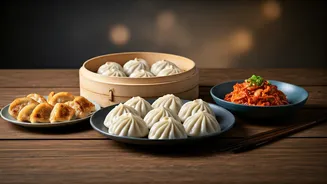
Jasmine presents a Taiwanese-style steamed pork and chive dumpling recipe, inspired by her childhood memories of family gatherings where diverse dumpling types were prepared together. The key to her flavorful filling lies in pre-mixing seasonings like Shaoxing wine, soy sauce, sesame oil, salt, white pepper, cornstarch, and ginger to ensure even distribution, avoiding any concentrated pockets of salt. This mixture is then combined with ground pork, chives, and green onions. Jasmine suggests stirring the filling in a single direction until it binds, a technique learned from her elders. To prevent sticking and impart a pleasant fragrance, napa cabbage leaves are placed at the bottom of the bamboo steamer. Steaming takes approximately 8-10 minutes, with translucent wrappers indicating readiness. Jasmine suggests either a pleated fold or a quicker 'speed fold' technique, emphasizing that imperfect shapes still yield delicious results. She typically serves these with two dipping sauces: one of chili oil and black vinegar, and another of sweet soy sauce with garlic and sesame oil.
Korean Kimchi Mandu
Joelle's recipe for Korean kimchi pork dumplings, often served during Lunar New Year in a soup called mandu guk, features a unique filling. She begins by pre-sautéing the ground pork to ensure it's fully cooked and to achieve a more distinct texture in the final dumpling. The filling also includes firm tofu for moisture, white onion, green onions, kimchi, shiitake mushrooms, and sweet potato starch glass noodles, which contribute a desirable chewy texture characteristic of classic Korean dishes. Seasonings include garlic, soy sauce, and sesame oil. Joelle prefers mixing the ingredients by hand, using a glove for cleanliness. For folding, she employs round wrappers, placing the filling on the less-floured side to prevent sticking. The 'wang mandu' or King mandu fold involves pinching the edges after folding in half, then joining the two corners to create a shape that accommodates more filling. Joelle's signature cooking method is the 'hot-cold-hot' boiling technique: bringing the water to a boil, adding dumplings, adding cold water when it boils again, and repeating this process. This shock to the dough results in a delightfully chewy wrapper. For serving, mandu guk is prepared with beef broth, rice cakes, egg, seaweed, and green onions, though the dumplings can also be eaten on their own.