






The Digital Daze
In today's fast-paced world, a common observation is children rapidly cycling through various digital devices – television, tablets, and smartphones – within
minutes. This constant, rapid-fire stimulation trains the young brain to expect immediate gratification and continuous novelty. As a result, stillness can become uncomfortable, and even educational activities may feel like a chore that must vie for attention against more exciting digital entertainment. This conditioning doesn't merely impact how children consume information; it profoundly shapes their cognitive processes, their capacity for imagination, and their ability to form meaningful connections with the world around them. The very fabric of their engagement with life is being rewoven by this relentless digital deluge, creating a silent struggle for sustained concentration that worries many parents.
The Power of Narrative
Reflecting on childhoods past, one recalls the remarkable ability to become engrossed in a story for extended periods without the aid of rapid visual cuts, flashing notifications, or endless scrolling feeds. We simply listened, our minds actively engaged in visualization and anticipation of what would unfold next. This quiet absorption cultivated more than just temporary focus; it fostered the development of rich inner worlds and a more profound capacity for imaginative thought. Storytelling, in its essence, is a powerful tool that bypasses the need for urgency, instead inviting the listener into a state of active presence. As a narrative unfolds, it gently compels the audience to stay with the journey, to follow its twists and turns, and to conjure images and emotions beyond the immediately visible. This very act of mental conjuring is where the foundation for renewed focus is laid, allowing the mind to slow down and engage deeply without becoming passive.
Cultivating Critical Thinking
A crucial element that traditional storytelling offers, and which is often absent in passive screen consumption, is the space for independent thought. On screens, narratives frequently dictate outcomes, define characters as strictly good or bad, and prescribe emotional responses, leaving little room for interpretation. Children are often positioned as mere recipients, accepting presented realities without question. Conversely, stories inherently create opportunities for inquiry. A child listening to a narrative might naturally ponder, 'Why did that character make that choice?' or 'What other possibilities existed?' This internal dialogue encourages curiosity and open-mindedness, moving away from quick judgments and towards nuanced understanding. The same story can resonate differently for each child, and even for the same child at different moments, fostering adaptability and a willingness to explore multiple perspectives, which is invaluable for navigating complex social interactions and reducing interpersonal conflicts.
The Human Connection
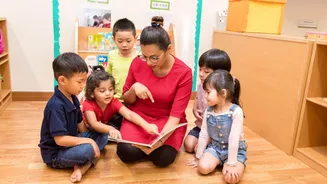
The act of storytelling, whether through reading aloud from a book or sharing an oral tale, creates a profound human connection between the storyteller and the listener. This shared experience transcends the mere transmission of information; it is about the immediate moment, enriched by vocal inflections, deliberate pauses, and expressive gestures. These elements naturally draw the child's attention to a single focal point, demonstrating that concentration can be an enjoyable and engaging experience rather than a forced endeavor. Many parents question if storytelling can truly compete with the allure of digital content. However, the discussion should not be framed as competition, but rather as a matter of balance and intentionality. While screens provide speed and variety, stories offer depth and continuity. Consistent exposure to narrative encourages children to rediscover the rhythm of active listening and imaginative engagement, a rhythm that steadily strengthens their overall ability to concentrate across various aspects of their lives.
Nurturing Inner Worlds
Integrating storytelling into a child's routine doesn't necessitate elaborate arrangements; it can begin with dedicating just a few minutes each day. Whether it's a cherished bedtime story, a tale shared during a quiet afternoon, or simply a shared reading session, the core principle is to establish storytelling as a regular habit. This consistency begins to condition the mind towards stillness and focused attention. Consider the simple act of a parent pausing before the next sentence in a bedtime story; the child's attentive lean forward, anticipating the continuation, is a powerful demonstration of focus rarely observed on interactive screens. Furthermore, children consistently exposed to stories often develop enhanced questioning skills and a greater patience for discovering resolutions. They become more inclined to grapple with ideas that may not offer immediate answers, demonstrating a growing capacity for sustained engagement with complex concepts and a natural inclination towards introspection, which is key to developing a robust sense of self.
Finding the Balance
In a world that constantly pulls us in myriad directions, the ability to pause and find stillness is invaluable. Storytelling serves as a gentle yet effective pathway back to this essential state. It is not about rejecting modernity, but about fostering a harmonious coexistence. While parents may not always be able to shield their children from every distraction, they can consciously provide moments of quietude, moments steeped in the power of narrative. These storytelling interludes, whether a book read aloud or an imagined adventure, can leave a lasting impression, long after the final word is spoken. In these moments, attention isn't a burden to be endured; it's a natural unfolding, allowing children to not only absorb a story but to connect with their own inner voices and thoughts, fostering a deeper sense of self-awareness and understanding.