




Origins and Influences
Spanish cuisine's foundations lie in a rich tapestry of historical influences, including those of the Romans, Moors, and indigenous Iberian cultures. The
Romans introduced staples like olive oil, wheat, and winemaking, shaping early Spanish culinary practices. The Moorish occupation, spanning centuries, significantly impacted the flavors and ingredients, introducing rice, citrus fruits, and spices like saffron, which are now integral to Spanish dishes. Regional variations further define Spanish cuisine, as each area embraced the influences in different ways and developed their unique cooking styles and ingredient preferences. This fusion of historical and cultural forces created a distinctive culinary heritage that continues to evolve. The use of fresh, local ingredients is a defining feature, and it plays a vital role in showcasing Spain's diverse agriculture and climate.
Tapas: A Spanish Tradition
Tapas, small savory dishes, represent a quintessential part of Spanish eating culture, embodying the social nature of meals. They are more than just snacks; they're an experience shared over drinks. Traditional tapas include olives, patatas bravas (potatoes with spicy sauce), and jamón ibérico (cured ham). The origins of tapas are debated, with several stories attributing their inception to bars covering drinks with plates to ward off flies, while another suggests that slices of bread or ham were provided with drinks to soak up alcohol. Tapas vary significantly across different regions, with each area featuring its specialties. In Andalusia, you might find fried fish and gazpacho, while in the Basque Country, pintxos (small skewers) are popular. The concept of tapas promotes a communal dining experience, encouraging people to share and savor a variety of flavors, often moving from bar to bar to sample a wide array of options.
Paella: A Rice Dish
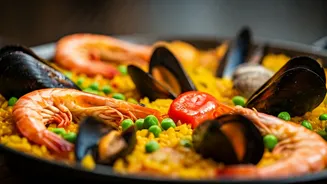
Paella, Spain's most iconic rice dish, hails from Valencia and embodies the region's culinary prowess. The dish's history can be traced back to the rice fields and farmers of the region who would cook their food over open fires, using whatever ingredients were available. Authentic paella includes short-grain rice, saffron for its color and flavor, and various meats or seafood, depending on the variant. Common types include paella valenciana (with chicken, rabbit, and vegetables), paella de marisco (seafood paella), and mixta (a combination of meat and seafood). The cooking process requires careful attention; the rice absorbs the flavors of the stock and other ingredients, creating a perfectly balanced dish. Paella is often prepared outdoors, fostering a sense of community. The dish is celebrated as a symbol of Spanish culinary identity and is a staple at gatherings and festive occasions across Spain.
Gazpacho and Salmorejo
Gazpacho, a cold tomato soup, is a refreshing staple in Spanish cuisine, particularly in the hot summer months. Originating in Andalusia, this soup blends fresh ingredients like tomatoes, cucumbers, peppers, onions, and garlic, seasoned with olive oil and vinegar. Its simplicity belies its complexity, with the flavors balancing beautifully. A variation, salmorejo, hails from Córdoba and uses a thicker consistency and different ingredients, primarily tomatoes, bread, olive oil, and garlic. Salmorejo is often garnished with chopped hard-boiled eggs and jamón ibérico, which creates a rich and satisfying meal. Both gazpacho and salmorejo exemplify the Spanish love for fresh, seasonal produce. These soups offer a glimpse into the diverse flavors that thrive in Spanish cuisine, reflecting regional variations and the availability of local ingredients.
Regional Specialties Flourish
Spanish cuisine showcases significant regional diversity, with each area offering unique culinary creations influenced by local ingredients and traditions. Catalonia features seafood dishes, such as pa amb tomàquet (bread with tomato) and crema catalana (a custard dessert). The Basque Country is renowned for pintxos and seafood preparations that are characterized by freshness and simplicity. In Galicia, seafood takes center stage, with pulpo a la gallega (octopus with paprika) being a popular dish. Castile and León focus on hearty dishes like cochinillo asado (roast suckling pig) and cocido (a stew). Each region's cuisine reflects a distinct blend of history, culture, and environmental factors, demonstrating Spain's rich culinary landscape. Tasting dishes from different regions gives a diverse culinary experience that illustrates the variations in ingredients, cooking methods, and flavors that define Spanish gastronomy.
Desserts: Sweet Endings
Spanish desserts offer a sweet finale to any meal, often reflecting the country's historical and cultural influences. Churros, fried dough pastries, are a beloved treat, typically served with hot chocolate. Crema catalana, a custard dessert with a caramelized sugar topping, represents a Catalan specialty. Turrón, a nougat made with honey and almonds, is especially popular during the holiday season, with various textures and flavors. These desserts showcase the use of local ingredients and traditional techniques. Whether it is a simple flan or a complex pastry, Spanish desserts demonstrate a skillful approach to creating satisfying and comforting sweets. This variety allows for a delightful exploration of textures and flavors. Each dessert embodies Spain's love of tradition and the pursuit of culinary delight.