






March's Aurora Advantage
March stands out as a superior month for aurora viewing, primarily due to an amplified surge in geomagnetic activity coinciding with the spring equinox.
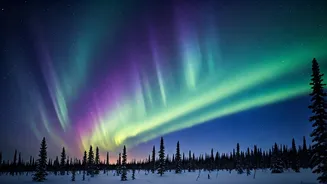
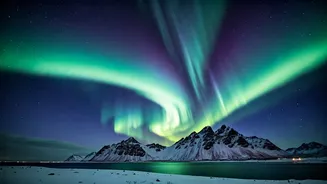
The captivating spectacle of the Northern Lights, or aurora borealis, is a result of energetic particles originating from the sun, propelled by solar winds and coronal mass ejections. When these particles encounter Earth's atmosphere, our planet's magnetic field guides them towards the poles, igniting vibrant light shows in both hemispheres. Extensive research, including a 75-year study by retired NASA solar physicist David Hathaway, indicates that March consistently records a higher number of geomagnetically active days compared to any other month. On average, March experiences about six days of intense geomagnetic activity, a notable increase from the mere three days typically observed in December. This heightened activity directly translates to more frequent and potentially more intense aurora displays, making March a prime candidate for anyone hoping to witness this natural wonder.
Optimal Viewing Times
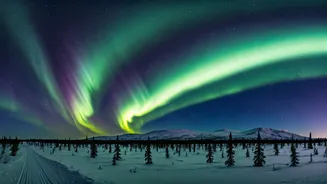
While auroras can grace the night sky at any hour, the peak of their activity most commonly occurs between 10 p.m. and 2 a.m. local time. This period often aligns with the highest levels of geomagnetic activity. Crucially, in March, the lingering longer nights of early spring still provide ample darkness across high-latitude locations such as Alaska, northern Canada, Iceland, and Scandinavia. These extended dark periods, combined with clear skies and minimal moonlight, significantly enhance the chances of spotting the dazzling auroral displays. Furthermore, March offers a sweet spot for visiting Arctic regions. The winter snow often remains at its deepest, while daylight hours are perceptibly increasing. The weather tends to be milder, and there's typically less cloud cover during the night, all contributing to a more favorable environment for aurora hunting and general exploration of these majestic landscapes.
The Equinox Phenomenon
The increased frequency of geomagnetic disturbances in spring and fall, nearly doubling that of winter and summer, can be attributed to a phenomenon known as the 'equinox effect.' This was first theorized in 1973 by geophysicists Christopher Russell and Robert McPherron. Their explanation centers on the interaction between the sun's and Earth's magnetic fields. Earth's magnetic field is tilted relative to the sun's, which generally causes much of the incoming solar wind to be deflected. However, during the equinoxes, when day and night are nearly equal in length due to Earth's axial tilt aligning with its orbit, the orientation of our planet's poles becomes almost perpendicular to the sun. This alignment allows a greater volume of solar wind to penetrate Earth's magnetosphere, leading to more robust geomagnetic activity and, consequently, more dramatic and visible auroras. This alignment is particularly pronounced around March 20th, the date of the spring equinox in 2026.
Solar Cycle Boost
Aurora enthusiasts are currently enjoying an exceptionally active aurora season, largely propelled by elevated solar activity as the sun moves past the peak of its approximately 11-year solar cycle. Solar cycle 25 officially reached its maximum intensity in 2024-2025, and scientists anticipate that this heightened solar activity will persist for a couple more years. This prolonged period of increased solar output is excellent news for those eager to witness the Northern Lights, as more frequent and powerful solar events translate directly into more spectacular aurora displays. Coupled with the inherent advantages of March viewing conditions, the current phase of the solar cycle presents an ideal window for aurora chasers to experience the full magic of the aurora borealis.