







The Posture Predicament
Many individuals wrestle with a lower abdominal bulge that seems impervious to diet and exercise, often attributing it to unwanted fat or a sluggish metabolism.
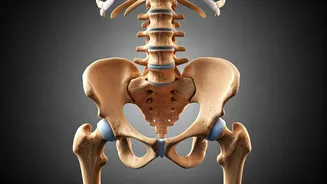
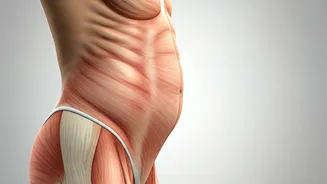
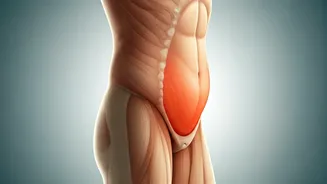
This can lead to a cycle of increased abdominal exercises, stricter dieting, and eventual disappointment. However, fitness expert Julie Capozziello suggests that the culprit might not be adipose tissue at all. Instead, it could be a misalignment known as anterior pelvic tilt. This postural imbalance affects the natural alignment of the spine, pelvis, and core muscles, which can cause the abdomen to protrude unnaturally and sometimes contribute to discomfort in the lower back. The modern lifestyle, characterized by extended periods of sitting, is identified as a primary contributor to this condition. When hip flexors become tight due to prolonged sitting, they exert a forward pull on the pelvis. This action accentuates the natural curve of the lower back, making the stomach appear more prominent. Over time, this chronic tightness can lead to weakened gluteal muscles and persistent lower back pain, adding to the frustration. While the visual effect can be mistaken for weight gain, Capozziello points out that it is often a structural issue, though it can occasionally be a combination of both poor posture and body fat.
Exercises for Alignment
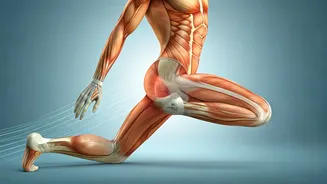
To combat anterior pelvic tilt and restore a neutral pelvic position, Julie Capozziello advocates for a series of five targeted corrective exercises. These movements are designed to gently retrain the core, enhance hip joint mobility, and reduce the exaggerated arch in the lower spine, all achievable without any special gym equipment. The recommended exercises include quadruped pelvic tilts, which involve controlled tilting of the pelvis while on all fours; deadbug toe taps, focusing on core stabilization and controlled leg movements; bear hold toe taps, which challenge core strength and balance in a plank-like position; hip CARs (Controlled Articular Rotations), aimed at improving the range of motion in the hip joint; and the happy baby stretch, a restorative pose that helps release tension in the hips and lower back. Beyond these specific movements, Capozziello emphasizes that achieving lasting improvement requires integrating postural awareness into daily activities. Simple, conscious adjustments while sitting, standing, and walking can make a significant difference over time. These include actively tucking the pelvis slightly under, drawing the rib cage down towards the pelvis, and gently rolling the shoulders back and down to promote an upright and balanced stance.
Identifying the Cause
Distinguishing between a lower belly bulge caused by anterior pelvic tilt and one primarily due to body fat involves observing how the abdomen presents itself. Dr. Vajalla Shravani, a fitness and Pilates expert, notes that with anterior pelvic tilt, the lower abdomen often protrudes even in individuals who are otherwise lean. The waistline might appear to have an exaggerated curve, lacking a relaxed contour. A straightforward indicator can be assessed through a simple posture check. Standing sideways in front of a mirror, an exaggerated arch in the lower back and a visibly forward-tilted pelvis are strong signs of anterior pelvic tilt. Another clue is the presence of muscular tension; individuals with this condition frequently experience tightness in the front of their hips and the lower back. They may also struggle to effectively engage their abdominal muscles. If consciously tucking the pelvis under and engaging the core muscles leads to a noticeable flattening of the abdomen, it strongly suggests that postural issues are the primary driver, rather than accumulated body fat.
Sitting's Impact on Posture
Prolonged periods of sitting have a profound effect on the body's alignment, particularly concerning the hip flexors, glutes, and spinal column. When we sit for extended durations, our hips remain in a perpetually flexed position. Over time, Dr. Shravani explains, the hip flexor muscles tend to adapt by shortening, becoming tight and contracted. Concurrently, the gluteal muscles, which are crucial for hip extension and maintaining an upright posture, become underactive and less engaged. This imbalance creates a situation where the tight hip flexors pull the pelvis forward, leading to an increased curvature in the lower back. Furthermore, sedentary behavior limits the natural movement of the spine, weakening the deep core stabilizers that are essential for supporting good posture. These postural shifts and the associated stiffness can develop surprisingly rapidly; in some cases, noticeable changes can emerge within a few weeks of consistent long periods of sitting, especially if there is minimal physical activity outside of work. Over months, this habitual posture can become ingrained, with the body accepting it as the norm.