


A Samosa Surprise
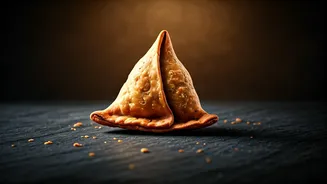
The humble samosa, a ubiquitous snack, is at the center of a viral discussion, not for its taste, but for its historical origins. A recent social media
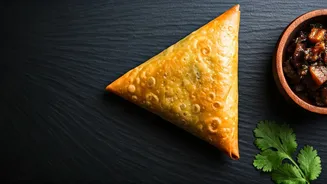
revelation has unearthed an ancient recipe that challenges our modern perception of this popular Indian snack. This intriguing find suggests that the samosa, as we commonly know it, is a product of significant evolution over centuries, with its early iterations differing dramatically from today's familiar version. The conversation isn't about the best street-side samosa, but rather about reclaiming its past and understanding its ancestral form, particularly focusing on ingredients that are conspicuously absent in this historical rendition, prompting a re-evaluation of its culinary lineage and its place in Indian food history.
Echoes of Royalty
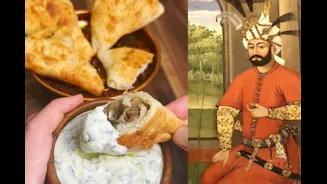
This culinary revelation originated from an old samosa recipe, purportedly dating back half a millennium and sourced from a Persian manuscript. This historical document is rumored to have journeyed through the hands of influential historical figures, including Emperor Akbar and Tipu Sultan, eventually reaching the British East India Company, and is now housed within the British Museum. The recipe itself is a treasured component of a text known as Ni’matnama, or the 'Book of Delights.' Originally compiled between 1501 and 1510 for the Sultan of Mandu in central India, this manuscript details a samosa far removed from its current street-food status. It was a dish meticulously prepared in royal kitchens, indicating its status as a refined delicacy. The ingredients listed are indicative of a rich and complex culinary tradition, a far cry from the simplified versions that emerged later.
Ancient Flavors Revealed
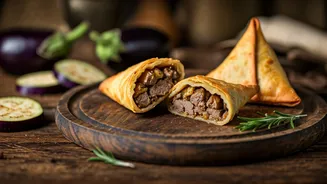
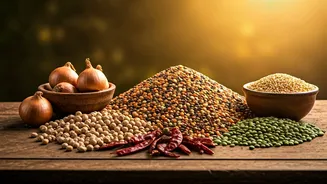
The most striking aspect of this ancient samosa recipe is the complete absence of potatoes and chili peppers. These foundational ingredients, which define the taste profile of modern samosas, were not yet integrated into Indian culinary practices during the period this recipe was conceived. The filling described in the Ni’matnama instead featured a blend of roasted aubergine pulp, dried ginger, and finely minced lamb, sautéed with onions and garlic. This unique combination was then encased and deep-fried in ghee, imparting a distinct richness and aroma. This historical preparation thus offered a flavor experience vastly different from the spicy, potato-laden samosas that have become a staple in contemporary Indian cuisine, highlighting a significant culinary divergence over time.
From Courts to Commons
Over the centuries, the samosa transitioned from its exclusive domain within opulent royal kitchens to a more accessible culinary offering for the general populace. As its popularity spread beyond aristocratic circles, the recipe underwent a natural process of adaptation and simplification. Ingredients were modified to suit the availability and economic constraints of everyday cooks, and preparation methods were streamlined to make the dish more feasible for wider consumption. This gradual evolution transformed the elaborate royal delicacy into the more straightforward and economical street food that is now beloved across India, making it a testament to food's dynamic cultural journey and its ability to transform with societal changes.
Online Culinary Discourse
The viral dissemination of this historical samosa recipe has ignited a vibrant online conversation, extending the discussion on how food serves as a tangible link to history and culture. Many netizens have expressed their fascination, with one user aptly remarking, 'This shows how food is also a part of history and culture.' Another commenter poignantly observed, 'Everyone links the samosa to India today. It’s an immigrant.' However, this interpretation has also met with some disagreement, as one user countered, 'The samosa is an Indian invention. The Arabs brought it back from India after their invasion in the 7th century.' This exchange underscores the complex and often debated origins of many cherished culinary traditions, showcasing the ongoing historical and cultural dialogues surrounding food.