






Sacred Ganges Flow
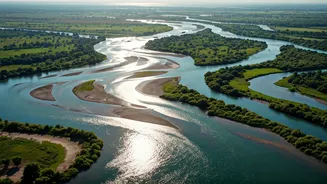
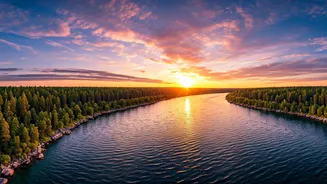
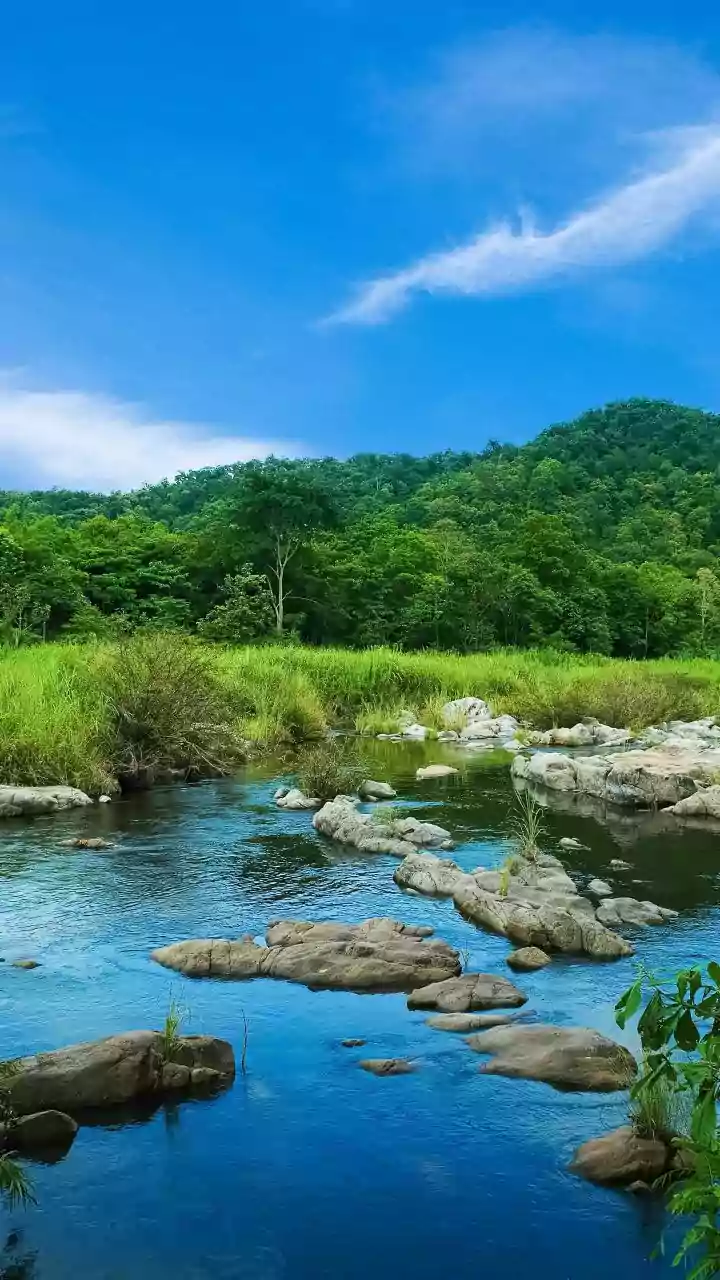
The Ganges, or Ganga, is far more than just a river in India; it's a divine entity, revered as a goddess and a symbol of purity. Its journey begins in the
Himalayas, at the Gangotri glacier, and winds its way through fertile plains, sustaining millions. Pilgrims flock to its banks, particularly in cities like Varanasi and Haridwar, to perform sacred rituals, seeking spiritual cleansing and liberation. The river's importance extends beyond its religious significance; it's a vital source of water for agriculture and a crucial artery for transportation and commerce in the regions it traverses. Its historical and cultural imprint is undeniable, shaping the very identity of the nation and inspiring countless tales, poems, and artistic expressions throughout centuries of Indian civilization.
Brahmaputra's Grandeur
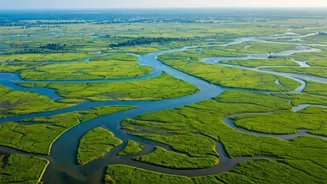
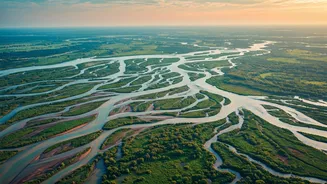
The mighty Brahmaputra, originating in Tibet, carves a spectacular path through Northeast India, dramatically altering landscapes with its immense power. Known as Yarlung Tsangpo in Tibet and Jamuna in Bangladesh, its Indian passage is characterized by wide, braided channels and vast alluvial plains. This river is not only a critical source of irrigation and sustenance for the northeastern states but also a natural wonder. Its seasonal floods, while sometimes destructive, also deposit nutrient-rich silt, vital for the region's agriculture. The Brahmaputra supports a rich biodiversity, including unique aquatic life and numerous bird species, making it an ecologically significant waterway that defines the unique character of India's eastern frontier.
Indus' Ancient Legacy
The Indus River, a cradle of civilization, has a history stretching back millennia, giving its name to the entire Indian subcontinent. Its origins lie in the Tibetan Plateau, and it flows through a vast network of tributaries, historically irrigating fertile lands that supported early human settlements and the magnificent Indus Valley Civilization. Although much of its course now lies in Pakistan, its historical and cultural significance for India remains profound. The river's influence is embedded in ancient texts, myths, and the very naming of the nation. Its once-flourishing banks are a testament to its role in shaping early human development and laying the groundwork for some of the world's oldest urban societies, a legacy that continues to resonate.
Yamuna's Urban Heart
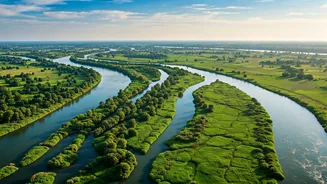
Flowing through the heart of Delhi, the Yamuna River holds immense cultural and historical value, deeply intertwined with the lives of millions. As a major tributary of the Ganges, it plays a critical role in supporting agriculture and providing water for urban centers. Its banks have witnessed the rise and fall of empires, and it's a central element in many Indian traditions and festivals, most notably the Janmashtami celebrations dedicated to Lord Krishna. Despite facing significant environmental challenges due to urbanization and industrialization, the Yamuna remains a vital lifeline, and efforts are ongoing to preserve and rejuvenate its ecosystem, reflecting its enduring importance to the nation's capital and beyond.