



Colour and Stripes
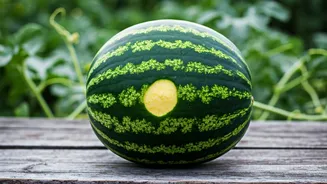
The first clue to a watermelon's authenticity lies in its skin. Naturally ripened melons usually display a deep, consistent dark green hue, often adorned
with distinct stripes or mottled patterns. If the rind appears excessively glossy or boasts an unnaturally vibrant colour, it's a red flag. This superficial shine might be due to waxing or artificial colouring applied to mask imperfections or mimic freshness, indicating a potentially chemically treated fruit rather than one that has ripened naturally under the sun.
The Crucial Field Spot
Pay close attention to the underside of the watermelon, the part that rested on the ground while growing. This 'field spot' is a critical indicator of natural ripening. A truly ripe melon will typically have a creamy yellow or even an orangey-yellow patch. This colour signifies that the fruit has had ample time to ripen on the vine. Conversely, if the spot is stark white, pale, or entirely absent, it suggests that the watermelon might have been harvested too early and subjected to artificial ripening processes to achieve its final size and colour.
Listen to the Tap
A simple yet effective test involves gently tapping the watermelon with your knuckles. A mature, naturally ripened melon will emit a deep, resonant, hollow sound, almost like a drum. This audible cue suggests that the flesh inside is perfectly juicy and ripe. However, if the sound produced is dull or muted, it often signals that the fruit is either overripe and starting to become mealy, or worse, it could indicate that the melon has been artificially filled or treated, leading to an undesirable texture and taste.
Inspect for Tampering
Before purchasing, conduct a thorough visual inspection, particularly around the stem and base of the watermelon. Look out for any tiny pinpricks, needle-like marks, or fine cracks. These are often telltale signs that chemicals, artificial sweeteners, or ripening agents may have been injected into the fruit. Such methods are used to speed up the ripening process or enhance sweetness artificially, compromising the melon's natural quality and potentially its safety.
The Watermelon Water Test
A quick and revealing test to check for artificial colouring involves a small piece of the watermelon's flesh. Carefully cut a sliver of the red pulp and immerse it in a glass of clean water. If the water rapidly turns a vibrant pink or red hue, it's a strong indication that the watermelon has been dyed with unsafe synthetic colours. Naturally coloured watermelons will release their pigments more slowly and won't drastically alter the water's colour, ensuring you're enjoying a pure, unadulterated fruit.