







Echoes of the Past
Nestled within the labyrinthine lanes of Old Delhi, a restored gateway beckons travellers to a unique lodging experience. Haveli Dharampura, situated in the historic
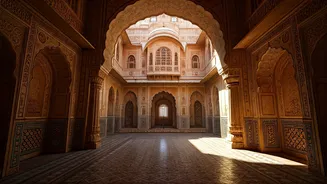
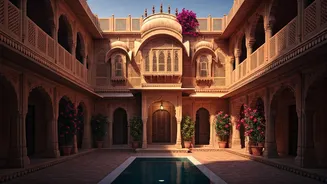
Shahjahanabad district established by Mughal Emperor Shah Jahan in the 17th century, stands as a testament to a bygone era of intricate courtyard architecture. These structures were designed as self-sufficient family enclaves, encompassing spaces for trade, celebrations, rest, and devotion, all revolving around a central courtyard. For centuries, havelis served as dynamic hubs, functioning as homes, commercial centers, and cultural gathering places. However, with the advent of modernization, many began to fall into disuse, leading to their demolition, repurposing as storage facilities or low-income housing, or simply succumbing to neglect. The current revitalization effort sees these spaces transformed not merely into museums, but into living entities offering an immersive historical encounter, allowing visitors to 'check into' history itself.
Reviving an Economy
The narrative of haveli revival extends beyond Delhi, notably to Bari Kothi, a majestic riverside estate in Bengal that shares a similar trajectory. Originally constructed in the late 18th century in Azimganj by the forefathers of Darshan Dudhoria, Bari Kothi was the seat of the Sheherwali Jains, a prominent merchant community that relocated from Rajasthan to Bengal. This community thrived on trade, managing silk, jute, and banking operations with Europe from what was then the subcontinent's most affluent province. In its heyday, 'kothi' was more than just a dwelling; it was simultaneously a family residence and a business headquarters. Bari Kothi, being the larger of two family estates, earned its name, translating to 'The Big House.' For six generations, it remained the vibrant core of family life before ultimately falling silent and remaining preserved yet static. For the sibling duo behind its resurgence, Darshan and Lipika, the restoration was a mission to revive not just a building, but the local economy, employing and supporting numerous local craftsmen and families.
Seamless Modernity
A shared challenge across restored havelis is rendering them habitable and comfortable for contemporary guests without compromising their historical integrity. The guiding principle at Bari Kothi, for instance, was to ensure that all modern additions were rendered invisible, allowing the building to appear as it did in 1780 while operating with 2026-level efficiency. This philosophy extends to other heritage properties like Padmaa, a three-century-old family haveli in Jaipur. Initially hesitant to install private bathrooms, fearing they would diminish the rooms' original character, the owners eventually found a balance. The integration of modern amenities like air conditioning, plumbing, and electrical systems was achieved through meticulous planning, utilizing existing service walls and concealing ducts and wiring. The aim was to enhance guest comfort and privacy subtly, ensuring that the transition between the old and the new felt organic and unobtrusive, preserving the authentic ambiance of these historic residences.
Authentic Guest Experience
While Instagram feeds showcase sun-drenched courtyards and aesthetic charm, the reality of staying in a restored haveli offers a far more textured and authentic experience. Properties like Haveli Dharampura acknowledge this, noting that guests are often drawn by the visual appeal but may not always anticipate the full sensory immersion. The spatial arrangements within these homes, such as compact bathrooms and narrow corridors, adhere to traditional Mughal domestic architecture rather than contemporary hotel standards. The vibrant, sometimes overwhelming, character of the surrounding neighborhoods is embraced as part of the stay, reframed as an integral element of the experience. This approach moves beyond simply presenting a beautiful facade; it invites guests to engage with the living history and vibrant pulse of the locale, creating a memorable and grounded travel adventure.
Living Heritage
The resurgence of havelis is driven by more than just their architectural beauty; it’s about preserving and sharing profound narratives of community and continuity. Padmaa, named after the owner's mother, has been a cornerstone of the Shah family for nearly three centuries, evolving from a jewelry trading post to a family home. Its transformation into a boutique hospitality space represents a natural progression, enabling its financial and emotional preservation while sharing its story. Similarly, at Bari Kothi, the emphasis is on the human element, with the staff embodying the property’s soul rather than being mere employees. This dedication to local employment and community support has revitalized the area, empowering local artisans and sustaining numerous families. At Haveli Dharampura, staff members often hail from the very neighborhoods guests explore, making interactions authentic and lived experiences. This approach transforms guests from mere tourists into participants in a living inheritance, as they fly kites from rooftops or engage with the local culture, experiencing a heritage that is actively being passed down through generations.