




Understanding Yellow Line Corridors
Mumbai's Yellow Line metro network is a crucial artery designed to connect disparate parts of the city, significantly easing commuter burdens. This extensive
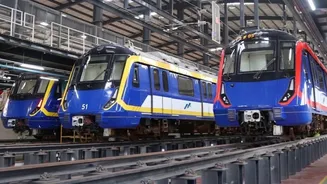
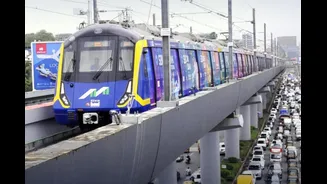
system is bifurcated into two distinct lines: Line 2A and Line 2B. Line 2A spans approximately 18.6 kilometers, running from Dahisar East all the way to D.N. Nagar, and is a fully elevated corridor. It boasts 17 metro stations. In contrast, Line 2B is a longer, predominantly elevated route of about 23.5 kilometers, intended to link D.N. Nagar with Mankhurd and Mandale, incorporating 20 stations. The entire Yellow Line, when fully realized, will cover a substantial 42.20 kilometers, making it one of the longest metro routes in the city. While Line 2A is substantially operational, Line 2B is still undergoing significant construction and development phases, with portions becoming operational in stages. This dual-line system is managed by the Mumbai Metropolitan Region Development Authority (MMRDA) and is a cornerstone of Mumbai's expanding public transportation infrastructure.
Operational Status & Key Milestones
The Yellow Line's journey towards full operational status has been marked by phased inaugurations. Phase One of Line 2A, spanning 9.5 kilometers and encompassing 9 stations from Dahisar East to Dahanukarwadi, was launched in April 2022. These stations include Dahisar (East), Eksar, Anand Nagar, IC Colony, Borivali West, Pahadi Eksar, Kandivali West, Kandarpada, and Dahanukarwadi. The full Line 2A, extending to D.N. Nagar with its 17 stations, has been a priority, with operational updates often reflecting its progression. Line 2B, while still largely under construction, has seen segments opening, notably the Chembur station, targeted for April 2026, which will connect Mandale to the heart of Chembur, a crucial step for eastern suburbs' connectivity. Other planned openings for Line 2B include the stretch from Andheri (D.N. Nagar) to Khar by the end of 2026, and the challenging BKC and Kurla link expected by 2027. The partial opening of Line 9 and Line 2B on April 3rd, following some delays, signifies continued progress in expanding Mumbai's metro network.
Fare Structure and Travel Passes
Commuting on Mumbai's Yellow Line metro is designed to be affordable and efficient, with fares calculated based on the distance traveled. The fare structure is tiered, ensuring that longer journeys incur higher, but still reasonable, costs. For distances between 3 and 12 kilometers, the metro fare is Rs 20. Journeys ranging from 12 to 18 kilometers are priced at Rs 30. For travel between 18 and 24 kilometers, passengers will pay Rs 40. The longest distance bracket, covering 24 to 30 kilometers, has a fare of Rs 50. To further enhance convenience for regular commuters, the MMRDA plans to introduce Trip Passes. These passes will be valid for 30 days and accommodate up to 45 trips. A nominal security deposit of Rs 50 will be required for the Trip Pass, which is fully refundable, making it an attractive option for frequent travelers seeking cost savings and ease of use.
Interconnectivity and Interchange Stations
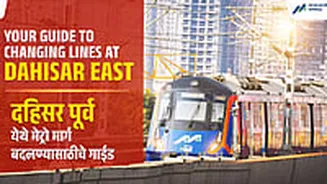
The Yellow Line is strategically designed to be a linchpin in Mumbai's integrated public transport system, offering numerous interchange points with other metro lines, suburban railways, and bus networks. Key interchange stations facilitate seamless transitions for commuters. For instance, Dahisar (East) on Line 2A connects with the upcoming Red Line 7 and Red Line 9. Lower Oshiwara offers a link to the Pink Line 6, while D.N. Nagar serves as a vital interchange with the Blue Line 1, a critical connection for western and central Mumbai travel. On the developing Line 2B, Khira Nagar and Bandra stations connect with the Western Line suburban railway. The Income Tax Office station in Bandra Kurla Complex (BKC) will link with the Aqua Line 3, and the Eastern Express Highway station will connect with the Green Line 4. Chembur station provides a crucial connection to the Monorail. Furthermore, the upcoming BKC Bullet Train station will offer direct integration with both Metro Line 3 and Line 2B, enhancing multi-modal connectivity through foot overbridges and potentially travelators.
Cancelled and Future Stations
As with any large-scale infrastructure project, the Mumbai Metro Yellow Line has seen some modifications to its original plan, including the cancellation of certain stations to optimize the route and avoid conflicts. Specifically on Line 2B, two stations were removed from the finalized plan: the MMRDA station and Kurla Terminus. The MMRDA station was deemed unnecessary due to its proximity and overlap with the Kalanagar flyover ramp. The Kurla Terminus station faced cancellation primarily because it encroached upon a restricted zone near the Mumbai Airport. Additionally, the planned SG Barve Marg station was also removed, partly due to its close proximity of just 474 meters to the originally proposed Kurla Terminus site. These adjustments are aimed at streamlining the metro's path and ensuring efficient operations, though they represent a departure from the initial proposals.
Operational Timings and Frequency
When fully operational, the Mumbai Yellow Line metro aims to provide extensive service hours to cater to the daily commute needs of Mumbaikars. Trains are slated to run from early morning, commencing at 6:00 AM, until late evening, with the last trains departing around 10:00 PM. The frequency of trains is expected to be quite high, with services running every 10 to 11 minutes during regular hours. During peak office hours, this frequency might increase to further reduce waiting times for commuters. For Line 2A, the first train from Andheri West is scheduled to depart at 5:55 AM, and the last train is slated for 9:24 PM. While exact timings may vary slightly station by station, these general timings reflect the system's commitment to providing accessible and reliable transport throughout the day. The frequency can also be adjusted based on real-time passenger demand.