



What Exactly Is Caviar?
Caviar, a delicacy synonymous with luxury, is not just any fish egg. It specifically refers to salt-cured roe derived exclusively from sturgeon species.
These ancient fish, often found in the Caspian and Black Seas, produce eggs renowned for their delicate texture and rich, nuanced flavour. Historically, prized varieties like Beluga, Osetra, and Sevruga have set the standard for what true caviar should be. Understanding this fundamental definition—that it originates solely from sturgeon—is the first step in appreciating its unique value and differentiating it from the myriad of other fish roes available globally. The meticulous curing process further transforms these eggs into the sophisticated delicacy we recognize.
Caviar Versus Fish Roe
It's crucial to understand that 'fish roe' is a broad umbrella term encompassing eggs from numerous aquatic species, such as salmon, trout, lumpfish, and capelin. While these are commonly enjoyed, they do not meet the strict definition of caviar. The primary distinction lies in their origin: caviar exclusively comes from sturgeon, whereas fish roe can originate from any fish. Beyond species, the preparation methods create a significant divergence. Sturgeon roe undergoes a refined curing process that imbues it with its characteristic subtle flavour and distinct texture. In contrast, other fish roes exhibit a much wider spectrum of tastes, colours, and saltiness, often requiring different culinary applications and offering a less consistent sensory experience compared to authentic caviar.
Why the Premium Price?
The elevated cost of authentic caviar is directly linked to the challenges and rarity associated with its production. Sturgeon, the exclusive source of true caviar, are slow-maturing fish that reproduce infrequently, making their egg harvesting a delicate and limited operation. Compounding this natural scarcity is the fact that many sturgeon species are now endangered due to overfishing and habitat loss. Consequently, the cultivation of sturgeon for caviar is heavily regulated, often involving extensive aquaculture efforts. The labour-intensive nature of carefully collecting, processing, and curing these fragile eggs, coupled with their inherent rarity, firmly places genuine sturgeon caviar in the realm of luxury consumables, justifying its significant price point.
Visual Cues: Colour and Sheen
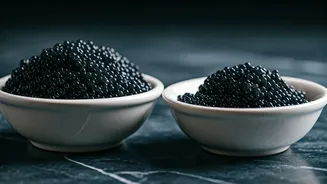
A keen observation of colour is one of the most straightforward ways to discern genuine caviar. Authentic sturgeon roe typically displays natural, subdued tones such as charcoal grey, a deep olive, a warm golden brown, or a rich, lustrous black. These colours often possess a gentle, natural sheen rather than an artificial, overly vibrant appearance. If the 'caviar' on your plate presents itself in unnaturally bright hues, a uniform, stark black, or an excessively glossy, almost plastic-like sheen, it's a strong indication that it has been treated with dyes or artificial enhancers to mimic the look of luxury. The subtle, organic colour variation is a hallmark of true caviar.
Texture Tells the Tale
Beyond visual inspection, the texture of caviar on the spoon offers another vital clue. When real caviar pearls are gently placed on a surface, they should maintain their distinct shape, appearing firm and separate from one another. They should not readily break down, smear, or clump together. If the eggs seem sticky, mushy, overly soft, or form a cohesive mass, it suggests they are likely not sturgeon roe. Cheaper alternatives, such as lumpfish or capelin roe, often have a more rigid or gelatinous consistency that causes them to stick together, betraying their imitation status and lacking the delicate, individual pop of authentic caviar.
Flavour Profile Insights
The taste of caviar is a defining characteristic that can quickly reveal its authenticity. Genuine sturgeon caviar offers a subtle, clean, and often buttery flavour profile, complemented by a mild briny essence that dissipates pleasantly. It should never present a strong fishy, metallic, or overwhelmingly salty taste. If the flavour feels harsh, lingers uncomfortably, or tastes artificial, it's a clear sign you're likely experiencing an imitation. Restaurants using less expensive roe often compensate for their lack of delicate flavour by adding excessive salt, resulting in an aggressive taste that lacks the nuanced complexity of true caviar.
Menu Listings and Pricing
The way caviar is presented on a restaurant menu can be highly informative. If 'caviar' is casually mentioned as an inexpensive addition to dishes like pasta, appetizers, or canapés, it is almost certainly an imitation. The high cost of authentic sturgeon caviar means it is typically featured as a premium item, often with specific varietal names like Osetra, Sevruga, or Beluga clearly stated. Vague descriptions such as 'black caviar' or a simple 'caviar garnish' are often euphemisms for less expensive, non-sturgeon roe. Genuine luxury is usually advertised with transparency and pride.
Restaurant Transparency Matters
Reputable establishments that serve authentic caviar usually make an effort to be transparent about their offerings. A well-described menu item might specify the type of sturgeon, its origin, or the specific varietal of caviar being served. Chefs and restaurateurs often take pride in sourcing and presenting genuine caviar, highlighting its esteemed qualities. Conversely, if the menu lacks detail, or if servers are evasive or dismissive when asked for more information, stating it's 'just regular caviar,' this vagueness often signals that the ingredient is likely an imitation being used for aesthetic effect rather than for its true luxurious quality. Look for establishments that confidently detail their caviar offerings.