



Oversized Planter Woes
Selecting a pot that is excessively large for your plant can be detrimental, potentially leading to an overabundance of soil. This excess moisture can create
a waterlogged environment, significantly increasing the risk of root rot. Moreover, a vast pot can cause the plant to divert its energy towards filling the space rather than developing a robust root system. Imagine moving into a mansion when a cozy apartment would suffice; the focus shifts to occupying the area. It's far more beneficial to gradually increase the planter size, opting for one that's only one to two inches larger than the current one. This approach encourages consistent root development and prevents the plant from becoming overwhelmed by its new, expansive home.
Mismatched Soil Choices
The type of potting soil you use plays a critical role in a plant's survival and growth after repotting. Different plants have distinct needs; some thrive in well-draining conditions, while others prefer to retain moisture. For instance, a general potting mix is suitable for many houseplants, but for vegetables, a more nutrient-dense blend is essential to provide the necessary sustenance for vigorous growth. Conversely, using sandy soil designed for succulents or cacti for moisture-loving vegetables would be a mistake, as it lacks the required water retention and nutrients. Always consider the specific requirements of your plant and choose a soil that aligns with its natural habitat and growth pattern.
Incorrect Repotting Timing
Timing is a crucial factor when repotting, as disturbing a plant during its active growth period can induce shock and hinder its recovery. Experts recommend repotting during a plant's dormant phase, which for many species, occurs in winter. This allows the plant to acclimate to its new environment with minimal stress. Observing signs that a plant needs repotting, such as roots emerging from drainage holes or stunted growth, is important. However, understanding the plant's specific growth cycle is equally vital. If repotting outside of dormancy is unavoidable, exercise extreme caution, especially when handling the root ball, gently loosening any tightly bound roots to minimize trauma and promote a smoother transition.
Excessive Root Disturbance
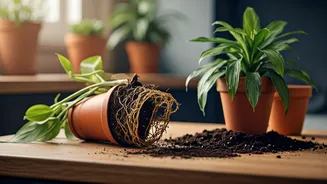
Even when repotting during the optimal season, excessive disturbance of the root system can be highly damaging. Some gardeners might aggressively remove all old soil or even trim roots unnecessarily, akin to giving a plant a haircut without cause. This aggressive approach can be traumatic, especially if the plant isn't severely root-bound. The goal is to gently tease apart tangled roots rather than completely stripping them of their familiar soil. Keeping some of the original soil attached to the roots provides a sense of familiarity and continuity, making the repotting process less jarring for the plant and aiding in its quicker establishment in the new pot.
Compacted Soil Issues
A common mistake during repotting is over-compacting the soil, which can have severe consequences for the plant's root system. While it might seem like a firm foundation is beneficial, pressing the soil down too hard restricts airflow, essentially suffocating the roots. Roots need oxygen to thrive, and compacted soil creates a dense barrier, hindering their ability to breathe and absorb nutrients. Instead of firm packing, it's better to allow the soil to remain loose and airy. This ensures that when you water the plant, the water penetrates the soil effectively and drains properly, preventing both waterlogging and the dreaded root rot.