




A Culinary Heritage
Spanish cuisine, a vibrant reflection of its diverse history and geography, boasts a rich heritage shaped by various cultural influences. From the Romans
to the Moors, each civilization left an indelible mark on its culinary landscape, contributing to the development of unique flavors and cooking techniques. The Romans introduced olive oil and wheat cultivation, fundamental elements in Spanish cooking. Later, the Moors brought spices, citrus fruits, and rice, enhancing the complexity of flavors. Over centuries, these influences blended, creating a culinary tradition that is both rooted in history and constantly evolving. The variations across Spain mirror these influences, with each region showcasing its distinct culinary identity. The northern regions are celebrated for their stews and seafood, while the south is renowned for its Moorish-influenced dishes and tapas culture. This diversity is what gives Spanish cuisine its dynamic character. The emphasis on fresh, local ingredients further amplifies the culinary experience. Farmers' markets are a vibrant part of Spanish life, providing access to the finest seasonal produce, which forms the foundation of the cuisine. Traditional cooking methods, passed down through generations, still play a crucial role, allowing the authentic flavors to shine.
Regional Delights Explored
Spain's diverse geography has resulted in a fascinating array of regional specialties. In Catalonia, on the northeastern coast, the emphasis is on seafood, rice dishes, and Catalan cream. The influence of French culinary techniques is evident in the area's refined cooking styles. Moving south to Valencia, one finds the birthplace of paella, a rice dish that combines saffron, seafood, chicken, and vegetables, cooked in a large, shallow pan over an open flame. This area's fertile land also supports the cultivation of oranges and other citrus fruits, adding a refreshing note to various dishes. In Andalusia, in the south, Moorish influences are strong, reflected in the use of spices, almonds, and dried fruits. Tapas culture thrives here, with bars offering a variety of small plates to accompany drinks. Galacia, in the northwest, is known for its seafood, particularly octopus (pulpo a la gallega), and hearty stews. The cuisine often relies on simple preparations that allow the natural flavors of the ingredients to shine. The Basque Country, another northern region, is a gastronomic hub, known for its innovative cooking techniques and pintxos (Basque tapas). The region boasts more Michelin-starred restaurants than almost any other region in the world, showcasing its high standards of excellence. These regional differences aren't just about the ingredients; they encompass methods of preparation, serving styles, and the overall dining experience, painting a picture of Spain's varied and vibrant culinary landscape.
Essential Ingredients Unveiled
Key ingredients form the heart of Spanish cuisine, contributing to its distinct flavors. Olive oil, a staple, is used in nearly every dish, from frying to drizzling, to elevate the taste of meals. Spain produces some of the finest olive oils, which are prized for their quality and rich flavor profiles. Tomatoes are another cornerstone. The rich, sun-ripened tomatoes are used in sauces, stews, and salads, adding a burst of freshness and sweetness. Garlic and onions are also indispensable, providing a foundational aroma and flavor for many recipes. Spices such as saffron, paprika, and cumin, reflect historical influences, from saffron in paella, to paprika adding a smoky depth to stews, and cumin used in Moorish-inspired dishes. Rice, especially short-grain varieties, is central to dishes like paella and arroz con leche (rice pudding). Seafood, due to Spain's extensive coastline, is naturally prominent. From prawns and mussels to tuna and sardines, a wide array of seafood is grilled, fried, or stewed. Meats include both cured and fresh varieties. Jamón ibérico, a cured ham made from Iberian pigs, is one of the most famous, known for its intense flavor and texture. Chorizo, a spicy sausage, adds a vibrant touch to stews and tapas. Fresh vegetables and fruits, depending on the season, make up a large part of the Spanish diet. Peppers, eggplant, and citrus fruits are used widely. These ingredients reflect the importance of quality and freshness. They capture the essence of Spanish cuisine, creating a rich sensory experience.
Iconic Dishes Detailed
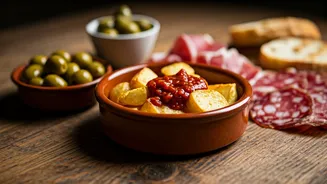
Certain dishes exemplify the essence of Spanish cuisine and have become internationally famous. Paella, as mentioned, is perhaps the most iconic, especially the version from Valencia. It brings together rice, saffron, seafood, chicken, and vegetables, cooked in a large pan, offering a perfect blend of flavors and textures. Gazpacho, a cold tomato soup, is another classic, refreshing and perfectly suited for hot weather. The use of ripe tomatoes, cucumbers, peppers, and garlic creates a light yet flavorful soup. Tortilla Española, a potato and onion omelet, is a simple yet satisfying dish, perfect for any meal or snack. It's often served as a tapa, cooked with a golden exterior and a soft, flavorful interior. Tapas, small plates meant to be shared, are an integral part of Spanish food culture. These can range from olives and cured meats to patatas bravas (fried potatoes with spicy sauce) and gambas al ajillo (garlic shrimp). Cocido madrileño, a hearty chickpea stew from Madrid, is a warm and comforting dish, packed with vegetables, meats, and chickpeas. Arroz con leche, a creamy rice pudding, provides a sweet finish to a meal, flavored with cinnamon and lemon zest. These dishes, among many others, represent the culinary mastery of Spain, offering something for every palate. The quality of the ingredients and the careful preparation methods make each dish a celebration of flavor and culture.
Embracing Spanish Flavors
Experiencing Spanish cuisine is more than just eating; it's a social and cultural event. Dining is meant to be a leisurely experience, centered around sharing food and conversation. Tapas bars, a staple of Spanish social life, provide a casual setting to sample a variety of dishes. The sharing of tapas encourages trying different flavors and fosters a sense of community. Family-style meals are also common. Dishes are often placed in the center of the table, allowing everyone to share and engage in conversation. This communal approach to eating is integral to the culture. The emphasis on fresh, seasonal ingredients adds to the experience. Visiting local markets to choose the ingredients is common. These markets are a feast for the senses, with fresh produce, seafood, meats, and cheeses. Cooking at home is a way to replicate the Spanish dining experience. Preparing traditional recipes can be rewarding, allowing one to learn about the cuisine and the culture it represents. Enjoying Spanish cuisine, whether at a restaurant, at a tapas bar, or at home, is an immersive way to experience the culture. It encourages a deeper appreciation for the ingredients, the preparation, and the communal enjoyment of food, creating an unforgettable experience. The joy of sharing and savouring a Spanish meal embodies the spirit of its food culture.