



Smart Arrival Airports
When planning your Venetian escape, consider more than just the primary Marco Polo Airport. Treviso Airport is a viable option for budget airlines, often
offering lower fares. Furthermore, Italy's robust rail network opens up further possibilities; arriving via train or bus from cities like Verona, Trieste, or even Bologna can be a cost-effective strategy. Weigh the total travel time and expense from these alternative gateways to find the most economical route into the city.
Winter Travel Advantage
While Venice experiences tourism year-round, the period from late December through to the start of Carnevale (typically late January/early February) sees fewer visitors. This can translate to slightly more manageable prices and a less crowded experience. However, be aware that some smaller establishments might close during January. To further enhance your budget-friendly visit, aim for weekdays, as weekends are often swamped with day-trippers, driving up prices and crowds.
Navigating to Your Stay
The journey from the airport to your accommodation warrants careful consideration. While coaches to Piazzale Roma are common, assess whether this is truly the cheapest option once you factor in onward travel to your hotel, likely via a vaporetto. The Alilaguna ferry offers various routes with stops that might place you closer to your final destination, potentially saving on internal transport costs. Always consult a map to determine the most efficient and budget-conscious route based on your accommodation's location.
Strategic Accommodation Choices
Choosing where to stay critically impacts your budget. While locations further from the city center might appear cheaper initially, the daily cost of using vaporettos to reach main attractions can quickly negate savings. Staying on islands like Giudecca or Murano incurs significant ferry fees (€9.50 per trip or a more expensive day pass). Even within the sestieri, proximity matters to minimize transport expenses. Similarly, mainland accommodation in Mestre is often less expensive, but factor in daily travel costs and the new Venice Access Fee during peak seasons. For sustainability and to support the local economy, prioritize lodging within the city itself.
Rethinking Airbnb Stays
While Airbnbs are often perceived as budget-friendly, Venice can be an exception. Rental prices can be surprisingly high, and the cost of groceries is inflated due to logistical challenges in transporting goods to the islands, making self-catering less economical than anticipated. In many cases, a standard hotel can offer better value. Furthermore, opting for hotels or hostels is a more ethical choice; the proliferation of short-term rentals has strained the housing market, forcing many locals out. Consider monasteries or convents that rent rooms as an alternative, keeping in mind potential curfews.
Delicious and Affordable Bites
Venice excels in 'cicchetti,' delightful bar snacks akin to Spanish tapas. These can easily form a substantial and affordable meal, often served on small pieces of baguette. For a more filling option, seek out places offering varied selections of meatballs or seafood cicchetti. For lunch on the go, 'tramezzini,' generously filled sandwiches with local variations like tuna and mini pickled onions, are a delicious and budget-friendly choice.
Embrace the Walkability
Don't be intimidated by Venice's intricate layout; the city is surprisingly compact and best explored on foot. Walking not only saves money on expensive vaporetto fares but also allows for serendipitous discoveries down charming alleyways. While it's easy to get lost, this can be a delightful experience. Major routes within the sestieri are generally easy to navigate, and the abundance of churches, bars, and artisan shops provides natural points of interest and orientation.
Judicious Vaporetto Use
If your itinerary keeps you primarily on the main islands and involves minimal travel, you might not need extensive use of the vaporetto system. However, if frequent trips are planned, especially to outer islands, investing in a timed pass could be economical. A 24-hour pass costs €25, 48 hours is €35, 72 hours is €45, and a week-long pass is €65. For very frequent visitors or those staying longer, consider the €100 Venezia Transport Card, valid for 5 years, offering discounted fares.
Strategic Sightseeing Passes
Before purchasing a city pass, carefully evaluate its value. The Venezia Unica pass, unlike those in many other cities, does not include free public transport. It grants access to Civic Museums and Chorus churches. If your primary interest lies in specific sites like the Doge's Palace, purchasing individual tickets might be more cost-effective than a comprehensive pass. A discounted Venezia Unica card covers San Marco museums, but assess if seeing all these sites justifies the cost for your specific itinerary.
Inexpensive Church Visits
While many Venetian churches are free to enter, some offer exceptional artistic and architectural value worth a modest fee. The Chorus circuit, encompassing 18 churches, showcases some of the city's finest art. Places like Santa Maria dei Miracoli, adorned with precious marble, or San Sebastiano, featuring extensive Veronese frescoes, are particularly noteworthy. These offer a rich cultural experience without the expense of major museums.
Bar Culture for Savings
A key Italian custom that applies in Venice is to eat and drink standing at the bar whenever possible. Prices are fixed and considerably lower than sitting at a table, where an additional service charge is often applied. Even in renowned establishments, standing at the bar can make them surprisingly affordable. This practice is a simple yet effective way to reduce dining expenses throughout your visit.
Savoring an 'Ombra'
While a spritz is a popular Venetian aperitif, it can be surprisingly expensive, especially if ordering in English. A more budget-friendly and authentic option is an 'ombra,' which translates to 'shadow.' This is a small glass of house wine, historically served in the shadow of St. Mark's Campanile, and can cost as little as €1. If you do opt for a spritz, consider the local Venetian choice, Select, over Aperol or Campari for a more authentic and potentially less costly experience.
Free Beach Access
Venice offers a pleasant respite on the Lido island, which features a public beach at its western end. Unlike many Italian coastlines where beach access is privatized and costly, this stretch of sand is completely free to enjoy. It provides an excellent opportunity to relax and unwind from sightseeing without incurring any expenses. Simply take the vaporetto across to the Lido and find a spot on the kilometer-long beach.
Avoiding Tourist Traps
Certain iconic establishments, while famous, come with exorbitant price tags and large crowds. Places like Harry's Bar or Caffè Florian in Piazza San Marco are examples of high-cost tourist magnets. For more affordable yet still memorable experiences, seek out less-known establishments or local alternatives. For instance, try Caffè Aurora in Piazza San Marco for a cheaper option, or on Torcello, opt for the Taverna Tipica Veneziana over the highly priced Locanda Cipriani. Similarly, explore bars near the Palanca vaporetto stop on Giudecca for waterfront dining with a smaller bill.
Gondola Alternative: Traghetto
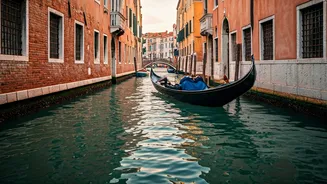
While a gondola ride is a quintessential Venetian dream, the cost can be prohibitive (€90 for a half-hour). A fantastic budget alternative is the 'traghetto,' a shared gondola service that crosses the Grand Canal at six points. For just €2, you can experience a similar on-the-water journey. While shorter and shared with other passengers, it offers an authentic and significantly cheaper way to see the city from its iconic waterways.
Mindful Souvenir Shopping
To support local artisans and avoid mass-produced trinkets, focus on handmade souvenirs. Many Venetian craftspeople offer affordable entry-level items such as hand-stitched notebooks, marbled pencils, or blown-glass beads for around €3. Engaging with artisans in their workshops can lead to discovering unique, locally made items that serve as meaningful mementos of your trip and are more sustainable than imported plastic goods.
Embrace Free Attractions
Many of Venice's most celebrated landmarks are accessible without charge. Iconic sites like the Rialto Bridge and St. Mark's Square are free to explore. The Basilica di San Marco, though now charging a small entry fee, offers a stunning experience for a modest cost and is highly recommended. Even without a pass, you can admire the architecture of numerous churches and soak in the city's atmosphere without spending a euro.
Respecting City Regulations
Adhering to Venice's strict rules is crucial for avoiding costly fines. Regulations prohibit activities such as picnicking in public squares, sitting on bridges, and swimming in canals. These rules are in place to protect the city's fragile infrastructure and heritage. Fines for infractions can be substantial, sometimes levied retroactively through extensive CCTV systems. Being mindful of these regulations ensures a smoother, more affordable visit.