




Record Satellite Deployment
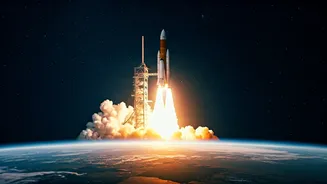
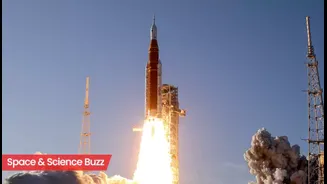
In a significant feat for satellite deployment, an Atlas 5 rocket blazed into the night sky from Cape Canaveral Space Force Station in Florida at precisely
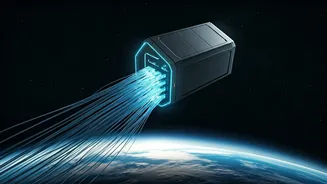
1:46 a.m. Eastern time. The mission achieved full payload deployment, successfully placing 29 Amazon Leo satellites into their designated low Earth orbit a mere 37.5 minutes after liftoff. This particular launch represented the fifth operational flight for Amazon's burgeoning satellite constellation, previously known as Project Kuiper, utilizing the reliable Atlas 5 platform. What set this launch apart was the sheer number of satellites carried; while previous missions each deployed 27, this flight pushed the boundaries by accommodating an additional two, bringing the total to 29.
Engineering Advancements
Amazon, in collaboration with United Launch Alliance (ULA), has been actively engineering solutions to enhance the capacity of their Atlas 5 launches. This focused effort on detailed engineering work has enabled them to integrate more satellites per mission. A key factor in achieving this increased payload capacity is the utilization of a more powerful iteration of the RL10C engine, which significantly boosts the performance of the Centaur upper stage of the Atlas 5 rocket. ULA referred to this mission as LEO 5, and it not only carried the highest number of satellites of any Atlas mission to date but also boasted the heaviest payload, though the precise total mass remains undisclosed by the involved companies.
Meeting Regulatory Deadlines
The rapid deployment of Amazon's planned 3,232-satellite constellation is a critical objective, driven by the need to adhere to stringent Federal Communications Commission (FCC) licensing requirements. With this latest launch, the company has now successfully placed 241 satellites into orbit. However, this figure still falls considerably short of the 1,616 satellites required to be operational by July to meet a key milestone outlined in their FCC license. This pressing need has prompted Amazon to seek an extension or waiver from the FCC, citing unforeseen delays with contracted launch vehicles, including Arianespace's Ariane 6, Blue Origin's New Glenn, and ULA's Vulcan Centaur, which are slated to deploy the majority of the constellation.
Future Launch Strategies
Looking ahead, Amazon is actively working to significantly increase its launch cadence, aiming for over 20 missions annually as new launch vehicles like New Glenn and Vulcan become operational. These future rockets are expected to carry substantially more satellites per launch, with Vulcan anticipated to accommodate at least 40 and New Glenn capable of carrying 48 or more. Further enhancements are expected for Ariane 6 launches, with plans to integrate more powerful solid boosters, potentially enabling them to carry over 32 satellites on later missions. In addition to Atlas 5 and future vehicles, Amazon has also utilized SpaceX's Falcon 9 rockets and has secured an additional 10 Falcon 9 launches, with three Atlas 5 missions still pending.
Navigating Launch Challenges
This recent Atlas 5 launch for Amazon Leo was ULA's first since a February 12th mission for the U.S. Space Force using the Vulcan Centaur. That earlier mission encountered an issue with a solid rocket booster, which, while not preventing payload deployment, has temporarily halted further Vulcan launches for evaluation. Space Force officials have acknowledged this situation, indicating that alternative launch plans are being developed for upcoming payloads assigned to the Vulcan vehicle, anticipating potential grounding for several months. The next scheduled launch for ULA is another Atlas 5 mission for Amazon Leo, tentatively set for April 27th, followed closely by an Ariane 6 launch for Amazon Leo on April 28th.