




Crisp Khakhra Sustenance
Before the era of convenience foods, a staple for long Indian journeys was khakhra, a remarkably durable, thin flatbread originating from Western India.
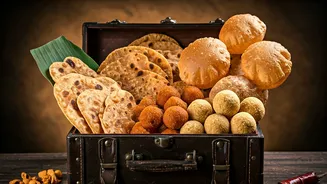
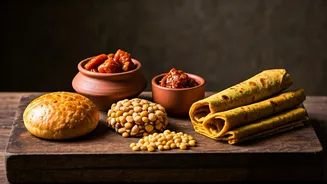
Its preparation involved rolling whole-wheat dough to an almost paper-like thinness and then roasting it until it achieved a satisfying crispness. This meticulous drying process made it exceptionally resistant to moisture and physical damage, ensuring it remained edible for extended periods. Families would carefully layer these delicate rounds, often separating them with pieces of cloth and a light smear of ghee for added flavour and preservation. These easily portable discs were a godsend for daytime travel when preparing a hot meal was impractical. Eaten plain, with a dollop of jaggery, or a zesty pickle, khakhra provided a reliable and lightweight food source, perfectly complementing a cup of chai or coffee on the move, a testament to its simple yet effective design for travel.
Sweet Thekua & Laddoos
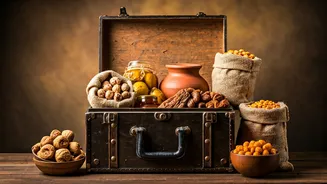
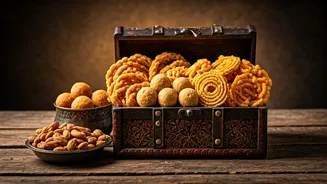
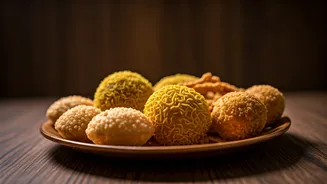
Across India, sweet, dense treats like thekua, a hardy cookie from Bihar made with wheat flour and jaggery, alongside various regional laddoos such as besan, til, or coconut varieties, were cherished travel companions. The high sugar or jaggery content in these baked or fried confections acted as a natural preservative, while their firm, dry consistency minimized the risk of crumbling during transit. Households took great care in crafting these items, often wrapping them in leaves or paper to protect them. Techniques like using ghee and toasted flours were employed to reduce moisture, an early form of food preservation. These sweet delights offered a quick energy boost, could last for several days, and even served as celebratory treats if journeys coincided with important festivals, making them both practical and comforting.
Sattu & Roasted Gram
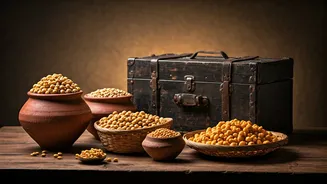
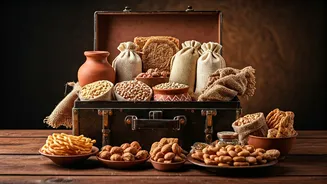
For essential protein on the go, ancient Indian travelers turned to sattu, a finely ground flour made from roasted gram, and whole roasted chana (chickpeas) or peanuts. Sattu offered incredible versatility; it could be carried as a dry powder and conveniently mixed with water or buttermilk at various stops to create a revitalizing beverage. Roasted chana and peanuts, requiring no preparation at all, provided sustained energy release throughout the day. In regions like Central and Eastern India, travelers would often carry small earthen pots filled with sattu, which could be combined with sour yogurt or jaggery to form a substantial and cooling meal that was far more resilient than fresh legumes. This ancient duo exemplifies a resourceful approach to maintaining nutrition during long journeys.
Puffed Rice Mixes
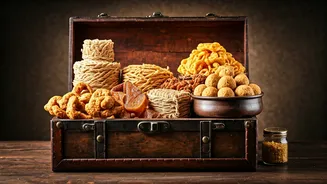
Murmura, or puffed rice, and its flavourful variants known as chivda, represent the quintessential lightweight travel food. Both home cooks and street vendors would prepare generous quantities of puffed rice, expertly seasoned with ingredients like peanuts, fried lentils, fragrant curry leaves, and a touch of salt or lime. A key advantage of chivda was its remarkable adaptability, easily modified to suit different regional tastes and seasonal availability. A few chopped onions, fresh green chilies, or a sprinkle of grated coconut could instantly transform the basic mix into a delightful snack. Travelers could adjust the flavors based on what was accessible, turning a simple base into a surprisingly satisfying and crunchy treat. The aerated nature of puffed rice means it’s low in weight but high in volume, perfect for quick hunger pangs, and it could withstand a bit of humidity without spoiling rapidly, making it ideal for communal tins.
Pickles & Preserves
A small container of achar, or Indian pickle, had the power to elevate even the plainest of meals into something truly enjoyable. Crafted with oil, salt, and acidic components such as vinegar or unripe mango, these pickles served a dual purpose: they enhanced flavor and acted as potent preservatives. Similarly, fruit and vegetable preserves, often packed in oil or thick sugar syrups, were designed to withstand the rigors of heat and extended travel. These compact yet potent additions were invaluable for masking the slight staleness that could creep into breads or rice when a fresh, hot meal was not an option, ensuring every bite was more palatable.
Sun-Dried Fruits
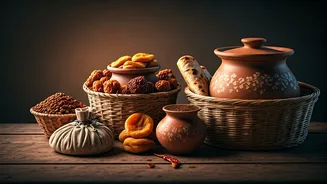
Aam papad, the delightful sun-dried mango leather, and other similar fruit preserves represent a concentrated source of natural sweetness and energy. These preparations involved meticulously removing moisture from fruits like mangoes and bananas, a process that not only prevented spoilage but also intensified their natural sugars, providing an instant energy boost. This method was particularly favored during peak harvest seasons when fruits were abundant and sunlight was plentiful. The slow drying over several days, often on clean cloths or woven trays, concentrated the flavors and created flexible, travel-friendly sheets or dried pieces. Families would carefully guard these precious preparations from birds, ensuring they reached the perfect, leathery consistency. Wrapped in materials like waxed paper or banana leaves and tucked away safely, these dried fruits offered a sweet, tangy contrast to the savory foods carried on long journeys.