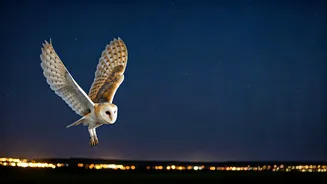







Urban Echoes & Disruption
While birds are generally programmed for nocturnal rest, urban environments often present scenarios leading to unexpected late-night serenades. The constant
barrage of sudden noises and pervasive artificial lighting can disrupt their natural circadian rhythms, prompting vocalizations as a response. This interference can even impact their breeding success. Interestingly, bird species that demonstrate a greater adaptability to urban living are more frequently observed engaging in vocal activity beyond midnight. These adaptations highlight the complex interplay between avian behavior and the ever-changing landscapes humans create, showing how cityscapes can redefine natural biological timelines for wildlife.
Territory's Silent Stage
One of the primary motivations for birds to vocalize under the cloak of night is the assertion of their territory. For many species, the relative quietude of the night provides a less crowded platform to announce their presence and issue warnings to potential rivals. This is particularly relevant in built-up urban areas where incessant artificial light pollution can disorient natural day-night cycles, compelling birds to recalibrate their singing schedules. Furthermore, the persistent din of city life can make it challenging for their calls to be heard effectively during daylight hours, nudging them to seek out the calmer hours of the night for crucial communication and territorial claims.
Love Songs in Darkness
Another significant impetus for nocturnal singing is the pursuit of a mate. Especially during the crucial breeding season, male birds may opt to sing at night as a strategy to attract females. This can be an effective method for them to distinguish themselves from the competition and to clearly signal their vitality and readiness to pair. The darkness also offers a protective advantage, potentially reducing the anxiety associated with being visible to predators while they are engaged in this vulnerable display. This behavior underscores the diverse evolutionary strategies birds employ to ensure reproductive success in varying environmental conditions.
Species' Nightly Habits
Certain bird species, such as the renowned common nightingale, have integrated nocturnal singing into the very fabric of their species' behavioral repertoire. These birds are celebrated for their intricate and melodious songs, which they frequently perform under the cover of darkness. While the precise evolutionary reasons for this nightly performance are still subjects of ongoing research, prevailing theories suggest a strong linkage to both territorial management and the vital act of mate attraction. The nightingale's nocturnal vocalizations offer a captivating example of specialized avian communication patterns.
Environmental Cues Trigger
Environmental stimuli can also act as potent triggers for vocalizations in some avian species during nighttime hours. Fluctuations in temperature, shifts in humidity levels, or even the omnipresent glow of artificial lighting can prompt birds to sing. For instance, a sudden decrease in ambient temperature might inspire a bird to vocalize, perhaps as a means to conserve energy or to signal its location to other members of its species. These external factors demonstrate the sensitivity of birds to their surroundings and how they adapt their communication strategies in response to subtle, or not-so-subtle, environmental changes.