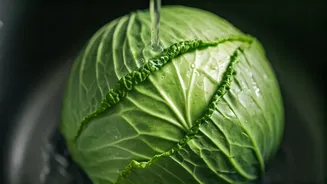






Why Clean Cabbage?
Cabbage, a staple in many dishes from parathas to vibrant salads, often harbors unwelcome guests. Its growth pattern, close to the earth, combined with
its tightly packed leaves, makes it a prime spot for tiny worms, unseen pests, lingering dirt, and even residues from pesticides. The very structure of the cabbage, with its overlapping layers, creates a perfect hiding place for these unwelcome additions. Therefore, a diligent cleaning process is not just recommended, it's essential for ensuring the health and safety of your food. Neglecting this step can lead to ingesting contaminants that simple rinsing might miss, compromising the integrity of your meal. Understanding why this thorough preparation is crucial sets the stage for employing the most effective cleaning strategies.
Discard Outer Layers
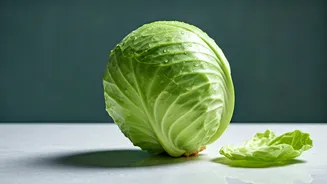
Begin the cleaning process by meticulously removing the outermost leaves of the cabbage. Typically, the first two to three leaves are the most exposed to the elements, accumulating the brunt of soil, potential insect activity, and any spray chemicals. These outer leaves often bear the visible signs of soil contact and can be tough or damaged. Discarding them is a proactive measure that eliminates the most likely areas where pests or dirt would reside, setting a cleaner foundation for the rest of the vegetable. This simple step significantly reduces the initial burden of cleaning and helps ensure that you're working with a more pristine core from the outset.
Chop and Inspect
Once the outer leaves are removed, it's time to break down the cabbage for a deeper clean. Cutting the head into halves or quarters is a practical next step. This action not only makes the cabbage more manageable but, more importantly, it opens up the dense layers, providing better access to the interior. With the layers separated, it becomes considerably easier to visually scan for any hidden worms or debris that might be nestled between them. This preparatory cutting allows for more effective soaking and rinsing in subsequent steps, ensuring that cleaning solutions can penetrate and dislodge any remaining unwanted elements more efficiently.
Salt Water Soak
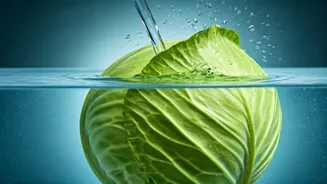
To effectively dislodge hidden worms and pests, a saltwater soak is a highly effective method. Prepare a basin of warm water and dissolve a generous amount of salt into it – about 10-15 minutes of soaking should suffice. The saline solution works by creating an environment that is uncomfortable for the worms, prompting them to detach from the leaves and float to the surface or the bottom of the basin. This method is particularly useful for those tiny, often camouflaged worms that are difficult to spot. The salt's osmotic action helps to loosen their grip, making them easier to rinse away in the following steps, ensuring a cleaner final product.
Vinegar Rinse Power
For an extra layer of cleanliness, consider incorporating a vinegar solution. Add one to two tablespoons of white vinegar to a bowl of fresh water. Submerge the chopped cabbage pieces for about five to seven minutes. Vinegar is a natural disinfectant that aids in killing bacteria and other microscopic organisms that may be present on the cabbage leaves. Furthermore, its acidity can encourage any remaining worms to detach from the vegetable, complementing the action of the salt water soak. This dual-action approach ensures that your cabbage is not only free of visible pests but also hygienically clean, ready for consumption.
Thorough Rinsing
After the soaking and vinegar treatment, a thorough rinse under running water is crucial. Gently agitate the cabbage pieces while water flows over them, repeating this process at least two to three times. This step is vital for washing away any loosened worms, salt residue, traces of vinegar, and any remaining dirt or debris that may have been dislodged. Ensure the water runs freely through all the nooks and crannies of the cut cabbage. A meticulous rinse guarantees that all the cleaning agents and the contaminants they've removed are effectively flushed away, leaving the cabbage pristine.
Final Inspection
Before you proceed with cooking, conduct a final, detailed inspection of each cabbage leaf. Gently separate the leaves and look closely for any lingering insects or dirt that might have evaded previous cleaning stages. Even after rigorous washing, a final visual check is an indispensable part of ensuring your cabbage is completely safe and hygienic. This diligent examination guarantees that you are serving only the cleanest produce, offering peace of mind with every bite and confirming that all the preceding cleaning efforts have been successful.