





Rani ki Vav's Splendor
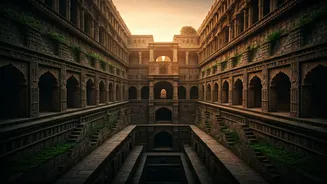
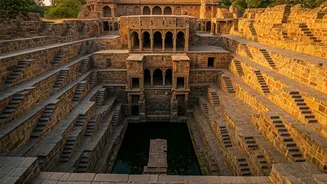
Journey to Gujarat, India, to witness the magnificence of Rani ki Vav, an 11th-century stepwell that stands as a testament to India's sophisticated architectural
prowess and artistic refinement. This intricately carved structure descends several stories below ground, showcasing a complex system of water management and decorative artistry that is both visually stunning and historically significant. It's more than just a well; it's a subterranean palace of stone, reflecting a rich cultural heritage that has been preserved for centuries. The detailed friezes depict various deities, figures, and geometric patterns, offering a glimpse into the religious beliefs and social life of the time. Rani ki Vav is a true marvel of ancient engineering, inviting visitors to explore its depths and appreciate its enduring beauty and ingenuity.
Meteora's Sky Monasteries
Ascend to the heavens in Greece at Meteora, a place where gravity seems to defy itself. Here, ancient monasteries cling precariously to colossal sandstone pillars, creating a landscape that feels otherworldly and deeply spiritual. The sheer scale of the rock formations combined with the human endeavor to build these sacred spaces is awe-inspiring. Visitors can explore the monastic communities, which have served as centers of Orthodox Christianity for centuries, and soak in the panoramic views that stretch for miles. The history and tranquility found here offer a unique blend of natural wonder and profound religious devotion, making Meteora an unforgettable destination for those seeking both beauty and introspection. The spiritual atmosphere is palpable, enhanced by the dramatic scenery.
Wadi Rum's Martian Sands
Venture into the vast, awe-inspiring desert of Wadi Rum in Jordan, often referred to as the 'Valley of the Moon' due to its dramatic, Mars-like terrain. This UNESCO World Heritage site is characterized by expansive sandy plains interspersed with towering sandstone mountains and majestic rock formations that have been sculpted by wind and time. It's an ideal destination for adventurers and nature enthusiasts, offering opportunities for jeep tours, camel treks, and stargazing under incredibly clear night skies. The area is also home to ancient petroglyphs, hinting at millennia of human presence. Exploring Wadi Rum provides an immersive experience in a breathtaking natural landscape, allowing visitors to connect with the raw beauty of the desert and its rich geological history.
Tsingy's Stone Forest
Experience the unique geological spectacle of Tsingy de Bemaraha National Park in Madagascar, a UNESCO World Heritage site renowned for its dramatic 'stone forest' of razor-sharp limestone pinnacles. This otherworldly landscape is not only visually striking but also a crucial ecological sanctuary, harboring a remarkable array of endemic flora and fauna, including several species of lemurs and birds found nowhere else on Earth. Navigating through the Tsingy requires a sense of adventure, with suspension bridges and climbing routes allowing visitors to explore this fascinating terrain. The park’s conservation significance is immense, protecting a rare ecosystem that has evolved in isolation, offering a glimpse into nature’s extraordinary creativity and resilience.
Alberobello's Trulli Homes
Step into a fairytale in Alberobello, a charming town in Italy's Puglia region, famous for its distinctive 'trulli' houses. These unique structures, characterized by their conical dry-stone roofs, create a picturesque and whimsical architectural landscape unlike any other. Wandering through the narrow streets of Alberobello feels like entering a storybook, with hundreds of these whitewashed dwellings creating a magical ambiance. Originally built without mortar, the trulli have a fascinating history tied to local building traditions and regulations. The town's designation as a UNESCO World Heritage site underscores its exceptional cultural value and its preservation of a unique architectural heritage that continues to captivate visitors from around the globe.
Lalibela's Rock Churches
Discover the spiritual heart of Ethiopia at Lalibela, a pilgrimage town famous for its extraordinary rock-hewn churches. These 11 medieval monolithic churches were not built in the conventional sense but were ingeniously carved directly out of the solid rock below ground level. Representing a pinnacle of Ethiopian architecture and religious devotion, these sacred sites remain active places of worship today. Each church boasts unique designs, intricate carvings, and religious artworks that tell stories of faith and history. Visiting Lalibela offers a profound cultural and spiritual experience, allowing visitors to witness an incredible feat of engineering and artistry that has been preserved for centuries, deep within the earth.
Papahānaumokuākea Marine
Explore Papahānaumokuākea, one of the largest marine conservation areas on Earth, located in the Northwestern Hawaiian Islands. This vast expanse of ocean and islands is a UNESCO World Heritage site of immense cultural and natural significance, rich in biodiversity and holding deep ancestral connections for Native Hawaiians. Its remote location and protected status ensure the preservation of vibrant coral reefs, diverse marine life, and critical habitats for endangered species. While access is restricted to protect its delicate ecosystem and cultural integrity, Papahānaumokuākea represents a globally important effort in conservation and a testament to the enduring link between culture and environment, safeguarding a pristine natural wonder.
Great Zimbabwe's Ruins
Uncover the mysteries of Great Zimbabwe, an awe-inspiring complex of ancient stone ruins in Southern Africa that served as the capital of a powerful medieval kingdom. The impressive dry-stone walls and structures, built without mortar, stand as a testament to the architectural ingenuity and sophisticated societal organization of the Shona people centuries ago. This UNESCO World Heritage site offers invaluable insights into a significant, yet often overlooked, chapter of African history, showcasing the grandeur and influence of a prosperous civilization. Exploring these enigmatic ruins allows visitors to connect with the past and ponder the legacy of this remarkable ancient city, which once housed a thriving population and was a center of trade and power.
Göbekli Tepe's Origins
Journey back over 11,000 years to Göbekli Tepe in Turkey, widely regarded as the world's oldest known temple complex. This extraordinary archaeological site features massive carved stone pillars arranged in circles, predating Stonehenge by millennia and challenging our understanding of early human civilization. The intricate relief carvings on the megaliths depict animals and abstract symbols, offering tantalizing clues about the beliefs and capabilities of prehistoric peoples. Göbekli Tepe is a profound site that compels us to reconsider the development of complex societies and the origins of monumental architecture, making it one of the most significant and intriguing discoveries in archaeological history.
Valongo Wharf's Legacy
Commemorate a critical, often somber, piece of global history at Valongo Wharf in Rio de Janeiro, Brazil. This UNESCO World Heritage site marks the place where millions of enslaved Africans were disembarked upon their arrival in the Americas, making it a powerful memorial to the transatlantic slave trade. Although it receives fewer visitors than other heritage sites, its historical weight and cultural resonance are immense. Valongo Wharf serves as a sobering reminder of the human cost of slavery and a vital space for remembrance and reflection on this crucial period in world history. Its preservation offers a poignant insight into the resilience of the human spirit and the enduring impact of this dark chapter.