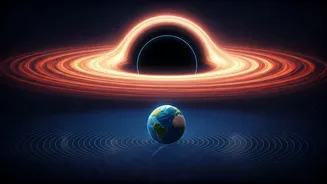





Solar Winds Explained
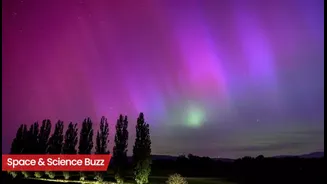
The mesmerizing auroras, often seen as vibrant curtains of light dancing in the polar skies, are a direct result of our Sun's dynamic activity. The Sun constantly
emits a stream of charged particles known as the solar wind. This wind, a plasma comprising electrons and protons, travels outward from the Sun at incredible speeds, typically ranging from 300 to 800 kilometers per second. The density and speed of this solar wind are not constant; they fluctuate based on solar events. For instance, during periods of increased solar activity, such as solar flares or coronal mass ejections (CMEs), the solar wind can become significantly more intense and energetic. These variations in solar wind conditions are crucial for determining the potential for auroral displays. When the solar wind is particularly strong or contains a higher concentration of energetic particles, the chances of witnessing auroras, even at lower latitudes, increase. Understanding the nature and variability of the solar wind is the first step in predicting when and where these celestial light shows might occur.
Geomagnetic Storms: The Aurora's Trigger
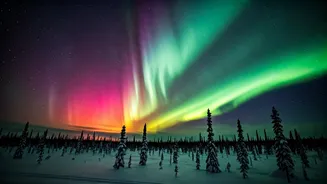
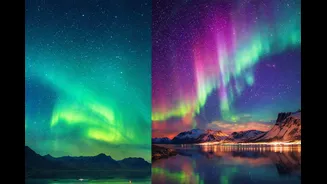
When the solar wind interacts with Earth's protective magnetic field, known as the magnetosphere, it can trigger geomagnetic storms. These storms occur when the solar wind's charged particles penetrate the magnetosphere, causing disturbances. The intensity of a geomagnetic storm is measured on a scale, with G1 being the weakest and G5 being the most severe. These storms are directly responsible for enhancing auroral activity. During a geomagnetic storm, charged particles from the solar wind are channeled towards Earth's magnetic poles. As these particles collide with gases in our upper atmosphere, such as oxygen and nitrogen, they excite these atoms, causing them to emit light. The more powerful the geomagnetic storm, the deeper these particles can penetrate the atmosphere and the more widespread and vibrant the auroras become. Events like coronal mass ejections (CMEs) from the Sun are particularly potent in their ability to generate strong geomagnetic storms, leading to auroras visible much farther from the poles than usual. For example, mentions of G4 (severe) geomagnetic storms correlating with auroras visible in lower latitudes highlight the significant impact of these events.
Forecasting Aurora Activity
Predicting aurora appearances involves monitoring space weather, particularly the Sun's activity. Forecasters analyze data from solar observatories to track solar flares, coronal mass ejections (CMEs), and coronal holes. Coronal holes are regions on the Sun's surface where the magnetic field is weaker, allowing the solar wind to escape more readily and at higher speeds, often referred to as high-speed solar wind streams. When these active regions or coronal holes are oriented towards Earth, the likelihood of geomagnetic activity increases. Aurora forecasts often highlight specific dates or periods when incoming CMEs or enhanced solar wind streams are expected to reach Earth. For instance, news often mentions dates like 'Thursday, Nov. 6: Auroras surge overnight with more geomagnetic storming on the way!' or 'Monday, Aug. 11: Ongoing fast solar winds could boost auroras again tonight.' These forecasts provide valuable information for aurora enthusiasts, indicating when conditions might be favorable for viewing these natural light displays, often specifying whether activity will be confined to high latitudes or potentially visible at mid-latitudes.
Visibility Factors and Aurora Viewing
While geomagnetic storms are the primary driver of auroras, several other factors influence whether you'll actually see them. The most critical is darkness; auroras are best viewed away from city lights under clear, dark skies. The phase of the moon also plays a role, with a new moon providing the darkest conditions for optimal viewing. Auroras are often most intense during the equinox months of March and September due to the orientation of Earth's magnetic field, though they can occur year-round. Many alerts mention specific latitude bands, such as 'auroras confined to high latitudes' or potential visibility 'as far south as Italy' or 'Illinois and Oregon.' This indicates that the strength of the geomagnetic storm and the specific conditions of the solar wind determine how far south the aurora can be seen. For example, mentions of 'incoming CME could spark northern lights as far south as New York' or 'Valentine's Day Aurora Alert — Geomagnetic storm could bring northern lights as far south as Michigan and Maine' highlight these southern extensions.