




An Entrance Steeped in Tradition
The moment you arrive at Gulab Haveli in Mandawa, Rajasthan, you're greeted with an immediate sense of history. After a long journey, the entrance itself
is a lesson in respect, with doorways intentionally built low. This architectural detail, a remnant from a bygone era, mandates a slight bow upon entering, a gesture of humility and deference that instantly connects you to the mansion's past. This 150-plus-year-old merchant abode, once home to a prominent trader involved in silk, spices, and opium, has been meticulously restored. Inside, the air hums with the gentle melody of folk music, wafting through sandstone corridors adorned with intricate frescoes. The entire atmosphere transports you, setting the stage for an unforgettable stay where history feels palpably alive, a stark contrast to the long drive you might have endured to reach this magical place.
Mandawa's Cinematic Charm
Mandawa itself is a place that feels remarkably familiar, even if you've never visited before. Known as the world's largest open-air art gallery, the Shekhawati region boasts over 2,000 painted havelis. This unique landscape has served as a backdrop for numerous Indian films and series, including 'Bajrangi Bhaijaan,' 'PK,' and 'Dahaad,' and it's easy to see why. The town isn't polished for tourists; instead, it radiates an authentic, lived-in texture. Dusty lanes are lined with sleepy shops, wandering camels, and the imposing facades of grand merchant mansions, many featuring fading frescoes. Walking through Mandawa feels less like entering a tourist spot and more like stepping directly into a vibrant, forgotten chapter of India's rich mercantile history. At its heart sits Gulab Haveli, a restored 19th-century mansion, once belonging to the wealthy merchant Gulab Rai Ladia, now a luxurious heritage property that retains its historical soul.
A Labyrinth of Stories
Gulab Haveli unfolds like an ancient storybook, especially after a welcoming ceremony of flower petals and traditional greetings. Constructed between the 1850s and 1870s, during the peak of Shekhawati's trade prosperity, this triple-story mansion was the domain of chief trader Gulab Rai Ladia, whose business spanned silk, spices, cotton, and opium. In that era, affluent Marwari merchants vied for status through their architecture, creating grander havelis and more elaborate frescoes. Gulab Haveli embodies this competitive spirit. The property is centered around two courtyards: the Mardana, the public space for business and guests, now a lively hub for performances and relaxation, and the Zenana, the private women's quarter. The latter, with its narrow passages, carved jharokhas, and secluded nooks, creates a wonderfully maze-like experience. Exploring the haveli involves navigating a network of tiny alcoves, painted walls, antique seating areas, and hidden balconies, with each turn revealing a new detail or an anecdote about its past, such as a former 'girls' gossip room' or chambers where deaf attendants managed fans for privacy.
The Dazzling Gold Room
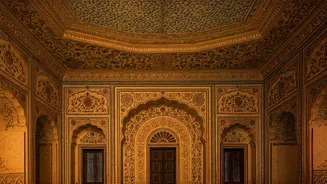
The legend of the Gold Painted Room at Gulab Haveli is entirely justified. Situated on an upper floor, this chamber is an unparalleled spectacle, a testament to opulent celebration. Originally a gift for Gulab Rai Ladia's grandson's wedding night, no expense was spared in its creation. The walls are resplendent with gold leaf detailing, and the ceilings are adorned with thousands of tiny convex mirrors that shimmer and refract light, transforming the room into a dazzling jewel box when illuminated. Intricate frescoes cover every surface, depicting mythological scenes, miniature art, floral motifs, and even sensual illustrations inspired by the Kama Sutra, fitting for its intended purpose. What makes this room so captivating is its intimate and romantic ambiance, a deeply personal space rather than a grand public hall. Despite its extravagance, the room retains the texture of time; the trompe l'oeil painted floor still evokes a carpet, the mirrors aren't perfectly polished, and the frescoes have softened gracefully, preserving its historical essence. Adjacent is the Sheesh Mahal, a mirrored space perfect for gatherings.
Rooms Steeped in Time
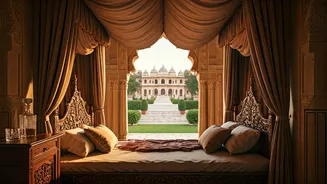
Gulab Haveli offers a curated experience with its 17 distinct rooms and suites, categorized into Superior, Deluxe, and Luxury options. What truly sets these accommodations apart is their authentic preservation. While equipped with elegant bathrooms, comfortable beds, and modern amenities, the haveli's original character is paramount. Restored frescoes grace the walls, the natural texture of the limestone is evident, and antique furniture blends seamlessly with contemporary additions. Efforts were made during restoration to conceal modern infrastructure, such as wiring and plumbing, beneath floors to maintain the integrity of the original structure. Many rooms open directly onto the central courtyard, where evenings come alive with Rajasthani folk musicians and guests mingling under the stars. This creates an atmosphere where the haveli feels not just like a hotel, but a vibrant, breathing entity, echoing the life it has witnessed over more than a century.
A Feast of Flavors
The culinary experience at Gulab Haveli is as robust and memorable as its architecture. Rajasthan is renowned for its food, and the Shekhawati thali served here is a grand affair that truly tests one's appetite. This elaborate meal arrives in multiple courses, featuring dishes like dal-baati drenched in ghee, smoky churma, ker sangri prepared with desert spices, gatte ki sabzi, freshly baked bajra and missi rotis, a potent lehsun chutney, local vegetables, pickles, papad, chaas, and traditional desserts. The food is not merely presented as tourist fare; it’s deeply local, comforting, and authentic. The hotel's all-day dining restaurant, Resham, draws inspiration from Silk Route flavors, offering a blend of regional specialties and internationally influenced dishes. Guests can savor saffron-smoked paneer with rose petal chutney, or opt for millet khichda and baklava. For evening relaxation, the bar Amal, designed with Marwari hospitality traditions in mind, offers cozy seating and a captivating atmosphere, making it the perfect spot to unwind after a day of exploration.
Exploring Mandawa's Pace
Experiencing Mandawa is best done at a leisurely pace, allowing its charm to unfold organically. A unique way to explore the town's narrow lanes is by camel, especially as the sun begins to set and casts a warm golden hue over the landscape. While mounting a camel might involve a moment of awkwardness, the ride itself becomes a strangely peaceful experience. From this elevated perspective, Mandawa appears even more cinematic, with painted havelis glowing amber and children playing in the lanes. A heritage walk with a guide like Deepak Sharma offers deep insights into the town's history and art. Sharma expertly decodes the frescoes, which depict everything from Hindu mythology to more modern imagery like trains and British officers, explaining how these artistic expressions evolved over time. He also highlights the town's unique social fabric, where religious festivals are celebrated collectively, contributing to its remarkably low crime rate and a palpable sense of community and peace amidst its grandeur.
Shekhawati's Wider Canvas
Gulab Haveli also serves as an ideal starting point for venturing beyond Mandawa to explore other fascinating towns in the Shekhawati region. Nawalgarh, for instance, is another vibrant open-air gallery, showcasing numerous painted mansions, including the notable Podar Haveli Museum and Morarka Haveli. Here, frescoes adorn walls, ceilings, gateways, and balconies, depicting a rich tapestry of gods, merchants, colonial figures, and scenes from daily life. Jhunjhunu offers a different character, characterized by its sacred temples, historic havelis, and the striking Khetri Mahal, a structure often cited as an inspiration for Jaipur's iconic Hawa Mahal. The journeys between these towns are themselves an integral part of the experience. Scenic drives wind through mustard fields, past camels crossing highways, dotted with spontaneous roadside chai stops and unexpected glimpses of forgotten havelis emerging from the landscape, adding to the region's enduring allure.
Authenticity Above All
In the realm of heritage hotels, there's a growing trend towards excessive polish and a manufactured sense of royalty. Gulab Haveli, however, masterfully avoids this pitfall. It doesn't strive for an overdone perfection; instead, its strength lies in its genuine authenticity. The walls still carry the echoes of time, the corridors retain their uneven charm, and the frescoes exhibit a natural, gentle fading in places. The wind moves through its courtyards with the same timeless rhythm it has for over a century. This commitment to preserving the haveli's real essence, rather than an idealized version, is what makes the experience so profound and lasting. It feels less like a curated exhibit and more like a living piece of history, a real place that resonates with the past and offers a truly immersive connection to Rajasthan's heritage.