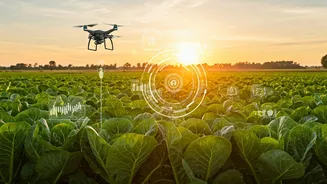










Precision Farming Advancements
The agricultural landscape is undergoing a significant overhaul thanks to artificial intelligence, moving from speculative futures to present-day achievements.
Innovative solutions are being deployed to enhance farming operations, leading to substantial gains in productivity and resource management. Technologies such as AI-powered conversational platforms are providing personalized agricultural advice to millions of farmers, enabling them to make more informed decisions. These platforms analyze vast amounts of data to offer tailored recommendations for crop management, pest control, and optimal planting times. Furthermore, advancements in soil analysis using portable devices equipped with hyperspectral imaging are revolutionizing nutrient assessment. These devices provide on-the-spot chemical profiles of the soil with remarkable accuracy, bypassing lengthy laboratory waiting periods. When combined with sophisticated satellite data, farmers are witnessing tangible yield increases, often ranging from 20% to 32%. This integration of cutting-edge technology ensures that even smallholder farmers can benefit from AI-driven insights, fostering a more equitable and efficient agricultural ecosystem globally.
Livestock Health Monitoring
Beyond crop cultivation, AI is making significant inroads into animal husbandry, particularly in enhancing livestock health and well-being. In regions like Kashmir, specialized smart necklaces for cows are being utilized to monitor their physiological data. These devices continuously track crucial indicators such as rumination patterns and body temperature. By analyzing this information, the AI systems can detect early signs of infections or heat stress in cattle days before any visual symptoms become apparent to human observation. This proactive approach allows farmers to intervene quickly, administer timely treatments, and prevent potential outbreaks within their herds. Such early detection not only safeguards the health of individual animals but also contributes to the overall productivity and economic stability of dairy farms. The integration of AI in livestock management represents a crucial step towards more efficient, humane, and sustainable animal agriculture, ensuring healthier animals and more reliable produce.
Data-Driven Crop Insights
Artificial intelligence is unlocking unprecedented levels of precision in understanding and predicting crop performance, particularly for staple crops like sugarcane. Through the sophisticated analysis of super-resolution satellite imagery, platforms are now capable of forecasting sucrose levels in sugarcane with an impressive 95% accuracy. This granular insight allows farmers to optimize harvesting schedules, ensuring they collect their crops at the peak of sweetness. The impact of this predictive capability is substantial, with documented yield improvements reaching up to 57%. Moreover, the same satellite infrastructure is being repurposed to create credit scores for farmers, a critical development for improving financial access. By providing lenders with reliable data on farming operations and potential yields, the time required for loan approvals is drastically reduced, shortening the process from weeks to mere days. This accelerated access to capital is vital for farmers to invest in necessary resources and expand their operations, contributing to their overall economic empowerment and the sector's growth.
Sustainable Practices Verification
The adoption of sustainable agricultural practices, essential for long-term environmental health and food security, is being significantly bolstered by AI-driven monitoring systems. Frameworks such as Monitoring, Reporting, and Verification (MRV) are being deployed by platforms like RMS for AI and Varaha to assess the efficacy and adherence to eco-friendly farming methods. For instance, in regions like Punjab, practices such as alternative wetting and drying in paddy cultivation, which conserves water and reduces methane emissions, can now be validated in minutes. This is a dramatic improvement compared to the months of manual labor previously required for such assessments. The ability to quickly and accurately verify sustainable techniques not only encourages their wider adoption but also facilitates access to green finance and carbon credits. This streamlined verification process is crucial for building trust and transparency in the agricultural supply chain, ensuring that genuinely sustainable farming is recognized and rewarded, ultimately contributing to a more resilient and environmentally conscious food system.