



Understanding Solar Winds
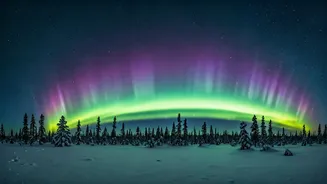
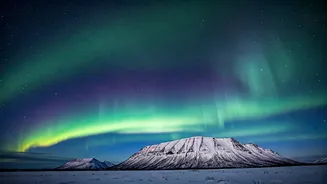
The aurora borealis, also known as the Northern Lights, is a spectacular display of natural light primarily seen in high-latitude regions. Its occurrence
is directly linked to the sun's activity, specifically the solar wind. This constant stream of charged particles, ejected from the sun's upper atmosphere, travels through space. When these particles interact with Earth's magnetic field, they can create the beautiful auroral displays. Geomagnetic storms, which are essentially disturbances in Earth's magnetosphere caused by enhanced solar wind, are crucial for aurora visibility, especially at lower latitudes. The intensity and frequency of these storms directly correlate with the likelihood and spectacle of the aurora. Space weather forecasts, often provided by scientific institutions and physicists, monitor these solar events to predict potential aurora sightings. Understanding the relationship between solar activity and Earth's magnetic field is key to predicting when and where the aurora might be visible. Factors like the speed and density of the solar wind, as well as the presence of coronal mass ejections (CMEs), play significant roles in determining the strength of geomagnetic storms and, consequently, the aurora's visibility.
Predicting Aurora Displays
Forecasting the aurora borealis involves monitoring various solar phenomena. Scientists track events like coronal mass ejections (CMEs) and fast solar wind streams, which can significantly influence geomagnetic activity. When a CME is directed towards Earth, it can trigger geomagnetic storms, intensifying the aurora. Similarly, persistent fast solar winds can lead to more frequent, albeit sometimes less intense, auroral displays. Several indicators are used in aurora forecasting. Geomagnetic storm watches and warnings are issued when conditions are favorable for disturbances in Earth's magnetic field. These alerts often specify the potential strength of the storm, such as minor, moderate, or severe. The likelihood of seeing the aurora is often stated in terms of probability and the latitudes where it might be visible. For instance, a strong geomagnetic storm might allow auroras to be seen at mid-latitudes, whereas weaker activity typically confines them to higher latitudes. Reports often mention whether auroras are expected to be confined to high latitudes or if there's a chance for them to be seen further south. These forecasts are crucial for aurora chasers, helping them plan their viewing opportunities.
Timing Your Aurora Hunt
Determining the best time to witness the aurora borealis involves considering both the season and specific space weather conditions. While auroras can occur at any time of year, they are most visible during the darker months, typically from late August to April, when nights are longer. Clear skies are, of course, essential for any viewing attempt. Beyond the seasonal advantage, specific timing is dictated by solar activity. Reports often highlight incoming CMEs or sustained fast solar winds as precursors to potential aurora sightings. A 'heads-up' for aurora chasers is frequently given when a CME is detected and expected to impact Earth. The forecast might suggest increased chances for auroras on specific dates, or over a particular weekend. It's also common for forecasts to mention whether activity is expected to be brief or sustained. Some reports note that while a specific night might be quiet, activity could pick up later in the week or over the upcoming weekend. Paying attention to these evolving predictions is key to maximizing your chances of a successful aurora hunt.
Geographic Considerations
The visibility of the aurora borealis is heavily influenced by geographical location. Traditionally, the Northern Lights are most prominently observed in regions at high geomagnetic latitudes, often referred to as the auroral oval. This includes countries like Iceland, Norway, Sweden, Finland, Canada, and Alaska. However, during periods of intense geomagnetic storms, the aurora's reach can extend significantly southward. Reports frequently mention when auroras are 'confined to high latitudes,' indicating that sightings would be rare in more temperate zones. Conversely, forecasts may highlight 'aurora possible across the U.S.' or even reaching into countries like Italy, signifying a strong geomagnetic event. Space weather physicists often provide forecasts that specify the expected latitude range for aurora visibility. This means that while residents of northern regions might see auroras with relatively minor solar activity, those in more southerly locations need to await more powerful space weather events to catch a glimpse. Therefore, understanding your latitude in relation to predicted auroral activity is fundamental for successful viewing.