






Customer's Disturbing Discovery
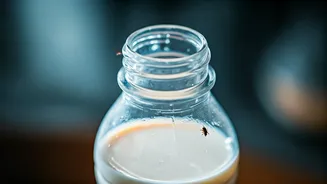
A significant concern arose for a milk delivery brand, known for its high-protein offerings, when a patron reported finding an insect within a sealed bottle
of their product. The customer, an author, publicly shared this unsettling experience through social media, accompanied by visual evidence. This post quickly gained widespread attention, igniting a flurry of discussions and anxieties among both existing patrons and prospective consumers regarding the brand's commitment to food safety and quality standards. The viral nature of the complaint underscored the critical importance of maintaining rigorous hygiene protocols in food and beverage production and distribution.
Brand's Initial Response
In the wake of the customer's complaint, the milk brand issued an immediate acknowledgment of the issue. Their initial public statement expressed regret for the negative experience and requested the customer to provide specific details, such as their registered contact number and a clear photograph of the contaminant. The company assured the customer that their team would prioritize investigating the matter to reach a swift resolution. This prompt, albeit standard, response aimed to de-escalate the situation and demonstrate a commitment to customer satisfaction and problem-solving.
Founder's Transparency Effort
To counter the growing apprehension and demonstrate the brand's dedication to food safety, the founder personally intervened. He shared unedited video footage capturing the daily packaging operations at their facility. This proactive measure was intended to visually reassure the public about the meticulous hygiene and stringent processes employed in packing their high-protein milk. The founder explained that the packaging line incorporates multiple robust cleaning stages, including high-pressure RO-treated water jets and HEPA-filtered air streams, within an environment maintained under positive pressure by an air handling unit, all designed to prevent any foreign matter from entering the final product.
Investigating the Anomaly
Reflecting on how such an incident could occur despite their advanced systems, the founder hypothesized that the insect might have become adhered to the packaging material prior to or during the cleaning process, evading removal. He emphasized that the plant's controlled atmosphere, with its air handling units creating positive pressure, minimizes the risk of airborne contaminants entering the packaging area. This explanation, while attempting to pinpoint a potential point of failure, also highlighted the complexity of ensuring absolute purity in large-scale food production and the continuous need for vigilance and process refinement to prevent even the slightest deviations.
Commitment to Future Prevention
Concluding his address, the founder extended a sincere apology for the subpar experience delivered to the customer. He reiterated the company's unwavering commitment to thoroughly investigating the root cause of the contamination. Furthermore, he pledged to implement and reinforce robust operational procedures and quality control measures to prevent such an occurrence from happening again. This promise underscored the brand's dedication not only to resolving the immediate issue but also to enhancing its long-term food safety protocols and rebuilding consumer trust through demonstrable improvements in their production and quality assurance systems.