





The Elusive Orbital Debris
Despite the growing presence of discarded satellites and mission fragments orbiting our planet, space junk is remarkably absent from the captivating visuals
captured during space missions, such as those from NASA's Artemis II. This invisibility stems from a combination of factors inherent to the vastness of space and the physical characteristics of these objects. While concerns about Kessler Syndrome – a cascade of collisions that could render Earth's orbit impassable – are valid, the practical challenge of visually documenting this debris in photographs is immense. The sheer volume of objects, ranging from defunct satellites to tiny fragments, creates a significant hazard, yet their presence is rarely noted in photographic evidence from space. This paradox highlights the complex realities of space exploration and the difficulties in representing the full scope of orbital hazards through imagery.
Speed and Scale Challenges
The primary reason space junk is practically invisible in photographs, even from highly advanced missions, is its incredible speed and the minuscule size of most debris. These objects are hurtling through space at velocities exceeding 17,500 miles per hour. This extreme speed means that even if a larger piece of debris were to cross a spacecraft's path, the window for capturing a clear, identifiable image is infinitesimally small. Furthermore, the vast majority of orbital debris consists of fragments smaller than a centimeter, making them imperceptible to the naked eye and beyond the resolution capabilities of most cameras, unless under exceptionally specific and rare conditions. While the potential for astronauts to capture a larger piece exists, the stars would need to align perfectly for such an event, rendering most photographic opportunities moot.
Orbital Location Matters
Another significant factor contributing to the invisibility of space junk in photographs is its typical location. The densest concentration of orbital debris resides in Low Earth Orbit (LEO), generally between 466 and 621 miles above our planet. Missions like Artemis II, which venture towards the Moon, spend most of their initial and critical flight phases traversing these regions at extremely high speeds. During these crucial operational periods, astronauts are intensely focused on navigation, system checks, and mission objectives, leaving virtually no time or opportunity to visually scan for or photograph external objects. The rapid transit through these debris-laden zones means that even substantial pieces of junk would be long gone before any meaningful photographic attempt could be made, let alone yield a discernible image.
Astronaut Safety Assured
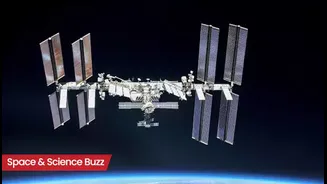
While the visual evidence of space junk might be scarce in mission photographs, its presence is a constant consideration for human spaceflight. The International Space Station (ISS), for instance, routinely experiences impacts from microscopic debris. However, spacecraft like the ISS are engineered with robust protective measures to withstand such minor collisions. The probability of a catastrophic impact with larger debris remains relatively low, partly due to the vastness of space, which keeps objects at immense distances from one another. Advanced tracking systems are in place to monitor potential threats, allowing mission control and astronauts to implement precautionary measures if a significant risk is detected, ensuring astronaut safety remains paramount despite the ever-present, albeit often unseen, hazard of space debris.