





Timing Your Seeds
To guarantee a spectacular display of colorful geranium blooms by spring, it's crucial to start your seeds during the heart of winter. The ideal window
for sowing geranium seeds is typically between January and February. This extended germination and growth period, which can span several months, ensures that your young plants are robust and ready for transplanting when warmer weather arrives. While these plants are known for their slow growth, patience is rewarded with an abundance of fragrant flowers. Initiating this process early in the season is key to enjoying their beauty throughout spring and summer. Remember, consistent moisture and avoiding excessively high temperatures, above 78°F, are vital for successful germination during this initial phase.
Essential Growing Gear
Before you begin sowing your geranium seeds, gathering a few key supplies will significantly enhance your success rate. Geraniums thrive when planted in a specialized seed-starting mix, which provides the ideal balance of drainage and moisture retention necessary for germination. Maintaining a consistent ambient temperature between 70°F and 75°F is also paramount for encouraging seedlings to emerge. A plant lamp can be an invaluable tool to ensure this specific temperature range is maintained, especially in cooler indoor environments. Additionally, once your seedlings have developed, a standard houseplant fertilizer, diluted to one-quarter strength, will provide the necessary nutrients to support their healthy growth without risking root burn.
Sowing and Germination
The process of starting geraniums from seed begins with preparing your seed tray. Fill each small cell, ideally no larger than two inches, with your moistened seed-starting mix. Gently place a single geranium seed into each cell, covering it with a thin, even layer of the soil. To create a microclimate conducive to germination, cover the entire tray with plastic wrap. This helps maintain consistent humidity and warmth. Place the covered tray in a location that receives ample sunlight, or position it beneath a plant lamp to achieve the stable 72°F temperature that geranium seeds prefer. Continuous monitoring of soil moisture is essential; if the soil starts to feel dry, replenish the moisture immediately. Germination times can vary widely, taking anywhere from a few days to as long as a month.
Nurturing Young Seedlings
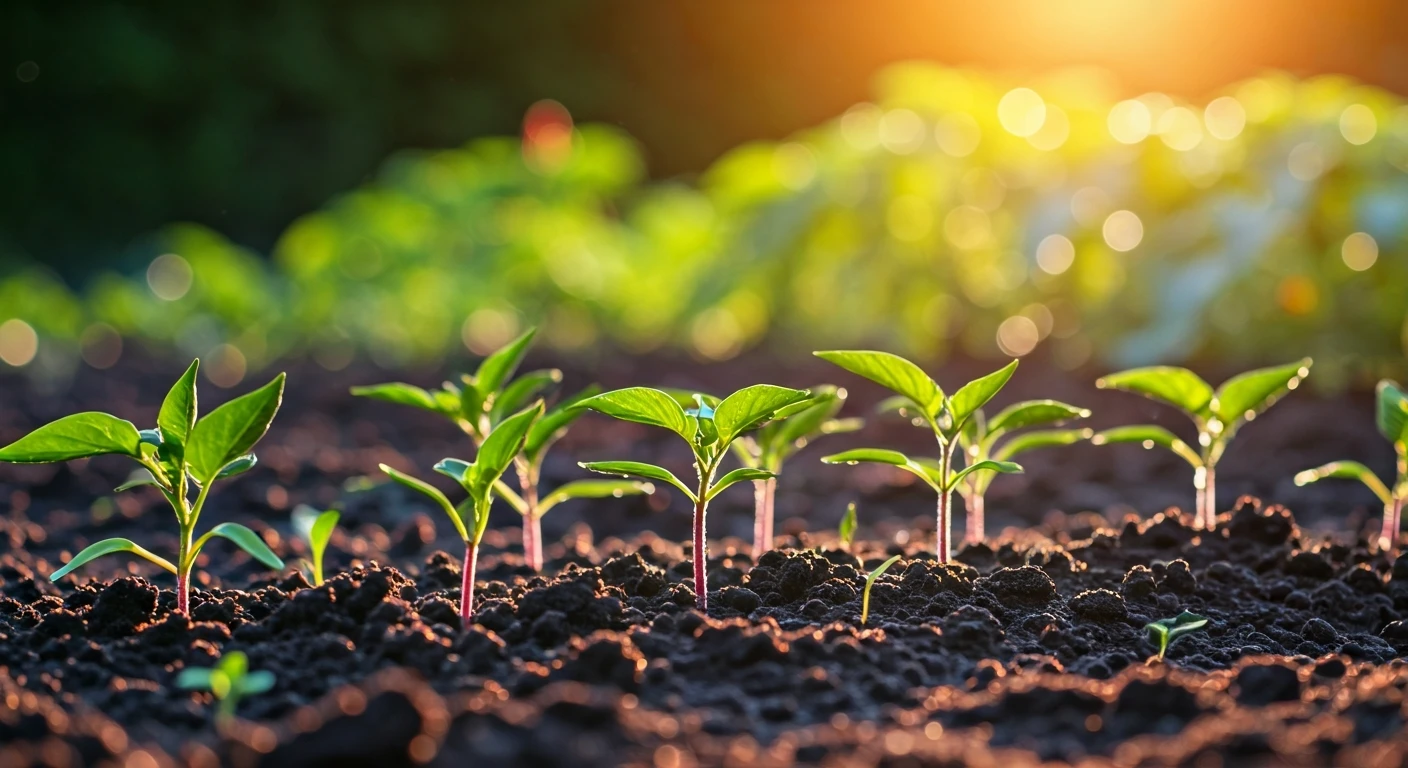
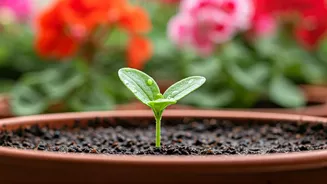
Once your geranium seeds have germinated and you observe the initial sprouts, it's time to focus on their development. Keep the seedlings in their trays, ensuring they receive full sun exposure throughout this period. Continue to monitor soil moisture diligently, providing water as needed to maintain a consistently damp environment. The seedlings should remain in the seed tray until they develop their first two sets of true leaves. At this stage, they are ready to be transplanted into individual pots. Choose pots that offer ample space for the roots to spread without overcrowding. Use fresh potting soil for this repotting process. Begin fertilizing your young plants weekly with a diluted houseplant fertilizer, using a quarter of the recommended strength to prevent any potential damage to their delicate root systems.
Transition to Outdoors
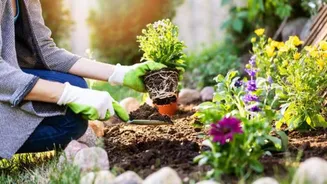
As the weather warms and the threat of frost has completely passed, your acclimated geraniums are ready to transition to their outdoor home. It's crucial to introduce them to the outdoors gradually to prevent shock. Initially, place them in a sheltered area, such as a covered porch or patio, where they can adjust to the different environmental conditions over several days. This acclimation period allows the plants to become accustomed to the varying temperatures, sunlight intensity, and airflow outside. Once they have successfully adapted, they can be planted in their final garden beds or containers, where they will flourish and begin to develop their characteristic vibrant blooms, typically by mid-spring.