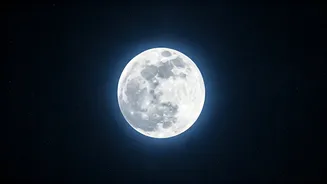







Blue Moon Explained
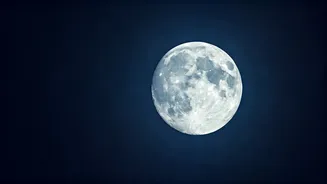
The term 'Blue Moon' is often misunderstood, leading many to believe the moon actually changes color. Astronomically, a Blue Moon refers to an extra full
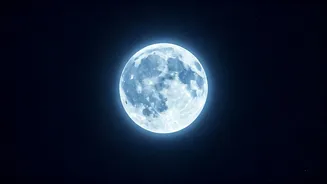
moon within a calendar period. There are two primary definitions: the first full moon occurring after a solstice or equinox is sometimes called a seasonal Blue Moon, while the more common definition, particularly in recent times, is the second full moon that falls within a single calendar month. This phenomenon isn't about the moon's hue; rather, it's a matter of lunar cycle timing. While rare atmospheric conditions, like volcanic ash or smoke particles of a specific size, can scatter light to make the moon appear bluish, these occurrences are coincidental and not inherent to the 'Blue Moon' designation itself. The 2026 Blue Moon follows the latter, more prevalent definition, marking a temporal anomaly rather than a visual transformation of the lunar surface.
2026 Blue Moon Details
Mark your calendars for the upcoming Blue Moon in 2026! This celestial event is set to occur on August 31, 2026. For observers in India, the peak of this full moon will be visible on the night of August 31st. The precise timing for India will be on August 31, 2026, at approximately 6:05 PM IST. This specific date signifies the second full moon within the month of August, making it a 'monthly' Blue Moon. The lunar cycle is roughly 29.5 days long, which is why two full moons can occasionally fit into a calendar month that has 30 or 31 days. Understanding these timings is crucial for anyone hoping to witness this relatively infrequent event and appreciate its astronomical significance as a marker of an occasional surplus full moon.
Visibility in India
For residents in India, the Blue Moon of 2026 promises excellent visibility. As the full moon reaches its peak on the evening of August 31, 2026, around 6:05 PM IST, it will be high in the sky shortly after sunset, making it easily observable across the subcontinent. Unlike some astronomical events that require specialized equipment or specific geographical locations for optimal viewing, a Blue Moon is a visual spectacle accessible to everyone with a clear night sky. No special filters or telescopes are needed to appreciate the moon's presence during this time. However, to enhance the experience and truly marvel at its appearance, finding a location with minimal light pollution will significantly improve clarity and provide a more profound connection to this natural wonder. The clear Indian skies on this particular evening should offer a magnificent display.
Cultural and Astronomical Significance
While the 2026 Blue Moon won't paint the sky blue, its rarity imbues it with a special kind of significance, both culturally and astronomically. It's a reminder of the rhythmic, yet occasionally irregular, dance between the Earth and its moon. Culturally, the term 'once in a blue moon' has become synonymous with rarity, highlighting its perceived infrequency in everyday life. Astronomically, it's an intriguing consequence of the lunar cycle's length relative to the Gregorian calendar. Such events, though not visually dramatic in terms of color, serve as excellent opportunities for public engagement with astronomy, encouraging people to look up and ponder the cosmos. The Blue Moon fosters a sense of wonder and connection to ancient celestial observations, reminding us of the consistent, yet ever-changing, nature of our universe and our place within it.