







The Solitude Advantage
The notion that living alone can boost professional productivity has recently gained traction, sparked by the experience of Priyansh Agarwal, a Google
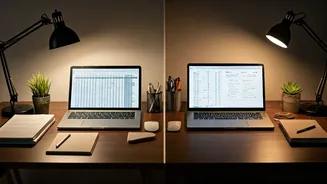
employee based in Bengaluru. Agarwal shared on social media his belief that moving into his own apartment, specifically to dedicate an entire room as a workspace, was a pivotal decision. He articulated that while the cost of rent is higher, the benefits of uninterrupted focus and a self-controlled environment far outweigh the financial aspect. This setup allows him to operate without the need to justify his actions or be sidetracked by the routines and activities of housemates. Agarwal emphasized that he experiences his most productive periods when completely by himself, free from external influences. This personal revelation has, in turn, prompted a wider discussion about the impact of living arrangements on work efficiency and personal well-being, suggesting that solitude offers a unique pathway to heightened output.
Personal Space, Peak Performance
Agarwal's assertion that living alone fosters greater efficiency resonates deeply with many professionals who find that an independent living situation allows for a more structured and focused approach to their work. The ability to design one's living space exclusively for productivity, free from the compromises inherent in shared accommodation, is a significant draw. This independence means no adjusting schedules for roommates, no shared kitchen squabbles, and no late-night noise disturbances. The dedicated workspace becomes a sanctuary, a place where concentration can flourish. While acknowledging the financial outlay for rent, Agarwal noted that this is often offset by reduced spending on social outings, as the comfort and productivity of his personal space become a primary focus. This dynamic suggests a trade-off where financial expenditure is redirected towards an environment that actively enhances professional output and personal peace.
Social Media Discourse
The online reaction to Priyansh Agarwal's perspective on solo living and productivity has been varied, sparking a lively debate across social media platforms. Many users have expressed solidarity with Agarwal's viewpoint, sharing their own anecdotes about how living alone has empowered them to achieve more in their professional lives. They highlight the freedom to dictate one's daily rhythm and the absence of common distractions found in communal living situations. Some participants in the discussion pointed out the brain's remarkable adaptability, suggesting that neuroplasticity allows individuals to adjust to either quiet or noisy environments equally well. The critical takeaway from this aspect of the debate is that individuals often don't actively explore which living arrangement truly aligns with their innate needs. Conversely, some voiced concerns about the potential for loneliness and emphasized that productivity isn't the sole determinant of a successful life, advocating for the importance of social connections and support systems, especially during challenging times.