





Why Grow Mushrooms?
Embarking on home mushroom cultivation, especially using the plastic bag method, presents an incredibly accessible entry point for aspiring growers. This
approach is remarkably budget-friendly, typically requiring an initial investment of under Rs 200, making it an economical choice. Beyond affordability, it's highly space-efficient, fitting easily into smaller living areas. Research indicates that this method is also quite forgiving, offering a high success rate for beginners. A 2019 study from Tamil Nadu Agricultural University highlighted that polybag cultivation can yield an impressive 1-2 kg of mushrooms per bag within a mere 30 days, demonstrating a 40% greater efficiency compared to traditional cultivation techniques. Dr. S. Marimuthu, a lead researcher involved in the study, noted in the TNAU Mushroom Production Manual that the perforations in these plastic bags are crucial, ensuring adequate aeration and significantly reducing the risk of contamination, much like natural log cultivation. Furthermore, this entire process is inherently organic, meaning no artificial chemicals are involved, resulting in a pure and healthy product that can contribute positively to your immune system. The growing popularity of terms like 'easy home mushroom cultivation' reflects the increasing interest in this accessible and rewarding hobby.
Essential Materials Needed
To kickstart your mushroom-growing adventure, gather a few key items that are readily available. You'll need approximately 5 kg of sterilised straw or paddy husk, which should be soaked overnight to prepare it. For the 'seed' of your mushrooms, procure 500g of mushroom spawn; you can choose between oyster or button varieties, easily obtainable from local agricultural supply stores. Ten large, perforated plastic bags, measuring around 50 x 100 cm, are essential for housing your mushroom substrate. Additionally, you'll require a spray bottle for misting and some rubber bands for sealing the bags. Lastly, identify a dark and humid spot in your home, such as a cupboard under the sink, to create the ideal incubation environment. The beauty of this setup lies in its minimal cost, making it far more economical than purchasing mushrooms from the market regularly.
Step 1: Substrate Preparation
The initial phase of growing mushrooms involves preparing the growing medium, known as the substrate. Begin by taking your sterilised straw or paddy husk and boiling it for a period of one to two hours. This crucial step is designed to eliminate any potential pests or unwanted microorganisms that could interfere with mushroom development. After boiling, thoroughly drain the straw to remove excess water, and then allow it to cool down completely. Ensuring the substrate is at room temperature before proceeding is vital to prevent damaging the delicate mushroom spawn. This preparation ensures a clean and viable environment for the mushroom mycelium to establish itself, setting the stage for successful fruiting.
Step 2: Mixing the Spawn
Once your prepared straw has cooled, it's time to introduce the mushroom spawn. Find a clean and hygienic space to work in; this helps maintain the sterility of your mixture. Combine the cooled straw with approximately 10% of the mushroom spawn. Mix these ingredients gently but thoroughly, ensuring that the spawn is evenly distributed throughout the substrate. After mixing, carefully fill your perforated plastic bags loosely with this spawn-straw mixture. Avoid packing the bags too tightly, as this can hinder proper air circulation and mycelial growth. The goal is to create an environment where the mycelium can easily spread and colonise the substrate.
Step 3: Incubation Phase
With the bags filled, the next step is to seal them and initiate the incubation period. Securely tie the top of each plastic bag using rubber bands. It's imperative to create small perforations on the bags; aim for about 20 to 30 holes evenly distributed across the surface. These holes are essential for providing the necessary ventilation. Next, hang the sealed bags in a shaded area where the temperature can be maintained between 25-30°C. This environment is ideal for the mushroom mycelium to grow and spread. You should observe the appearance of white threads, indicating that the mycelium is actively colonising the substrate. This incubation process typically takes around 15 days.
Step 4: Triggering Fruiting
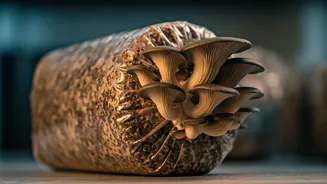
After the incubation period, when you see the white mycelial growth covering the substrate, it's time to encourage the mushrooms to fruit. This involves moving the bags to a slightly cooler environment, ideally with a temperature range of 18-22°C, and providing some indirect light. Crucially, you will need to mist the bags with water twice daily using your spray bottle. This increased humidity and slightly cooler temperature signals to the mycelium that it's time to produce mushrooms. The consistent moisture is vital for the development of the mushroom buds, which will eventually grow into mature fruiting bodies. This transitional phase is key to initiating the harvest cycle.
Step 5: Harvesting and Flushes
The final stage is the rewarding process of harvesting your home-grown mushrooms. You'll know they are ready for picking when their caps have flattened out. This typically occurs around day 25 to 30, depending on the conditions and mushroom variety. To harvest, gently twist off the mature mushrooms from the base. Don't be discouraged if the first harvest is small; the beauty of this method is its ability to produce multiple flushes. Each bag can yield 2 to 3 harvests, providing a continuous supply of fresh mushrooms. For those in drier climates, like Delhi during winter, using a damp cloth to cover the bags can help maintain the necessary humidity for optimal growth.
Common Pitfalls and Scaling
While growing mushrooms in plastic bags is generally straightforward, being aware of potential issues can enhance success. Regularly inspect your bags daily for any signs of green mold growth. If mold appears, it's best to discard the affected bag to prevent it from spreading to other cultures. To ensure uniform growth and maximum yield, rotate the bags periodically. For those looking to scale up, the polybag technique is highly efficient; ten bags can provide enough mushrooms to feed a family of ten for a week. This method boasts a remarkable yield success rate, even during warmer months, achieving up to 90%. You can then enjoy your fresh, organic produce in various culinary creations, from stir-fries to curries, relishing the distinct flavour of home-grown fungi.