







The Active Recall Advantage
Many children and parents rely on study methods like rereading notes or highlighting, which often create an illusion of knowledge rather than true retention.
Research indicates that these passive techniques are significantly less effective for long-term memory compared to active recall strategies. When students engage in teaching material to others, their understanding deepens, and their ability to apply that knowledge improves. This active retrieval process forces a more profound cognitive engagement, compelling the brain to access and reconstruct information, thereby strengthening memory pathways. The 60-second teach-back trick capitalizes on this principle by requiring children to actively pull information from their minds and articulate it, leading to more robust and lasting learning outcomes than simply revisiting textbook pages.
Implementing the 60-Second Trick
Integrating the 60-second teach-back method into your child's routine is remarkably simple and requires no special tools or preparation from parents. After your child finishes a study session on any subject, from history to science, ask them to explain one topic they've learned back to you. The challenge is to do this within a minute, without consulting any notes, and as if they were explaining it to someone entirely new to the subject. This exercise compels them to organize their thoughts and recall information concisely. If they stumble or pause, it's a positive indicator, signaling an opportunity to identify and fill specific knowledge gaps. Over time, this practice naturally enhances their ability to recall information more quickly, clearly, and with growing confidence. The beauty of this method lies in its low barrier to entry for parents; simply being an attentive listener is sufficient, as the child does the heavy lifting of knowledge retrieval.
Brain Science Behind the Magic
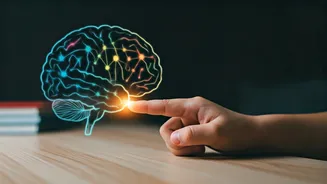
The remarkable effectiveness of the 60-second teach-back trick is rooted in fundamental principles of cognitive neuroscience. Primarily, it activates 'retrieval practice,' a process where actively recalling information strengthens the neural connections associated with it. Unlike rereading, which fosters mere recognition, retrieval forces the brain to work harder, creating more durable memories. Furthermore, this technique acts as an immediate diagnostic tool, pinpointing 'knowledge gaps' that passive study often masks. When a child struggles to articulate a concept, it clearly reveals areas needing further attention and reinforcement, guiding their subsequent learning efforts more efficiently. This act of simplification and explanation also promotes 'deeper processing,' moving beyond superficial memorization to a genuine understanding that allows for more flexible and accessible memory recall, especially under pressure, such as during exams. Additionally, the consistent practice of verbalizing learned material cultivates 'confidence and verbal fluency,' empowering children with stronger communication skills and a greater sense of academic self-efficacy.