





Propulsion Breakthrough Announced
A significant agreement has been forged between a Polish aerospace innovator and an Indian company specializing in services performed in orbit. The Polish firm,
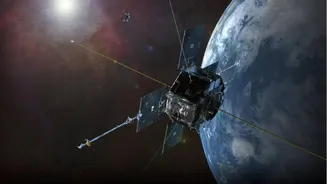
known for its development of eco-friendly chemical propulsion technology, will equip the Indian company's spacecraft with its advanced systems. This collaboration is geared towards enhancing the capabilities of missions focused on servicing existing satellites while they are still operational in space. The core of this partnership involves the supply of sophisticated propulsion units designed to provide precise control and maneuverability for spacecraft performing complex tasks such as repairs or refueling. This initiative marks a crucial step in making in-orbit servicing more efficient and feasible, paving the way for new operational paradigms in space exploration and utilization.
Next-Gen Maneuvering Systems
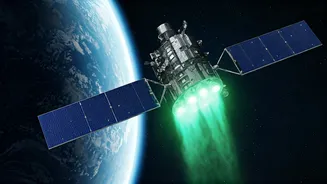
The collaboration will see the delivery of two distinct multi-thruster propulsion configurations, specifically the 'BOOSTER' model, for an upcoming mission scheduled for late 2026. This deployment is particularly noteworthy as it will feature the inaugural use of a propulsion system powered by nitrous oxide (N2O) to achieve six degrees of freedom (6-DOF) maneuvering within an in-orbit servicing context. This level of control allows for highly intricate movements, essential for tasks like precise station-keeping, complex orbital adjustments, and close proximity operations. The ability to achieve 6-DOF maneuverability signifies a substantial advancement, enabling spacecraft to navigate and interact with other objects in orbit with unparalleled agility and precision, a capability vital for the success of sophisticated servicing operations and the broader expansion of space infrastructure.
Strategic Partnership Flourishes
The chief executive and co-founder of the propulsion company expressed great enthusiasm for the ongoing partnership with the Indian servicing firm, describing the mission as exceptionally ambitious. He highlighted the collaborative effort as a significant achievement, not only for both companies but for the entire space industry. The successful integration of their booster propulsion systems into an in-orbit servicing mission is seen as definitive proof that environmentally friendly chemical propulsion is now ready for widespread commercial adoption. This sentiment underscores the maturation of green propulsion technologies and their readiness to meet the rigorous demands of real-world space applications, signaling a shift towards more sustainable and capable space operations across the sector.
Versatile Propulsion Chosen
The Indian company's leadership confirmed that the decision to select the 'BOOSTER' propulsion system was driven by its exceptional versatility and its capacity to fulfill the stringent performance requirements of their specialized in-orbit servicing spacecraft. The company emphasized that their mission necessitated a propulsion configuration tailored to specific needs, and Liftero's adaptable framework proved capable of rapid, practical, and cost-effective modifications, even within demanding time constraints. This highlights the supplier's agility and commitment to client-specific solutions. The Indian firm looks forward to the initial launch and anticipating future collaborative missions, underscoring the confidence in the propulsion system's capabilities and the strength of the partnership.
Pioneering Space Sustainability
This collaboration is set to dramatically extend the operational lifespan of satellites by providing essential services like refueling and maintenance directly in orbit. Looking further ahead, the company envisions establishing orbital refueling depots. These stations would act as vital hubs, replenishing satellites with fuel and thereby significantly prolonging their functional viability. This forward-thinking approach is crucial for fostering more sustainable space operations by reducing the need for frequent satellite replacements. Ultimately, this initiative aims to mitigate the growing problem of space debris, contributing to a cleaner and safer orbital environment for future endeavors in space exploration and commercial activities.