







Bands for Home Fitness
Resistance bands are a versatile and cost-effective way to enhance your home workouts. They offer variable resistance, allowing you to tailor your exercises
to your fitness level. Unlike weights, resistance bands are lightweight and portable, making them ideal for small spaces or travel. They are also gentle on the joints, making them suitable for people of all ages and fitness levels. The bands are excellent for both strength training and stretching, and they can target various muscle groups. Furthermore, using resistance bands enhances muscle activation, improving the effectiveness of each exercise. Their adaptability makes them perfect for users with varying strength capabilities.
Benefits of Using Bands
Resistance bands offer a range of advantages that make them a great choice for home workouts. They are particularly beneficial during the winter months, when cold weather can lead to muscle stiffness and reduced activity. Regularly using resistance bands helps improve flexibility, increases blood flow, and keeps muscles warm. Moreover, they are highly effective for functional training, which mimics everyday movements and enhances overall body strength. Their resistance levels can be adjusted easily, from light to heavy, ensuring a progressive workout experience. They also help improve posture, balance, and coordination. This adaptability makes them suitable for a wide range of users, from beginners to experienced athletes, providing a comprehensive and accessible fitness solution right in your home.
Top Rated Resistance Bands
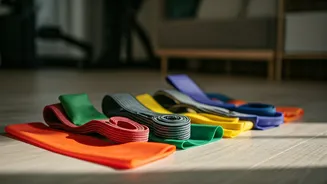
There are numerous resistance bands available on the market, each offering unique features and benefits. The first type is the loop resistance bands, which are typically used for lower-body exercises, such as squats and glute bridges. Next are the tube resistance bands with handles, these are great for upper body workouts. Fabric resistance bands provide an alternative, often preferred for their comfort and durability, especially during exercises like hip thrusts. Some sets include multiple bands with different resistance levels, allowing for versatile workouts. Finally, figure out what you are looking for in a resistance band, from ease of use to overall durability.
How to Use Resistance Bands
Incorporating resistance bands into your workout routine is simple and effective. You can anchor bands to a door for exercises like chest presses or rows. For leg workouts, loop bands around your ankles or thighs to add resistance to squats and lunges. When using bands, maintain proper form to maximize effectiveness and prevent injuries. Start with lighter resistance levels and gradually increase as you get stronger. Focus on controlled movements, avoiding jerking or quick motions. Consistency is key for achieving results; aim for regular workouts, even if they are short. Always listen to your body and take breaks when needed. Combining resistance band exercises with other forms of training, such as cardio, provides a well-rounded fitness regimen, helping you reach your fitness goals.
Exercises to Try
Here are some basic exercises that can be performed using resistance bands. For the lower body, try squats with a band around your thighs to activate your glutes and build leg strength. For the upper body, do band rows by anchoring the band and pulling it towards your chest, strengthening your back muscles. Band bicep curls are effective for targeting biceps, while band tricep extensions are excellent for your triceps. Don't forget to incorporate stretches using bands to improve flexibility and range of motion. For core strength, try band wood chops, which engage your core muscles as you move the band diagonally across your body. The versatility of resistance bands allows for numerous exercise variations, making them a complete tool for all your fitness needs.
Maintaining Your Bands
Proper care and maintenance will extend the life of your resistance bands. Always inspect your bands for signs of wear and tear, such as cracks or tears, before each use. Store your bands away from direct sunlight and extreme temperatures, which can degrade the material. After each workout, wipe your bands with a damp cloth to remove sweat and dirt. Avoid using harsh chemicals or cleaning agents, which can damage the bands. Allow the bands to air dry completely before storing them. If your band loses some resistance, it's generally a sign that it may be time to replace it. Following these tips helps to ensure that your resistance bands remain effective and safe for your workout sessions.