


The Common Carrot Conundrum
Carrots, with their natural sweetness and robust structure, seem like an ideal vegetable for roasting, promising delightful caramelization and a satisfying
texture. However, many home cooks encounter a frustrating outcome: carrots emerging from the oven dry, wrinkled, and unappealingly leathery. This often stems from the fundamental nature of roasting as a dry-heat cooking method. The oven's intense dry heat effectively draws moisture out of the vegetables, a process that, while essential for browning and flavor development through caramelization and the Maillard reaction, can be detrimental to carrots' delicate structure. Composed primarily of water within a cellular framework, carrots can lose too much of this essential liquid before they reach the desired tenderness. This dehydration leads directly to the characteristic shriveling. Furthermore, the inherent shape of carrots, tapering from a thicker top to a thinner end, exacerbates this issue, causing uneven cooking. The thinner parts dry out and overcook far more rapidly than the denser cores, meaning that by the time the center is cooked, the extremities are often past their prime, resulting in a visually unappetizing and texturally disappointing dish.
The Ingenious Two-Stage Solution
The solution to the pervasive problem of shriveled roasted carrots lies in a smart, two-stage cooking approach that prioritizes tenderness before browning. Instead of relying solely on the oven's dry heat to both cook and brown the carrots—a process that inherently risks dehydration—this method strategically uses moist heat first to tenderize the vegetables. Parboiling the carrots in well-salted water acts as a highly effective, albeit unglamorous, initial step. This technique leverages water's superior heat transfer capabilities compared to air, allowing the carrots to cook through quickly and uniformly. As they simmer, the carrot cell walls soften and relax within the hydrating environment, enabling them to achieve a tender state without significant moisture loss. Crucially, because the carrots are already partially cooked when they enter the oven, their time in dry heat is dramatically reduced. This shorter oven duration minimizes the opportunity for the heat to excessively dry them out, ensuring that the focus in the oven is purely on achieving that desirable golden-brown caramelization and depth of flavor.
Mastering the Method: Step-by-Step
Achieving perfectly roasted carrots begins with proper preparation and a clear understanding of the two-stage process. Start by thoroughly scrubbing your carrots; peeling is optional, depending on your preference. If using baby carrots with their greens still attached, trim the leafy tops to about half an inch, as these tender fronds can be saved for a decorative garnish. For standard supermarket carrots, it's best to cut them lengthwise or into your preferred uniform shape to promote even cooking. Place the prepared carrots into a pot filled with generously salted water and simmer until they reach a state of crisp-tenderness—they should yield to a knife with slight resistance but not fall apart. Once cooked, drain them thoroughly and allow them to steam off any excess surface moisture. The next phase involves maximizing browning in the oven. Toss the par-cooked carrots liberally with oil or, for enhanced flavor and browning, melted butter. Season them assertively with kosher salt. Crucially, spread the seasoned carrots onto a preheated metal baking sheet; this initial contact with a hot surface will immediately begin the browning process. Roast at 375°F (190°C) for approximately 30 to 40 minutes, or until they develop a deep golden hue. A final tip: avoid adding delicate herbs until after the carrots have finished roasting, as they can easily burn and become unappealing during the high-heat cooking.
The Glorious Outcome
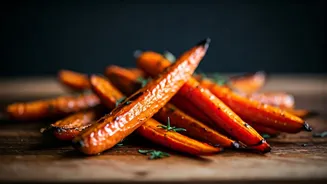
The culmination of this two-stage cooking method is a batch of roasted carrots that surpasses expectations in both appearance and taste. Instead of the dreaded shriveled texture, you'll be presented with carrots that boast a creamy interior, complemented by delightfully crisp edges. The exterior will be deeply bronzed and beautifully caramelized, offering a rich, toasty sweetness that is truly candy-like. These carrots remain intact, showcasing their shape without any hint of leathery dryness. This approach not only rectifies the common problem of dehydration but also amplifies the natural flavors of the carrot, resulting in a side dish that is both visually appealing and incredibly delicious, making them a perfect addition to any meal, from everyday dinners to special occasions.