

The Era of All White
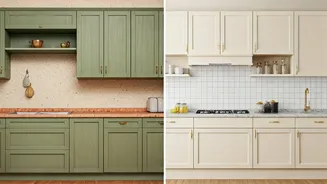
The dominance of all-white kitchens, once a celebrated minimalist choice, has waned considerably. Interior designers observe a growing homeowner desire
for spaces that exude character and history, elements often perceived as lacking in monochromatic white schemes. Consequently, there's a noticeable shift towards incorporating bolder hues and varied textures through elements like backsplashes, accent cabinetry on islands, and runners, aiming to infuse kitchens with the personality that was once missing. This evolution signals a move away from sterile uniformity towards more vibrant and custom-feeling environments.
Tuscan Overwhelm
Kitchens evoking an overwhelmingly Italian ambiance, characterized by heavy, ornate details and a sense of opulent grandeur, have fallen out of favor. This style, reminiscent of early 2000s trends, is now viewed by designers as visually crowded and overly elaborate. The current design philosophy leans towards a more serene and streamlined aesthetic, prioritizing lighter color palettes and minimalistic decoration. The emphasis has shifted to creating brighter, more airy spaces that embrace simplicity and a less is more approach to ornamentation, offering a refreshing contrast to the previously favored detailed look.
Nostalgic Farmhouse
The pervasive farmhouse aesthetic, particularly its 1990s iteration, is now widely considered outdated as contemporary design preferences steer towards cleaner, more functional layouts. Elements like warm-toned oak finishes and busy patterns are giving way to sleeker lines and a more neutral color scheme. While the cozy, homey feel of farmhouse design remains appealing, the modern interpretation focuses on natural textures and richer, subdued color palettes rather than the more traditional, cluttered appearances of the past. This shift prioritizes a streamlined, less is more philosophy in kitchen design.
Open Shelving's Decline
While offering an accessible storage solution, open shelving in kitchens is experiencing a decline in popularity, especially when their primary function becomes purely decorative. Designers note that maintaining a consistently tidy appearance on open shelves is challenging, as they often become display areas requiring constant curation. To address this, homeowners are increasingly opting for alternatives, such as cabinets with frosted glass panels, which provide a chic, low-maintenance solution for concealing clutter while maintaining an uncluttered aesthetic and reducing dust accumulation.
2000s Cherry Wood
The distinct look of 2000s kitchens, featuring dark cherry wood cabinets paired with vibrant granite countertops, is now seen as dated. While darker wood tones are seeing a resurgence, the specific reddish hues of cherry wood no longer align with current design trends that favor lighter, cleaner aesthetics. The bold patterns of traditional granite also clash with the preference for more subdued and neutral solid-surface countertops. The current movement is towards creating brighter, more contemporary spaces by opting for lighter wood finishes and simpler countertop materials.
Ubiquitous Subway Tile
Subway tiles, once a go-to backsplash option, are now being advised against by designers due to their widespread overuse. Their ubiquity can lead to kitchens appearing generic rather than custom-designed, suggesting a lack of personal style or exploration. With a vast array of unique and visually interesting tile options available, designers encourage homeowners to move beyond this common choice to create a more distinctive and personalized look that sets their kitchen apart from the ordinary.