



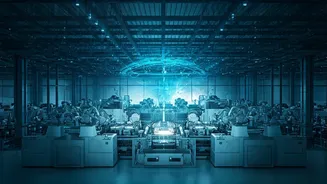
Forging the Future
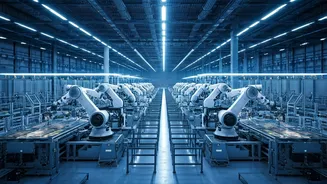
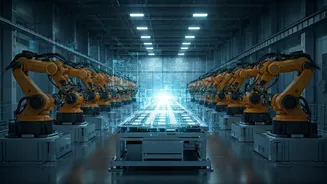
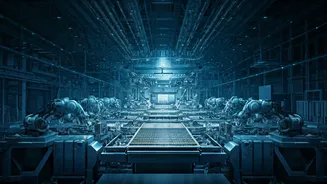
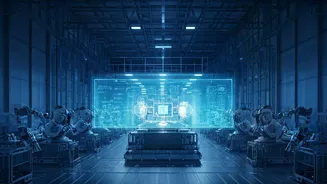
Elon Musk is embarking on a significant expansion into in-house semiconductor fabrication with his ambitious 'Tera-fab' project. This massive facility,
slated for construction near Tesla's Austin headquarters, is designed to produce custom chips essential for a wide array of his technological pursuits. The venture aims to accelerate advancements in artificial intelligence, robotics, autonomous driving systems for Tesla, and the burgeoning orbital data center infrastructure planned by SpaceX and xAI. This move stems from a critical need to overcome the current semiconductor supply chain limitations, which threaten to impede the rapid scaling of his compute-intensive AI and robotics initiatives. Musk himself has expressed urgency, stating that without building the Tera-fab, the necessary chips simply wouldn't be available to meet their aggressive development timelines.
Addressing Chip Scarcity
The tech industry is currently experiencing a pronounced scarcity of advanced chips, a bottleneck that directly impacts the race to develop powerful AI capabilities. While many companies are grappling with this issue, few possess the resources and strategic vision to establish their own semiconductor manufacturing operations, a process that demands billions in capital investment and access to highly specialized, multi-provider equipment. Musk's decision to forge ahead with Tera-fab, a joint effort between Tesla and SpaceX, highlights his commitment to securing a dedicated supply of cutting-edge silicon. This initiative moves beyond typical supplier relationships, like those with TSMC and Micron, or existing agreements with Samsung, to create a self-sufficient ecosystem. The urgency is palpable, as Musk indicated that the current pace of semiconductor production is insufficient for his companies' burgeoning AI and robotics needs, making the Tera-fab a necessity rather than a luxury.
Dual-Purpose Chip Design
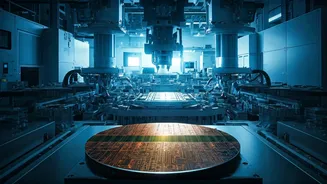
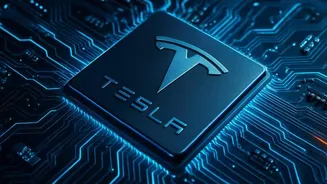
The Tera-fab facility is engineered with a specific focus on producing two critical types of advanced semiconductors. A primary output will be 2-nanometre chips optimized for edge computing and inference tasks, designed to enhance the performance of applications like Tesla's robotaxis and the Optimus humanoid robots. These chips are crucial for real-time decision-making and processing data directly on the device. Concurrently, the factory will manufacture high-power chips intended for use in SpaceX's ambitious orbital data center network and xAI's sophisticated AI models. The facility is projected to generate between 100 to 200 gigawatts of computing power annually on Earth, with a staggering terawatt capacity dedicated to space-based applications. Musk has indicated that the majority of these chips will be allocated to xAI, underscoring the central role of artificial intelligence in his long-term vision.
Orbital Data Center Vision
Elon Musk's grand strategy extends beyond Earth's atmosphere, encompassing a visionary network of orbital data centers powered by custom-built chips. The initial phase of this project involves launching a 'mini' AI data center satellite capable of delivering 100 kilowatts of computing power. This satellite represents a single node in a much larger architecture, with plans to scale individual data centers to megawatt capacities. Musk's broader aspirations include launching satellites from the lunar surface, contributing to a future he envisions as one of 'amazing abundance.' In pursuit of this goal, Musk has petitioned the US Federal Communications Commission (FCC) for approval to deploy one million data center satellites into Earth's orbit, a proposal that has already encountered opposition from competing satellite ventures. These orbital data centers are also integral to SpaceX's financing plans, with expectations of raising substantial capital to support this expansive undertaking.