



Powering Down for Longevity
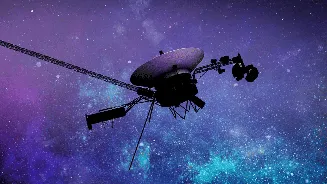
In a bid to extend the operational lifespan of the venerable Voyager 1 spacecraft, NASA has made the pragmatic choice to deactivate additional scientific
instruments. This decision was precipitated by an unexpected dip in power levels detected during a maneuver on February 27th. While some systems were already offline from the previous year, this recent power drop prompted NASA to take further action sooner than anticipated. The core objective behind this measure is to ensure the spacecraft's continued functionality for as long as possible, allowing it to transmit valuable data from the outer reaches of our solar system and beyond.
Science Continues Aboard
Despite the necessary deactivation of certain instruments, Voyager 1 is not entirely silenced. It currently retains two vital operational science instruments: one designed to detect plasma waves and another that measures magnetic fields. These systems are performing exceptionally well, diligently collecting and transmitting data from a region of space that no other human-made object has ever ventured into before. The dedicated team at JPL remains committed to maintaining the operational status of both Voyager probes, emphasizing their ongoing focus on keeping these pioneering spacecraft going for an extended duration.
A Hope for LECP
While the recent power reduction necessitated the shutdown of certain scientific payloads, there is a potential for the Low-Energy Charged Particle (LECP) instrument to be brought back online. Engineers are actively developing a solution that could not only extend the longevity of both Voyager 1 and its twin, Voyager 2, but also potentially re-activate the LECP. This ongoing effort highlights the ingenuity and determination of the mission control team to maximize the scientific return from these extraordinary interstellar explorers, ensuring their legacy continues to expand.