



ML-2 Development Paused
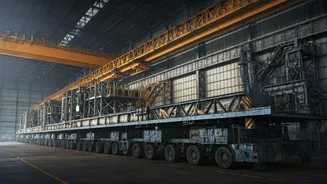
NASA has officially stopped all construction activities on Mobile Launcher 2 (ML-2), a specialized platform that was being developed for an advanced version
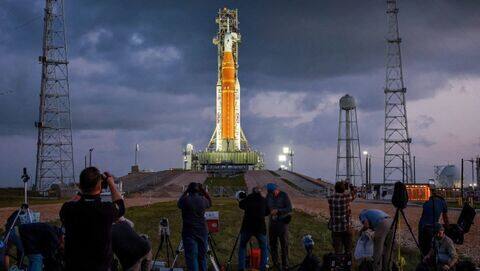
of the Space Launch System (SLS) rocket. This decision stems from NASA's strategic shift away from developing the SLS Block 1B variant, for which ML-2 was specifically designed. The agency has now redirected efforts to dismantle ML-2 and salvage usable hardware. This hardware will be integrated as essential spare parts for Mobile Launcher 1 (ML-1), the existing launch platform that successfully supported the initial Artemis missions, including Artemis 1 and the upcoming Artemis 2. This move aims to bolster the reliability and longevity of the current launch infrastructure, ensuring critical components are readily available for future space exploration endeavors.
Repurposing Core Components
As part of the stop-work order for ML-2, NASA is meticulously extracting crucial hardware that is identical to components found on the operational Mobile Launcher 1. A significant focus is on preserving items with long manufacturing lead times, such as specialized cryogenic flex lines within the umbilical arms. These umbilical arms, which connect the rocket to the launch tower for propellant and data transfer, are identical for both the core stage and the Orion spacecraft on both ML-1 and ML-2. By salvaging these long-lead items and storing them carefully, NASA aims to build a vital inventory of spares. This proactive measure will significantly reduce potential delays and enhance the readiness of ML-1 for subsequent Artemis missions, mitigating risks associated with component wear or unforeseen damage during launches.
Strategic Rocket Pivot
The decision to halt ML-2 construction is intrinsically linked to NASA's revised strategy for the Space Launch System. The agency recently announced it would no longer proceed with the development of the SLS Block 1B configuration, which necessitated the larger Exploration Upper Stage and a different launch platform. Instead, NASA is prioritizing a 'near Block 1' version of the SLS to increase the frequency of launches. Furthermore, the Interim Cryogenic Propulsion Stage (ICPS), of which only one remains, will be replaced by a Centaur upper stage for future SLS missions. This strategic realignment makes the specialized features of ML-2 redundant, prompting the repurposing of its assets to support the established SLS Block 1 architecture.
Costly Development Hurdles
The development of Mobile Launcher 2 was plagued by significant financial overruns and schedule slippages, contributing to its eventual cancellation. Initially awarded to Bechtel in 2019 with a $383 million cost-plus contract and a target completion date of March 2023, the project faced escalating costs. A subsequent report by NASA's Office of Inspector General revealed that ML-2's total cost could reach up to $2.5 billion, with projections indicating a potential completion date as late as 2029. These substantial cost increases and delays were attributed, in part, to an initial underbidding by the contractor, leading to difficulties in execution and leaving NASA with substantial financial commitments for an increasingly unnecessary asset.
ML-1 Post-Artemis Analysis
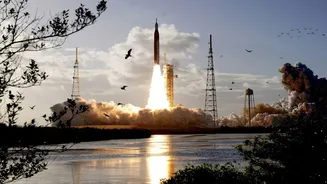
Following the successful launch of Artemis 2, NASA is conducting a thorough review of the performance and resilience of the existing Mobile Launcher 1. The platform sustained more damage than anticipated during the Artemis 1 launch in 2022, requiring extensive repairs to tubing, elevators, and other critical equipment. Lessons learned from Artemis 1 have informed modifications to the launch platform, including the hardening of critical systems against plume damage and the installation of more robust blast doors for elevator protection. Additionally, improvements have been made to the water deluge system, which is designed to mitigate residue damage from solid rocket booster exhaust. Initial assessments of the Artemis 2 launch indicate that these enhancements have significantly improved the platform's durability, with most damage described as largely cosmetic, a marked improvement over the extensive repairs needed after Artemis 1.