





Pioneering Orbital Computing
The burgeoning field of space-based computing is on the cusp of a major advancement in India, with projections suggesting the nation could witness its
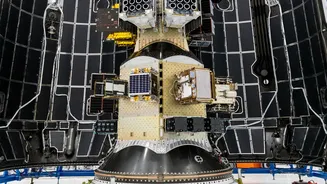
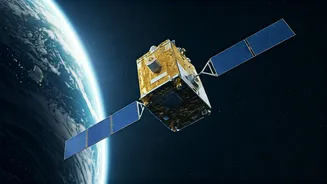
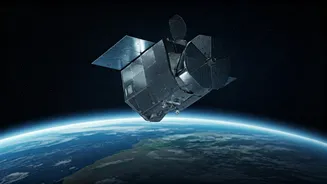
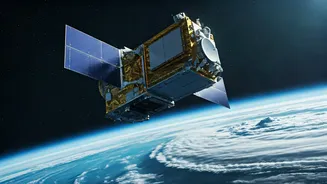
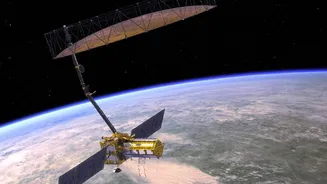
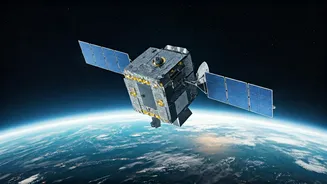
first indigenous large language model (LLM) undergoing training in orbit as early as this year. This ambitious endeavor is spearheaded by space-tech startup Pixxel in a significant partnership with LLM provider Sarvam AI. Together, they are developing and constructing what is set to be India’s inaugural orbital data center satellite, christened 'The Pathfinder.' This remarkable 200-kg satellite is anticipated to be deployed into orbit by the close of 2026. Its core function will be to host powerful Graphics Processing Units (GPUs), specifically designed for the intricate tasks of training and executing Sarvam's sophisticated AI models. A key differentiator from traditional satellite computing lies in 'The Pathfinder's' hardware; unlike existing systems that utilize low-power edge processors optimized for resilience rather than high performance, this new satellite will be equipped with hardware comparable to the cutting-edge systems found in terrestrial data centers, vital for powering frontier AI applications. This initiative aligns with a global trend where major technology players, including Google and SpaceX, alongside numerous startups, are exploring space as a viable solution to overcome Earth's mounting power limitations.
Addressing Earth's Energy Crunch
The escalating demand for energy by terrestrial data centers has become a significant global concern, leading to public resistance and compelling technology companies to seek innovative solutions like orbital data centers. Projections indicate a substantial increase in global data center capacity, estimated to reach 200 GW by 2030. Similarly, India's data center capacity is expected to experience a six-fold growth, expanding from its current 1.8 GW to approximately 10.5 GW by 2031. Companies like SpaceX are already envisioning deploying up to a million data-center satellites into orbit. Furthermore, Meta is exploring partnerships with energy startups to harness solar energy beamed directly from space, aiming to power its own ground-based data centers. Even governmental bodies like the Indian Space Research Organisation (ISRO) are actively investigating next-generation satellites capable of on-board data processing and storage, signaling a broader shift towards decentralized and space-integrated computing infrastructure. Despite these advancements, some experts remain skeptical about the feasibility and commercial viability of orbital data centers, citing the high cost of rocket launches and the challenges associated with maintaining and repairing space-based hardware.
Pixxel-Sarvam Collaboration Unveiled
The strategic partnership between Pixxel and Sarvam AI outlines a comprehensive approach to realizing 'The Pathfinder' mission. Pixxel will assume responsibility for the entire lifecycle of the satellite, encompassing its design, construction, launch, and ongoing operation. The satellite's development will take place at Pixxel's forthcoming facility, Gigapixxel, which is being engineered for scalable satellite production, capable of manufacturing up to 100 units. While specific technical details regarding 'The Pathfinder' have not been disclosed, Sarvam AI will focus on executing the training and inference of its advanced language models directly within the space environment. This approach ensures that the models and their processing platform operate independently of any foreign cloud or ground infrastructure, establishing a sovereign AI capability. The mission is designed to rigorously test real-time AI inference and data processing under the demanding conditions of space. Key performance indicators will include evaluating operational efficiency, power management strategies, thermal regulation, and the effectiveness of real-time data workflows, thereby laying the groundwork for future orbital data center systems from both a technical and commercial standpoint.
Dual-Purpose Satellite Innovation
Beyond its primary role in hosting AI model training hardware, 'The Pathfinder' satellite will also be equipped with a sophisticated hyperspectral imaging camera. This advanced camera will be capable of capturing highly detailed hyperspectral data, which will then be analyzed directly in orbit, leveraging the foundation models trained on the satellite. This integrated processing capability offers a significant advantage over traditional methods, which require vast amounts of raw imagery to be transmitted back to Earth for analysis. By performing on-orbit analysis, the system can efficiently identify patterns, detect subtle changes, and generate actionable insights in real-time. This dramatically accelerates the time between data acquisition and decision-making, enabling more responsive actions in critical areas such as environmental monitoring, resource management, and tracking vital infrastructure. Pixxel emphasizes that this innovation significantly reduces latency, leading to faster and more effective interventions across various applications, demonstrating the practical benefits of space-based AI processing.