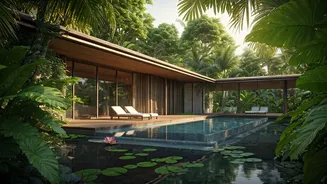







Kipling Camp's Sustainable Haven
Nestled in Madhya Pradesh's Maikal hills, Kipling Camp stands as a beacon of conservation, established in 1982 by Belinda Wright. This retreat intentionally
minimizes its environmental footprint, with less than 10% of its land developed, dedicating a significant 15 acres to an undisturbed sanctuary. The architecture thoughtfully incorporates local styles, connected by natural pathways, fostering a seamless integration with the surroundings. The camp prioritizes local employment and actively contributes to the community through essential services like medical aid and school supplies. Furthermore, it champions the preservation of local culture by supporting the Baiga tribals and Gond artists, ensuring that cultural heritage flourishes alongside its robust conservation initiatives, making every visit a contribution to both the environment and the local way of life.
Svasara's Jungle Immersion
Located on the periphery of Maharashtra's Tadoba Tiger Reserve, Svasara Jungle Lodge offers an authentic wilderness experience. Situated on 10 acres of meticulously restored forest, the lodge boasts 12 elegantly furnished suites adorned with local artistry. Beyond providing exhilarating wildlife safaris led by expert naturalists, Svasara demonstrates a profound dedication to its community. This commitment is evident in its employment of local residents and its active support for regional conservation efforts, ensuring that each guest's stay is not only luxurious but also deeply meaningful and ethically sound, contributing positively to the local ecosystem and economy.
The Kumaon's Eco-Design
The Kumaon, gracefully situated in Uttarakhand's Binsar hills, exemplifies sustainability through its thoughtful design and construction. The lower suites are primarily built with local stone, echoing the aesthetic of traditional Kumaoni village homes, while the upper chalets creatively blend fly-ash bricks, bamboo, and copper. The property's layout is engineered to maximize natural light and airflow, significantly reducing the need for artificial energy consumption. Guests can indulge in activities like stargazing and exploring ancient temples, immersing themselves in the region's natural beauty and cultural heritage with a minimized environmental impact. The culinary offerings exclusively feature local cuisine, substantially lowering the carbon footprint associated with food consumption, embodying a holistic approach to eco-conscious travel.
Sariska Lodge's Regeneration
Sariska Lodge in Rajasthan is a powerful symbol of the region's remarkable conservation turnaround after facing severe poaching challenges in the early 2000s. Founded by Anand Shekhawat and Puneet Jain, the lodge embodies a profound legacy of wildlife protection. What was once designated for afforestation has been transformed into a vibrant 15-acre micro-ecosystem. The founders have planted over 50,000 native trees and grasses, creating a crucial buffer zone for the reserve's thriving tiger population, which exceeds 50 individuals. This 11-suite retreat goes beyond merely having a 'low impact'; it actively rejuvenates the soil and water resources. Adhering to a zero-waste philosophy and employing its entire staff from neighboring villages, Sariska Lodge offers an unhurried luxury where the most profound amenity is the breathtaking starlit sky and a flourishing, revitalized forest.
The Tamara Coorg's Commitment
Deeply embedded within a lush coffee plantation in Karnataka's globally significant biodiversity hotspot, The Tamara Coorg serves as a premier example of responsible tourism. As a certified property by the Global Sustainable Tourism Council (GSTC), it unequivocally demonstrates that international sustainability standards can be seamlessly integrated with high-end hospitality. In observance of Earth Day, under the theme "Responsible Hospitality: Our Power, Our Planet," the resort hosts a dedicated Earth Week from April 22nd to 28th. This initiative allows guests to engage beyond typical stays, participating in sustainability workshops, enjoying conscious dining experiences, and embarking on nature-led trails. Every aspect of the resort's operation is meticulously planned, from energy-efficient systems to the thoughtful gesture of gifting guests a sapling, ensuring the enduring spirit of the Western Ghats stays with them long after their departure.
Evolve Back: Harmonious Living
Nestled amidst the aromatic coffee estates of Coorg, Karnataka, Evolve Back masterfully achieves a harmonious integration with its natural surroundings. The resort's structures are constructed using indigenous materials and reflect traditional Kodava architectural styles, creating the impression that it has grown organically from the landscape itself. Beyond its exquisite villas and serene lakes, Evolve Back actively engages in community educational programs and provides support to local farmers. It also diligently maintains its own private nature reserves, powerfully substantiating its claim that the "spirit of the land" is more than just a mere slogan, but a guiding principle in its operations and philosophy.
Samode Lodge's Green Design
Positioned within the buffer zone of Madhya Pradesh's Bandhavgarh National Park, Samode Safari Lodge presents an exclusive retreat away from the main tourist throngs. The lodge features twelve exquisitely designed villas, occupying only 2 acres of its expansive 30-acre property, with a strong emphasis on rewilding initiatives and cultural preservation. Its architecture thoughtfully incorporates local materials, and the property leverages green energy sources. Critically, its operational model prioritizes the employment and empowerment of local communities, ensuring that the economic benefits of tourism directly support the people who are integral to the region's conservation efforts.
Oberoi Vanyavilas' Solar Power
Situated at the edge of Rajasthan's Ranthambore National Park, The Oberoi Vanyavilas beautifully combines luxurious tented accommodation with the raw beauty of the wild. While its teak wood floors and private walled gardens epitomize opulence, the property actively demonstrates its commitment to environmental responsibility. The hotel operates entirely on solar energy and transports guests using electric buggies, minimizing its carbon footprint. Furthermore, it cultivates its own produce, reducing reliance on external supply chains. The resort also provides substantial support to Tiger Watch and collaborates with Dhonk, a foundation dedicated to helping former poachers and local artisans transition to sustainable livelihoods, showcasing a holistic approach to conservation and community development.
Aahana Resort's Community Focus
Located on the northeastern boundary of Corbett National Park in Uttarakhand, Aahana Resort is nestled within the verdant Patlidun valley. Founded by Kamal Tripathi, whose family has a legacy of freedom fighters, the resort views tourism as a powerful vehicle for giving back to the community. The property features an organic farm that supplies its farm-to-fork dining experience, and an impressive 95% of its staff hails from neighboring villages. This establishment offers a refined blend of Victorian-inspired luxury and deeply embedded community initiatives, demonstrating a successful model where high-end hospitality directly benefits local populations and ecosystems.
Dolkhar's Ladakhi Roots
Dolkhar, located in Ladakh, is the brainchild of Rigzin Wangmo Lachic, conceived for individuals who deeply value sustainability as an intrinsic component of travel. This boutique property is profoundly connected to the essence of Ladakhi life, featuring seven villas expertly constructed by local artisans utilizing indigenous materials. From the plant-based menu at Tsas to the bespoke handcrafted furniture, Dolkhar offers a distinctive fusion of traditional craftsmanship and contemporary comfort. Guests can also indulge in spa treatments featuring locally sourced, indigenous ingredients and participate in culturally immersive workshops focused on traditional crafts like wool, ceramics, and metalwork, providing a rich and authentic experience.
Coconut Lagoon's Heritage
Coconut Lagoon, part of CGH Earth in Kumarakom, Kerala, is more than just a resort; it's a vibrant testament to Kerala's rich heritage. In the 1990s, when land reforms led to the abandonment of historical homes, Jose Dominic, the founder of CGH Earth, lovingly rescued these centuries-old wooden structures. These heritage homes were meticulously reassembled by master craftsmen using Thachu Shastra, an ancient technique of carpentry that requires no nails. The resort operates its own water bottling plant, utilizes biogas for its kitchen operations, and employs a comprehensive rainwater harvesting system, effectively proving that traditional methods often represent the most environmentally sound and sustainable approaches.
SUJÁN's Conservation Ethos
SUJÁN Sher Bagh and Sujan Jawai, esteemed partners of Relais & Châteaux, are passionately led by conservationists Jaisal and Anjali Singh. Each guest's stay includes a mandatory conservation contribution that directly finances vital wildlife research and community development projects. The SUJÁN properties adhere to a stringent 'no plastic' policy and champion traditional and organic farming methods. This approach underscores their belief that true exclusivity and luxury are intrinsically linked to the diligent protection of wilderness areas for the benefit of future generations, demonstrating a profound commitment to preserving natural environments.