




Bridging the Gap
The Mumbai-Pune Expressway, a critical conduit for Maharashtra's connectivity, is on the cusp of a significant enhancement with the impending inauguration
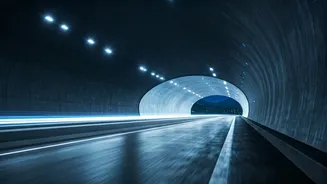
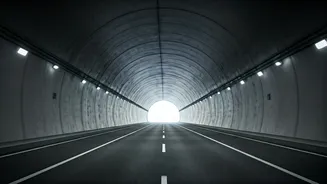
of its 'missing link.' This ambitious 13.3-kilometer project, engineered to bypass the challenging ghat section notorious for its serpentine curves and seasonal traffic snarls, promises a dramatic reduction in travel duration. At its heart lies India's longest twin-tube road tunnel, a testament to modern engineering prowess, constructed at a substantial investment of Rs 8,000 crore. This infrastructural marvel is poised to streamline the commute, offering a smoother, quicker passage for both daily travelers and the vital freight movement that fuels the region's economy. The reduction in distance, from the current over 19 km between Khopoli exit and Sinhgad Institute to a more efficient 13.3 km, directly translates to an estimated saving of 20-25 minutes in travel time, liberating commuters from the congestion of the ghats.
Advanced Infrastructure & Tunnels
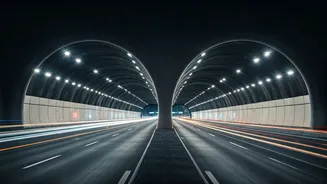
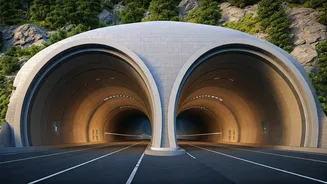
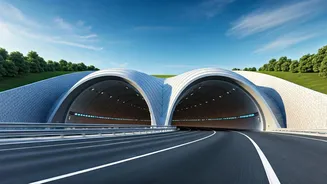
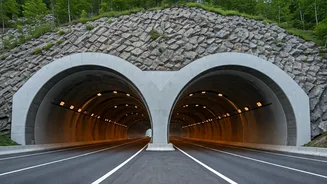
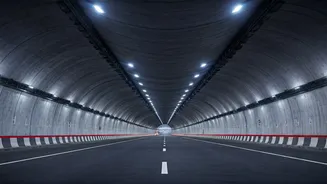
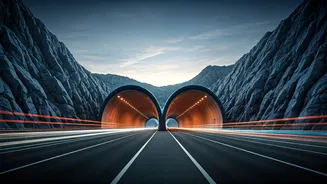
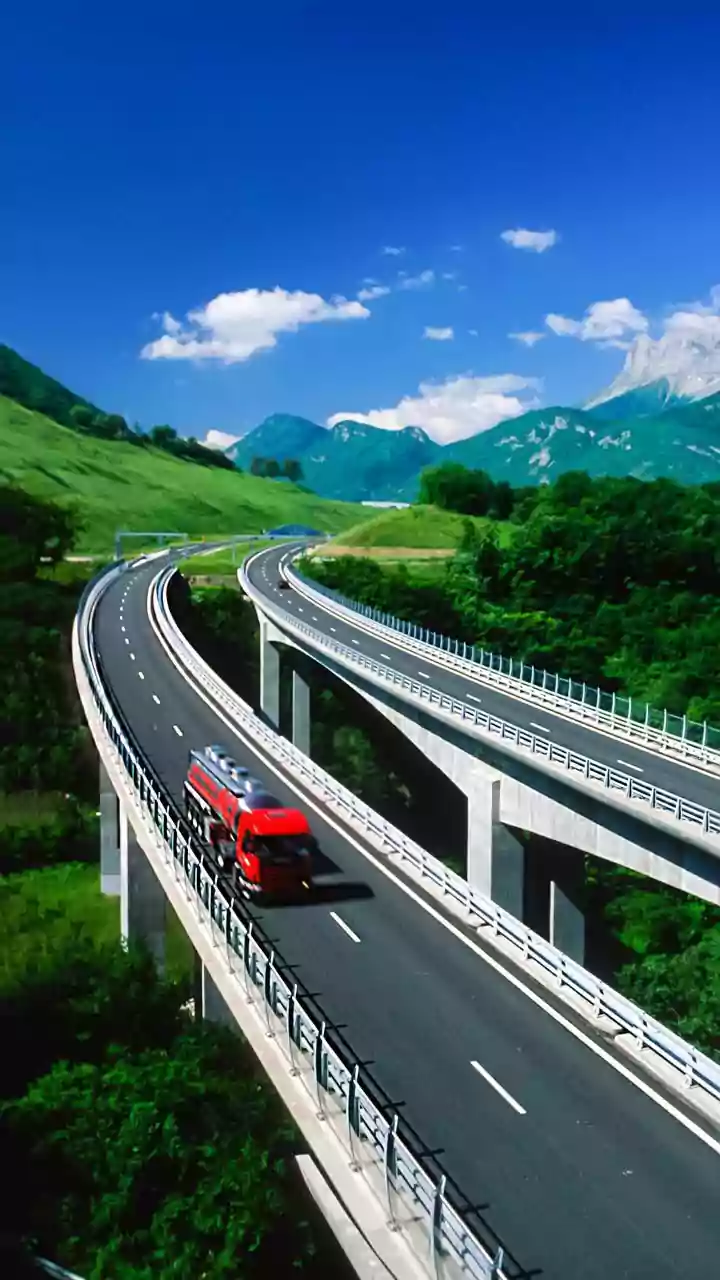
Central to the 'missing link' are its sophisticated tunnel systems, representing a leap forward in road infrastructure. Package-I of this project meticulously integrates eight-lane twin tunnels, with lengths of 1.75 km and 8.92 km respectively. These tunnels are not merely passages but are equipped with cutting-edge safety mechanisms. This includes advanced fire detection and suppression systems, robust ventilation ensuring breathable air, and strategically placed emergency exits for swift evacuation if necessary. Complementing the tunnels, Package-II comprises two eight-lane viaducts, measuring 790 meters and 650 meters. The design emphasizes enhanced capacity, with each corridor featuring four lanes plus an additional shoulder lane, a marked improvement over the expressway's existing three lanes. This expanded capacity is crucial for managing traffic flow, especially considering that stopping vehicles is prohibited on the 'missing link,' mirroring the expressway's operational rules. The engineering intent is to create an uninterrupted and highly efficient travel corridor.
Paramount Safety Systems
The operationalization of the 'missing link' is underpinned by a comprehensive and multi-agency approach to emergency response and enforcement. Twin multi-agency control rooms have been established near the tunnel endpoints, staffed 24/7 by personnel from the Highway Police, Maharashtra State Road Development Corporation (MSRDC), and the Regional Transport Office (RTO). These control rooms monitor the entire stretch via numerous Pan-Tilt-Zoom (PTZ) CCTV cameras, enabling rapid detection of any incidents, from vehicle stoppages and accidents to fire emergencies. In response, the control room can swiftly dispatch patrolling vehicles, ambulances, fire tenders, and cranes. Furthermore, the tunnels are equipped with SOS panic buttons placed every 250 meters, directly alerting the control room to distress calls. For traffic law enforcement, speed guns will be deployed at the 'missing link's' ends to monitor speed violations. The Intelligent Traffic Management System (ITMS), featuring AI-enabled cameras, is already active on the expressway and will extend its capabilities to the 'missing link,' issuing challans for infractions like speeding and lane indiscipline. The tunnels also incorporate in-built water sprinklers and fire alarm systems.
Phased Access & Speed Limits
Ahead of its inauguration, authorities have outlined a phased approach for vehicle access and stipulated clear speed limits for the 'missing link.' During Phase 1, running from May 1 to October 31, only Light Motor Vehicles (LMVs) and passenger buses/vehicles will be permitted. This initial period allows for a controlled introduction and assessment of the new infrastructure. From November 1 onwards, Phase 2 will potentially see the inclusion of goods vehicles, contingent upon a thorough review of the preceding six months of operation. Critically, a complete prohibition will remain for vehicles carrying hazardous materials, including inflammable and explosive substances; these will continue to utilize the existing expressway. For permitted vehicles, the speed limit for cars and LMVs is set at 100 kmph, while for passenger vehicles and buses, it is 80 kmph. These limits are consistent with those already in place on the existing expressway, excluding the ghat section, ensuring a predictable and safe driving experience.
Anticipating Challenges
While the 'missing link' represents a significant infrastructural leap, potential challenges and concerns have been identified. The straight, high-speed nature of the corridor, combined with its tunnels and bridges, places a paramount emphasis on effective speed enforcement and rapid emergency response, especially during its initial operational phase. A key challenge for the police will be managing public curiosity; drivers may be tempted to slow down for photographs, necessitating awareness campaigns. The impending monsoon season also presents a testing period for new infrastructure, as heavy rains can amplify risks associated with high-speed travel. Looking beyond the initial phase, the potential reintroduction of heavy vehicles after six months could reintroduce complexities in traffic management, particularly if vehicle segregation is not rigorously enforced. These considerations underscore the importance of the 'four Es' of road safety: Education, Enforcement, Engineering, and Emergency Response, as highlighted by independent road safety researchers.