


The Water Immersion Test
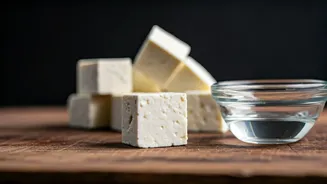
One of the simplest ways to assess paneer's integrity involves a glass of water. Take a small fragment of the paneer you suspect and gently place it into
a bowl filled with regular water. If the paneer is pure and unadulterated, it will maintain its form, perhaps softening slightly but staying mostly intact. However, if it's been compromised with fillers or other substances, you might observe it starting to disintegrate, or the water itself could become noticeably cloudy, signaling that something isn't right with its composition.
Assessing Paneer with Heat
A quick method to check for fake paneer involves a bit of heat. Place a small portion of paneer into a dry pan over medium heat; no oil is needed. Observe its reaction carefully. Genuine paneer typically softens a little when heated, retaining its inherent creamy texture. In contrast, counterfeit paneer might behave differently, potentially releasing an unusual amount of oil or developing a rubbery consistency that deviates significantly from what pure paneer should exhibit when subjected to warmth.
Evaluating Paneer's Texture
The feel of paneer can tell you a lot about its authenticity. Gently press a piece of paneer between your fingertips. Pure, fresh paneer should have a delicate and somewhat crumbly texture, yielding softly to pressure. If it feels excessively firm, dense, or unpleasantly rubbery, it might be an indication that it's not entirely made of milk solids and could contain adulterants that alter its natural structure and feel.
The Aromatic Paneer Check
Your sense of smell can be a powerful tool in determining paneer quality. Bring a piece of paneer close to your nose and inhale its aroma. Pure paneer generally possesses a very mild, pleasant, and milky scent, characteristic of fresh dairy. Any strong, sour, pungent, or chemically-like odor should raise a red flag, suggesting that the paneer might be stale, spoiled, or has been mixed with substances that compromise its purity and safety.
Detecting Starch with Iodine
For a precise check against starch adulteration, the iodine test is highly effective. You'll need a small amount of iodine solution, readily available at most pharmacies. Place a tiny piece of paneer on a clean surface and add just a single drop of iodine solution onto it. If the paneer turns a distinct blue or black color upon contact with the iodine, it confirms the presence of starch, a common adulterant used to increase volume and reduce costs.
The Boiling Point Test
Boiling paneer can reveal its true nature. Take a small cube of paneer and immerse it in boiling water for a few minutes. Observe how it holds up in the hot liquid. Pure paneer is known to retain its shape and structure quite well, even when subjected to boiling temperatures. However, if the paneer begins to disintegrate, break apart into pieces, or develops a slimy texture in the boiling water, it's a strong sign of adulteration and poor quality.
Checking Paneer with Lemon
An acidic reaction can also indicate the presence of unwanted ingredients in paneer. Take a small piece of paneer and carefully add a few drops of lemon juice to it. Pure paneer will likely show minimal to no significant reaction, perhaps a very slight change in consistency. Conversely, if the paneer begins to dissolve, curdle strangely, or its texture changes dramatically and rapidly due to the lemon juice, it suggests it might not be entirely made of milk and contains additives that react to acidity.