




Redford's Mountain Dream
Sundance Resort's story began with actor Robert Redford's profound connection to Utah's Mount Timpanogos, a place he discovered in 1961 and was inspired
to preserve. His initial acquisition of just two acres, fueled by the success of "Butch Cassidy and the Sundance Kid," expanded over the years. He acquired the existing Timp Haven ski hill, established by Scottish settlers, and meticulously developed the area with a guiding principle: 'develop little, preserve much.' This philosophy led to over 70% of the resort's land being permanently conserved, establishing Sundance as a sanctuary that prioritizes nature alongside its recreational offerings. The resort’s current iteration carries forward this legacy, even as it embraces new developments, aiming to maintain the serene, artistic atmosphere that Redford cultivated.
A New Era Dawns
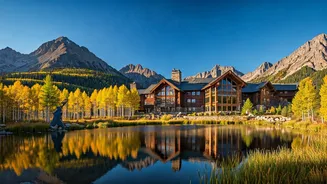
Sundance Resort is entering a significant new phase following its acquisition in 2020 by Broadreach Capital Partners and Cedar Capital Partners. Crucially, these new stewards are committed to upholding the resort's distinctive character and independence, ensuring it remains outside large, interlinked ski pass networks like Epic or Ikon. This transition marks considerable evolution, highlighted by the addition of 165 acres of new ski terrain and the debut of the resort's first-ever hotel, The Inn at Sundance Mountain Resort. These enhancements were part of Redford's original vision, though beyond his personal financial reach. The newly opened Inn, situated at the base of the Outlaw Express lift, features design elements honoring Redford, including a replica of the motorcycle he rode upon his initial discovery of the area, further weaving his story into the resort's fabric.
Skiing in Serenity
While Sundance is considerably smaller than many of Utah's mega-resorts, boasting 71 runs across 540 acres served by six lifts, it offers a distinct skiing experience. Even during challenging snow conditions, as experienced during a notable winter with half its runs closed including new terrain, the available slopes like Bearclaw blue run and the tree-lined Freddie's and Holman's Hollow black runs provide ample enjoyment. The resort's scale encourages a more intimate interaction with the mountain, and its dining options, such as the Bearclaw Cabin known for its signature pork nachos, add to the rustic charm. The promise of the resort's challenging back mountain terrain, visible but inaccessible during the visit, serves as an enticement for future returns under better snow conditions.
Beyond the Slopes
Sundance's appeal extends far beyond its skiable terrain, embodying a rich cultural tapestry inspired by its founder. The Village area, accessible from the Inn, houses two restaurants and various shops, including the historic Owl Bar. This bar, originally from Wyoming and once frequented by outlaws like Butch Cassidy's gang, was acquired and relocated to Sundance by Redford in 1994, adding a layer of historical intrigue. The resort has long been a haven for artists, writers, and filmmakers, a reflection of Redford's commitment to the arts, exemplified by the establishment of the Sundance Institute in 1981. This institute championed independent cinema, evolving into the renowned Sundance Film Festival. Although the festival itself has moved, the resort's artistic spirit endures, evident in its Art Studio and Gallery, where visitors can engage in creative pursuits like jewelry making, fostering a connection to the mountains through tangible artistic creation.